
Livraison le jour même ou le lendemain

Qualité garantie

Débloquez vos offres de bienvenue: Livraison GRATUITE | Jusqu'à -80 % | 30 jours d'essai gratuits à JoyPlus
Téléchargez l'application
A visible joint between laminate flooring and tiles, a gap between a floor and carpet, or a slight difference between two floor coverings can quickly spoil the harmony of a room. A self-adhesive floor transition strip can conceal this area in just a few minutes, with no drilling or additional adhesive required. However, you need to choose a model suited to the width of the joint and the condition of the surface.
Before placing your order, several points deserve your attention. A decorative finish will not compensate for a significant difference in level, nor will adhesive stick to a dusty or damp floor. Here are the criteria to consider, followed by a selection of models for different needs.
A self-adhesive PVC strip is mainly suitable for flat joints, small gaps and visual transitions between two floor coverings. If there is a step or a pronounced difference in height, it may come away more quickly or create an uncomfortable edge underfoot.
For a joint between laminate flooring and tiles, start by measuring the difference in level. If it is significant, it is better to choose a ramp-shaped transition profile designed to compensate for this height.
A 3 m strip may seem economical, but it will need to be stored and handled correctly. It will not necessarily be the most practical option for a small repair. Conversely, a one-metre model reduces waste and is much better suited to a doorway or short joint.
Always check all three dimensions: length, width and thickness. A 4 cm-wide strip will not cover a gap wider than this measurement, particularly if you want to leave a margin on either side.
Adhesive will not stick properly to a greasy, damp, dusty or uneven surface. After cleaning, the floor must be completely dry before installation. Wax, cleaning-product residue and small particles can cause the edges to lift.
A flexible PVC transition profile can follow a flat surface more easily and can generally be cut with scissors. The models featured here are advertised as resistant to scratches, stains and abrasion, and can be cleaned with a damp cloth.
This does not mean they are suitable for every situation. In a room frequently exposed to water, such as a bathroom, check the manufacturer's recommendations and avoid areas that remain constantly wet. The 3 m black model is specifically indicated for indoor residential use and is not intended for very humid environments, unless otherwise stated.
A finishing strip 4 cm wide and 0.3 cm thick can cover a typical joint while remaining relatively discreet. Measure the area to be concealed in several places: walls and floor coverings are not always perfectly straight.
A model that is too narrow will leave the joint visible. If it is too wide, it may instead become a dominant visual feature, especially in a small room.
Self-adhesive installation is straightforward: measure, cut, remove the protective film, then press into place. However, the claim of easy, tool-free installation should be taken with a pinch of salt: scissors or a craft knife will generally be needed to achieve a clean cut.
If the strip has been folded during transport, gently warming it with a hairdryer may help it regain its shape and follow the floor more closely. However, avoid overheating it: excessive heat could deform the PVC or damage the adhesive.
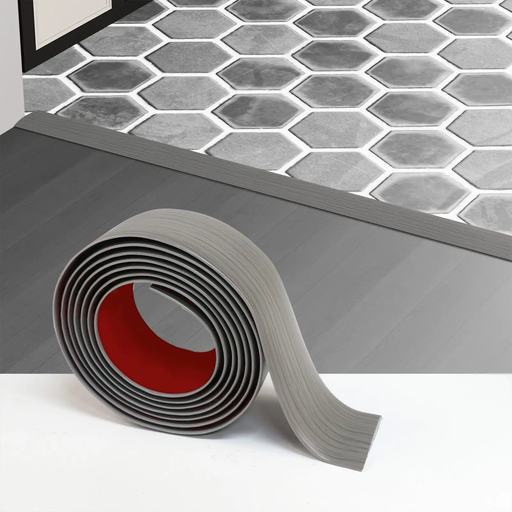
Why this choice suits this profile: Its one-metre format is ideal for a small repair, an entrance or a short joint. Its grey wood shade blends easily into understated décor.
Its limited length avoids buying an oversized roll for a small area and makes cutting easier.
Flexible PVC, 4 cm width, 0.3 cm thickness and self-adhesive installation, with the option to cut it using scissors.
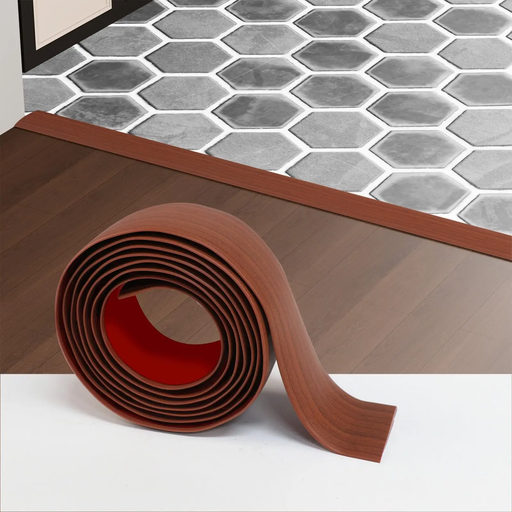
Why this choice suits this profile: Its cherry wood-effect finish is ideal for interiors where the joint needs to complement warm-toned wood flooring or furniture.
The wood pattern provides a genuine decorative finish rather than a neutral joint cover that would clash with the flooring.
Wood-grain finish, PVC advertised as scratch- and stain-resistant, and the option to cut it for a custom fit.
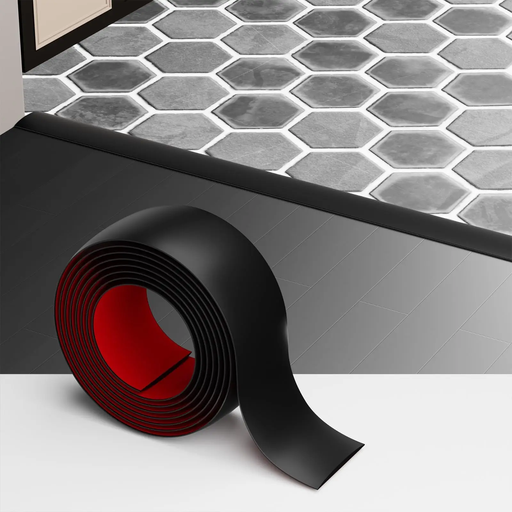
Why this choice suits this profile: At 3 m long, this roll is suitable for several doorways or a long joint in a home, office or premises subject to moderate use.
Its generous length reduces the number of joins, which are often more noticeable and more likely to lift.
300 cm format, 0.3 cm-thick PVC, black finish and care requiring only a simple wipe.
At the junction between tiles and carpet, make sure that no fibres are trapped beneath the adhesive section. On vinyl flooring, also check that there are no raised areas or treatments that could compromise adhesion.
It is mainly suitable for small differences and relatively flat joints. For a significant difference in level, choose a profile with a suitable compensating shape. A flat strip can conceal the joint, but it will not eliminate the risk of tripping.
Its lifespan depends on how the floor is prepared, foot traffic, humidity and the quality of the surface. Installation on a clean, dry and stable surface provides better durability. In a busy area, check the condition of the edges regularly and replace the strip if it lifts or becomes distorted.
Remove it gradually. If necessary, gently warm the adhesive with a hairdryer to soften it. The result depends on the floor covering and its finish. First test it in a discreet area and avoid pulling abruptly, particularly on carpet or flooring with a fragile top layer.