
Livraison le jour même ou le lendemain

Qualité garantie

Débloquez vos offres de bienvenue: Livraison GRATUITE | Jusqu'à -80 % | 30 jours d'essai gratuits à JoyPlus
Téléchargez l'application
A gap between two floor coverings is quickly noticeable, traps dust and can even be a tripping hazard. A self-adhesive floor threshold strip lets you conceal that join without drilling into the floor or needing a whole toolkit. It works particularly well between laminate flooring, tiles, vinyl or carpet in a living room, bedroom or kitchen.
Not all models are equal, though, even when they look similar. A poorly chosen width, adhesive applied to a dusty surface or a material that is too rigid can turn a quick installation into a disappointing purchase. Here are the factors to consider before choosing a self-adhesive floor transition profile.
A 1-metre strip might seem enough, but it won't necessarily cover the entire join. The dimension to check first is the width, especially when the gap between the two floors isn't perfectly even. At 4 cm wide, a threshold strip gives you a comfortable overlap margin for many domestic transitions, provided the surfaces are sufficiently flat.
Measure the area to be covered at several points. If the gap varies, base your measurement on the widest point and plan a clean cut at the ends.
Even the best self-adhesive finishing profile won't work miracles on a greasy, damp or dusty floor. Residues from wax, cleaning products and grains of sand can prevent the adhesive from bonding properly.
Before fitting, clean both floor coverings thoroughly, let them dry completely and check they aren't already lifting. On a very textured or crumbly surface, a screwed model or a suitable glue may be a better option.
A wood-effect finish can look elegant, but the shade also needs to complement both floors. Too much contrast will draw the eye to the join. Conversely, a colour close to the wood or furniture will create a more discreet visual continuity.
Also check the thickness and flexibility of the profile. A strip that is too thick can create a small step, while one that is too thin may not properly cover the gap between the floors.
PVC is often the material of choice for this type of product thanks to its flexibility and ease of maintenance. The Art3d products featured here are described as being made from PVC and designed to resist scratches, stains and abrasion, according to the information provided by the manufacturer.
That doesn't make them indestructible, though. In an area where furniture is moved frequently, where castors pass over it or where it experiences repeated rubbing, examine the finish carefully and take care with the installation. For everyday cleaning, a quick wipe with a slightly damp cloth is usually sufficient.
The models on offer measure 4 cm wide and 0.3 cm thick. This size is suitable for many joins between floor coverings laid at the same level or with a small height difference. It won't replace a ramp profile when the two floors are noticeably uneven.
The length should be chosen according to the job:
A longer strip reduces the number of joins, but always take your measurements before cutting.
A tool-free installation usually follows four steps:
If the strip has become distorted during transport, the manufacturer advises that a gentle pass with a hairdryer can help it regain its shape. Use moderate heat to avoid overheating the PVC or the adhesive. Once installed, avoid putting the strip under stress immediately.
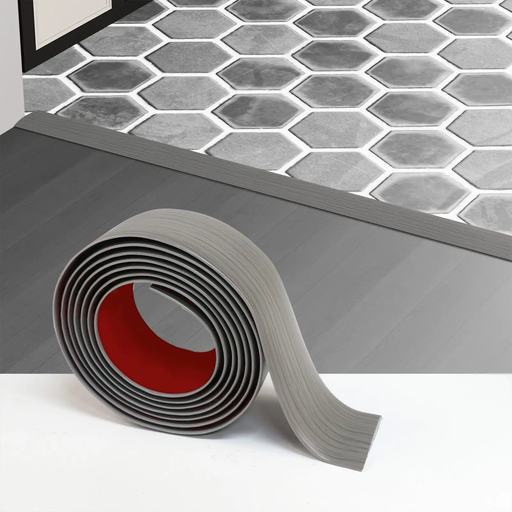
Why this choice suits this profile: With its 1 m length, this model is ideal for a small join, for example between a bedroom and a hallway, without forcing you to buy a strip that is too long. Its grey wood finish blends easily into a contemporary interior.
Its 4 cm width helps cover a standard gap, while the self-adhesive installation means you don't need to buy screws or extra glue.
Flexible PVC, cuts with scissors and grey wood-effect finish, according to the manufacturer's specifications.
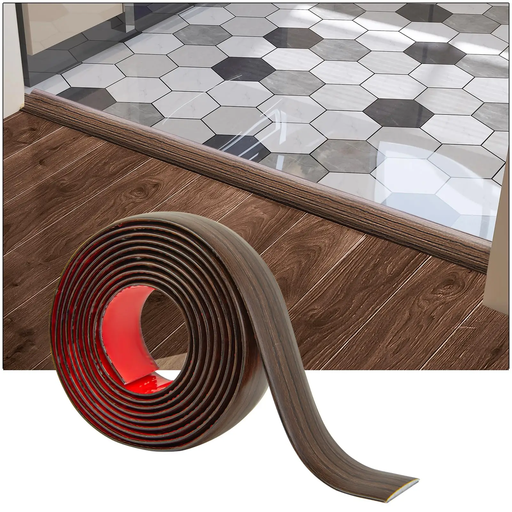
Why this choice suits this profile: Its brown wood finish is aimed at interiors seeking visual continuity with laminate flooring or warm-toned furniture. Its 122 cm length covers a standard separation between two rooms.
The width and thickness are clearly stated, which helps you avoid a decorative model that is too narrow or incompatible with the join.
122 cm length, 4 cm width, 0.3 cm thickness and brown wood-effect finish.
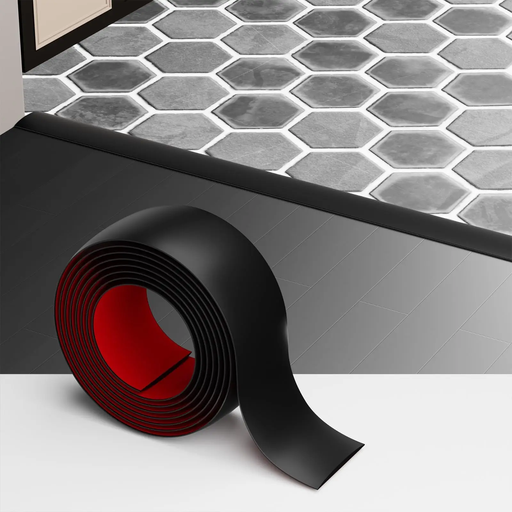
Why this choice suits this profile: At 300 cm, this strip is ideal for large openings, hallways or projects requiring several cut pieces. Its black shade makes a feature of the demarcation between tiles, vinyl, carpet or laminate.
A continuous length minimises visible joins and places where dust can accumulate. However, the strip must be installed on a clean, dry indoor surface.
300 cm length, self-adhesive PVC, 4 cm width and 0.3 cm thickness.
We've put together a comprehensive, real-time selection of products that meet these criteria as well as European safety requirements.
Measure, cut, clean and dry the surfaces, then gradually remove the protective film before pressing the strip down. Avoid applying the adhesive to a damp or dusty floor. If the profile is curved, a gentle pass with a hairdryer can help reshape it.
Its lifespan depends on the preparation of the surface, the frequency of foot traffic, exposure to moisture and friction. An installation carried out on a clean, stable floor will help it last. Inspect the edges regularly and replace the cover strip if the adhesive lifts or the surface becomes distorted.
Check the specifications on the product page for the model you choose. Some products are described as suitable for rooms like the bathroom, while others are intended for indoor residential use and are not recommended for very damp areas. The surface must be dry at the time of installation and any standing water should be avoided.