
Livraison le jour même ou le lendemain

Qualité garantie

Débloquez vos offres de bienvenue: Livraison GRATUITE | Jusqu'à -80 % | 30 jours d'essai gratuits à JoyPlus
Téléchargez l'application
A chair that scrapes across the parquet, a table that marks the laminate floor, or a piece of furniture that's difficult to move over tiles – self-adhesive felt furniture pads offer a simple solution, provided you choose the right model. However, a poorly sized pad can quickly peel off, leave marks, or fail to protect your floor adequately.
Here are the key factors to consider before choosing self-adhesive felt pads for your chairs, tables, cabinets and other furniture.
A pad that's too small won't cover the contact area properly. The edge of the leg can then touch the floor directly, causing scratches. Conversely, a model that's too wide may overhang, snag on things, or peel off when you move the furniture.
Measure the base of each leg, especially if your chairs have differently shaped feet. For an irregular surface, adhesive felt sheet that you can cut to size usually allows for a more precise fit.
Even the best adhesive won't work miracles on a dirty, damp or greasy surface. Dust that builds up under a chair leg significantly reduces adhesion and can cause the pad to come loose. Standard felt models also wear out faster on tile grout lines or rough floors.
So before you decide, check that the material, the type of flooring, and how often the furniture is moved are all compatible.
Noise reduction depends on the weight of the furniture, the type of floor, the pressure applied, and how the furniture is moved. Figures quoted by some manufacturers, such as a reduction of up to 30 decibels, should be taken as indications valid under specific conditions, not as a guaranteed result in every home.
High-density wool felt offers a soft surface, well-suited to varnished parquet, wood, linoleum and laminate. It's particularly suitable for furniture that's moved regularly, like dining chairs.
Two-material pads, which combine a felt layer with a reinforced adhesive backing, are designed to hold better on hard or uneven surfaces. Models with rounded edges are especially practical when legs need to glide over tile grout lines.
Choose the dimensions based on the area that actually makes contact with the floor, not the overall size of the furniture.
To install your furniture leg protectors correctly:
Avoid applying to any damp, greasy, crumbly or unstable surface. Small parts should be kept out of reach of children under 3 years of age and pets.
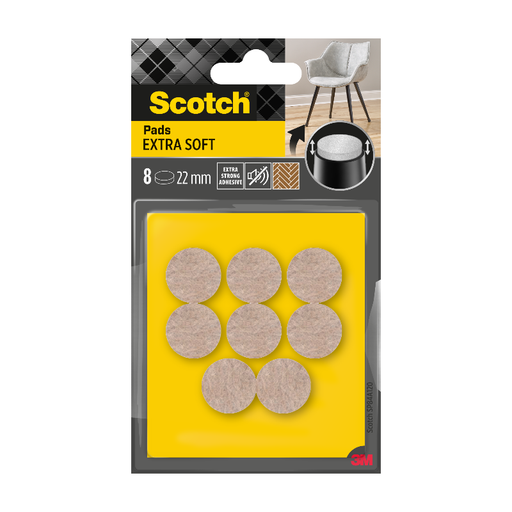
Why this choice suits this profile: With its 22 mm diameter and pack of 8 pieces, this model is perfect for a first installation on chairs, small tables or occasional furniture.
The round shape avoids rough cutting, while the self-adhesive backing can be applied without tools onto a clean, dry surface.
Beige felt, 22 mm diameter, 8 pieces and integrated adhesive. Suitable for wood, laminate and panel floors, according to the product information.
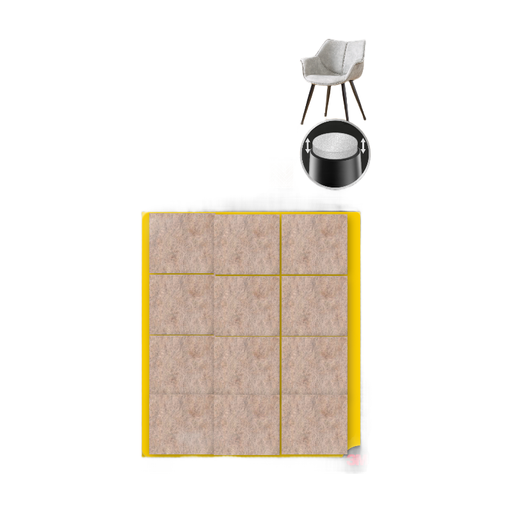
Why this choice suits this profile: This model combines natural wool fibres, a soft thickness and a 3M adhesive designed to stay in place on furniture used every day.
The soft material limits direct contact with delicate surfaces, without relying on a simple, very thin film.
12 pieces of 24 × 22 mm, a discreet beige colour, and intended use on varnished parquet, lacquered surfaces and delicate tabletops.
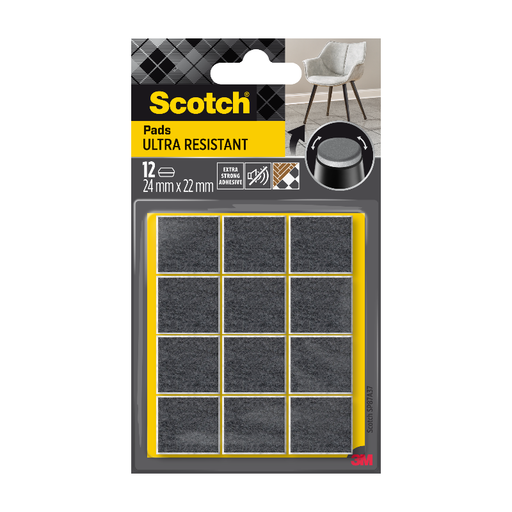
Why this choice suits this profile: Its two-component structure and rounded edges are designed for furniture moved across tiles, grout lines or rough floors.
According to the product information, the rounded edge resists crossing grout lines three times better than a straight edge.
High-density structure, reinforced adhesive, 12 pieces and stated compatibility with tiles and rough floors.
We've put together a comprehensive, real-time updated list of products that fully meet these strict selection criteria and European safety regulations.
The lifespan depends on the weight of the furniture, how often it's moved, and the condition of the floor. Inspect the pads every few months and replace them as soon as the felt is flattened, torn, clogged with dust, or the adhesive starts to peel. A worn pad can trap abrasive particles and produce exactly the opposite effect to the one you want.
For a heavy piece of furniture or one that's moved daily, a two-component model will often be more suitable than a standard thin felt. For occasional use, a pack of round wool pads can be perfectly adequate.
Clean and dry each leg, then centre the pad on the contact area. Press firmly and let the adhesive bond before moving the chair again. Check that the pad doesn't protrude too far from the leg.
Yes, depending on the model. Wool felts are generally suitable for parquet, laminate and linoleum. For tiles or uneven grout lines, choose a two-component structure with a rounded edge and check its condition regularly.
Round formats are suitable for regular legs and allow for quick fitting. A self-adhesive sheet that you cut to size offers more flexibility for rectangular legs, wide furniture, or items whose base doesn't match standard dimensions.