Hosts looking for seeds
You want seeds you can identify in the product, not just a topped fougasse. Check the ingredients for the specific product you choose: PAUL lists a five-seed bread separately from its olive fougasse.


If seeds are your main priority, choose a bread that specifically lists them in its ingredients rather than a fougasse where only the topping is specified. If you’d rather serve a topped centrepiece as an appetiser, a fougasse may be a better fit for your meal. Check the ingredients, allergens, size and serving instructions for the specific product you choose.
You want seeds you can identify in the product, not just a topped fougasse. Check the ingredients for the specific product you choose: PAUL lists a five-seed bread separately from its olive fougasse.
You’re looking for a topped centrepiece to slice and serve at just the right moment. Carrefour Traiteur’s 300 g bacon fougasse is listed as serving three and requiring reheating in the oven. These details apply to this product, not to all fougasses.
If any of your guests need to avoid certain ingredients, check the exact recipe before serving. Wheat, milk, meat and other allergens vary between products, so the topping’s name alone isn’t enough to tell you whether it’s suitable.
For this dinner, start with what matters most: finding seeds, making serving easier or catering for your guests’ dietary requirements.
| Criteria | What to check | Who it’s for |
|---|---|---|
| Seeds and ingredients | Look for seeds in the ingredients. Compare the fibre per 100 g if nutritional values are provided. | If you’re mainly looking for the texture seeds provide, make sure they’re named in the ingredients rather than assuming the product is high in fibre. Around 42% of consumers prioritise ingredients they can verify. |
| Size and serving | Check the weight, how many people it serves (if stated) and the reheating instructions. | To serve a sharing centrepiece easily, you need to be able to plan the quantity and when to bring it to the table. Around 33% of consumers put serving considerations first. |
| Dietary requirements | Read the ingredients and allergens for the exact product, including any precautionary allergen statements. | If a guest needs to avoid an ingredient or topping, the recipe’s suitability matters more than its size. Around 25% of consumers prioritise these dietary requirements. |
Carrefour and Auchan highlight recipes topped with ingredients such as olives, cheese and charcuterie. The fact that a retailer sells seeded bread tells you nothing about the ingredients in its fougasses.
If seeds are essential, look for them in the ingredients of the specific product. Otherwise, choose a fougasse for its topping and serve seeded bread separately.
PAUL describes its olive fougasse as plant-based, while other recipes contain milk or meat. You can’t assume that one product’s qualities apply to another.
Ask your guests about their dietary requirements, then check the ingredients and allergens of the product you buy. Keep this information handy when you serve it.
Weights and preparation instructions vary. Carrefour Traiteur lists its bacon fougasse as 300 g, serving three and requiring reheating in the oven, while Auchan’s olive fougasse is sold in a 400 g size.
Take the other dishes into account when planning quantities, and check the storage and reheating instructions for your chosen product before dinner.
The retailer offers several topped fougasses, as well as a Carrefour Traiteur sharing option.
The retailer offers fresh topped fougasses, including olive and cheese varieties.
The bakery offers an olive fougasse and, separately, a selection of speciality breads that includes seeded varieties.
If seeds matter for your appetisers, these bites offer an alternative to a fougasse or seeded bread that you can slice.
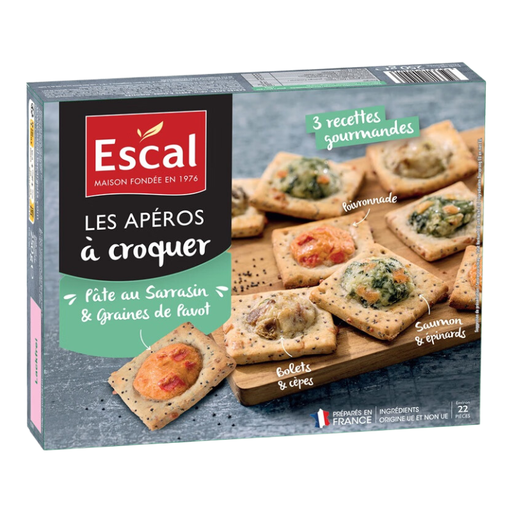 Image unavailable
A seed-filled appetiser option if you’d rather serve bites than a fougasse. This is a frozen puff pastry product that needs to be baked. Check the cooking instructions on the packaging and don’t refreeze it after thawing. Also check the ingredients and allergens for your guests, as well as the weight and number of pieces, before planning how much to serve.
Check the ingredients for the exact product rather than judging by its colour or photo. For prepacked food in France, the DGCCRF states that ingredients are listed in descending order by weight and allergens are highlighted. For non-prepacked fougasse, ask the retailer for its ingredients.
No. You need to check the recipe and nutritional values for each product. Auchan’s listing for its olive fougasse states that it contains 1.6 g of fibre per 100 g; this figure doesn’t apply to other olive fougasses.
Check the ingredients and allergens for each product, including any precautionary allergen statements relevant to your guests. PAUL describes its olive fougasse as plant-based and vegetarian, but that doesn’t apply to fougasses made to other recipes.
Follow the instructions for the product you’ve bought: there’s no single preparation method for all fougasses. For its bacon fougasse, Carrefour Traiteur recommends two to three minutes in a conventional oven at 170 °C. Don’t automatically apply these instructions to another product.