Fans of extra-crunchy crispbreads
You’re looking for a dry, crisp texture with plenty of seeds. Rye and sesame or multigrain recipes are worth comparing, particularly for their salt content and allergens.


For a crunchy snack, compare rye and seeded crispbreads by their ingredients and nutritional values. If protein is your priority, check the amount per portion rather than simply looking for seeds. Soft seeded bread offers a different texture. In every case, check the salt content and allergens in the exact recipe before you buy.
You’re looking for a dry, crisp texture with plenty of seeds. Rye and sesame or multigrain recipes are worth comparing, particularly for their salt content and allergens.
You want to compare how much protein your snack provides. A product labelled “seeded” doesn’t, on its own, tell you how much protein each slice contains.
The ingredients list and allergen warnings matter more than how the product looks. A recipe with no obvious wheat isn’t necessarily suitable for someone avoiding gluten.
Start with what matters most to you, then compare the values per 100 g with those for the portion you plan to eat.
| Criteria | What to check | Who it matters to |
|---|---|---|
| Fibre and crunch | The amount of fibre per 100 g and per portion, as well as the cereals and seeds listed in the ingredients. | If I’m mainly looking for a crunchy crispbread, I check the recipe and declared fibre content before choosing a topping. Around 33% of consumers prioritise this. |
| Allergens and gluten | The allergens in the exact recipe, any “may contain” warnings and, if needed, a clear “gluten-free” label. | If I need to avoid an ingredient, an appealing list of seeds isn’t enough to tell me whether the product is suitable. This comes before other criteria for around 25% of consumers. |
| Protein | The protein content per 100 g and per slice, taking the actual weight of each slice into account. | I compare how much protein I’ll get from my portion, rather than assuming that “seeded” means high in protein. This is the main criterion for around 25% of consumers. |
| Format and texture | The number of slices, the stated texture and storage instructions after opening. | For a snack on the go, I might prefer a crunchy product; at home, soft bread may better suit my tastes. Around 17% of consumers prioritise format and texture. |
Seeded crispbreads may contain wheat, rye or sesame, and carry warnings about traces of other allergens. The DGCCRF notes, in particular, that wheat and rye are cereals containing gluten.
Read the packaging for the specific product you’re buying. If you need to avoid gluten, look for a suitable, explicit label rather than relying on the product name or appearance.
Auchan’s product information lists 13 g of fibre per 100 g for its rye and sesame crispbreads, while Wasa Protein+ lists 20 g of protein per 100 g. These figures relate to different products and different nutritional criteria.
Compare fibre, protein and salt on the same basis, then adjust the values to match the portion you plan to eat.
La Boulangère describes its organic quinoa and seeded bread as having a soft, tender crumb. That’s not the same texture as crunchy rye bread or a cracker.
Choose the texture you want first, then check the packaging and storage instructions after opening.
According to Auchan’s product information, its cereal and seeded crispbreads combine several cereals and seeds in a pack of 24 slices, weighing 240 g.
The Protein+ variety with linseed and poppy seeds lets you compare the protein content per slice, rather than relying on the product name alone.
Its crunchy rye and sesame crispbreads are a good fit if you’re looking for a crisp texture and a recipe centred on these two ingredients.
Its organic rye and sesame crackers are another crunchy recipe worth considering.
Its organic quinoa and seeded bread is better suited to people looking for a soft bread texture.
These mini linseed and poppy seed crackers are a good match if you’re looking for a crunchy snack. They aren’t bread crispbreads, so bear the difference in format and recipe in mind when comparing them.
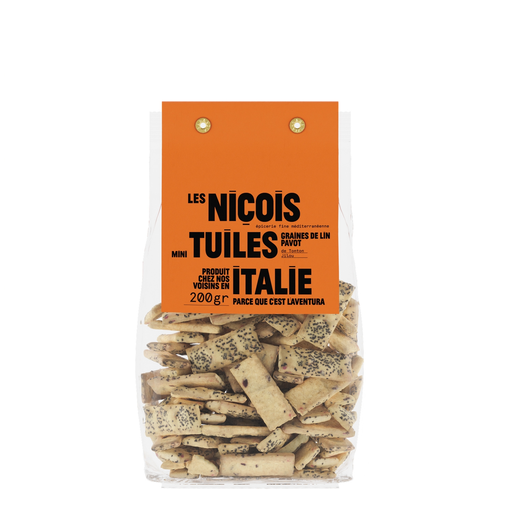 Image unavailable
A cracker option for a crunchy snack, distinct from bread crispbreads. The product information lists gluten from wheat and barley malt, as well as 2.6 g of salt per 100 g. Check the label if these details affect your choice.
No. Pasquier’s cereal and seeded crispbreads contain wheat and rye, among other ingredients, while Auchan’s rye and sesame crispbreads contain rye. The DGCCRF lists these cereals as containing gluten. If you need to avoid gluten, check for a suitable label and read the ingredients on the exact product packaging.
Start with the ingredients, allergens and nutritional values per 100 g, then check the size of your portion. For prepacked foods sold in France, the DGCCRF states that allergenic ingredients must be highlighted.
Follow the storage instructions for the product you’ve bought. Joybuy’s product information for Wasa Authentique, which is a different variety from Wasa Protein+ crispbreads, recommends storing it in an airtight container after opening to keep it crisp.
A crispbread can be the base for a snack, but what you have with it matters too. For teenagers who aren’t hungry in the morning, Manger Bouger suggests a seasonal fruit with one or two slices of cereal bread or one or two biscuits. This is just an example, not a portion size that suits everyone.