
Livraison le jour même ou le lendemain

Qualité garantie

Débloquez vos offres de bienvenue: Livraison GRATUITE | Jusqu'à -80 % | 30 jours d'essai gratuits à JoyPlus
Téléchargez l'application
A door that lets in a draught, a poorly insulated window, a bathroom seal that turns black, or a crack that reappears after a few weeks: sealing jobs seem straightforward, but the product you choose makes all the difference to the result.
Before buying seals and sealants for the home, three mistakes crop up time and again:
So the right choice starts with the intended use, the width of the gap to fill, and compatibility with the surface.
For a door and window seal, measure the gap at several points around the frame. Older frames can have quite noticeable irregularities.
Avoid compressing the foam too much: constant pressure can make closing difficult and cause the adhesive to peel off more quickly.
The surface and the conditions of use will guide your choice of sealant.
Always check the contraindications listed on the cartridge. Some sealants are not compatible with Perspex, polyethylene, polypropylene, PTFE or certain synthetic materials.
The surface must be clean, dry, dust-free and degreased. Adhesive applied to a damp or crumbly surface is likely to peel off quickly.
For a 280 ml cartridge, you will generally need a sealant gun. A filling knife or smoothing tool will help you achieve a neat finish. For self-adhesive seals, scissors or a craft knife may be enough, while rigid profiles sometimes require a fine-tooth saw. Wear gloves and goggles when cutting.
Self-adhesive strips intended for floors also need a perfectly dry surface. An adhesive floor transition strip can cover the gap between laminate flooring, tiles, carpet or vinyl flooring. However, it will not fix the floor if it is moving or lifting.
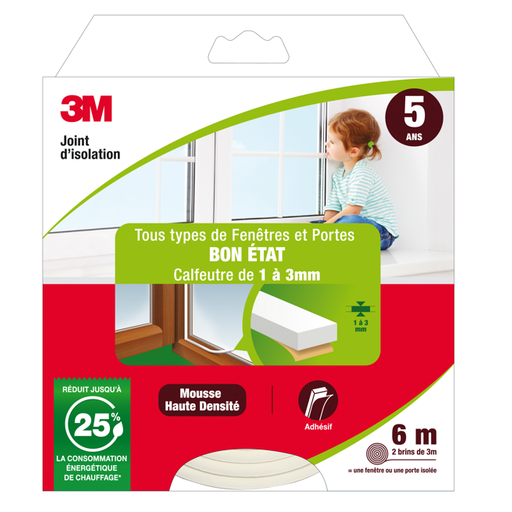
Why this choice suits this profile: Its self-adhesive application requires no tools and is suitable for wooden, PVC or aluminium doors and windows with a gap of 1 to 3 mm.
The 1 to 3 mm range reduces the risk of choosing an oversized seal for joinery that is already well fitted.
High-density soft foam, 6 m length and no-drill installation.
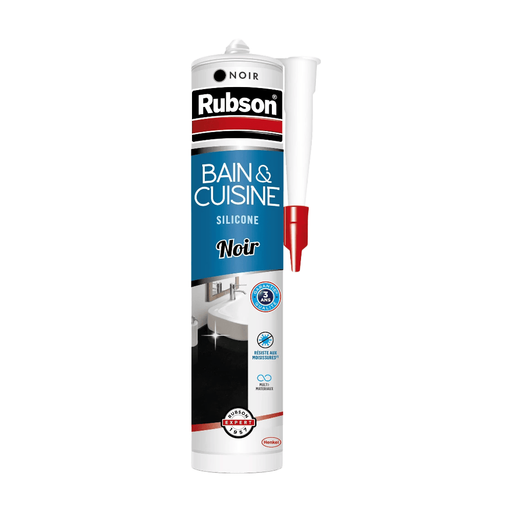
Why this choice suits this profile: Its black colour complements contemporary finishes around a sink, shower, basin or fitted unit.
Its silicone formulation and sanitary purpose prevent you from using an acrylic sealant in an area regularly exposed to water.
280 ml cartridge, flexible seal and formulation with fungicidal agents, according to the product sheet.
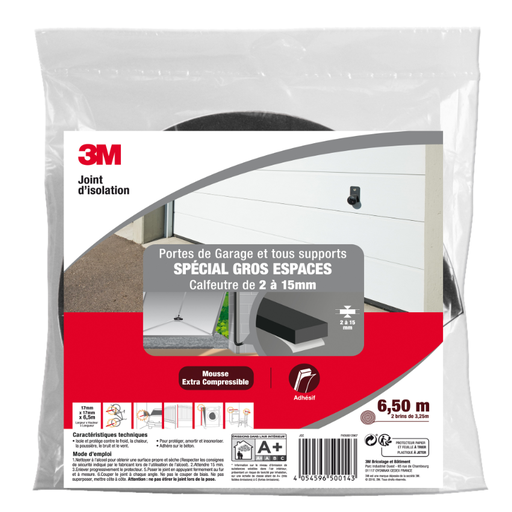
Why this choice suits this profile: It is designed for large gaps of 2 to 15 mm on garage doors, doors and windows, where standard profiles are too narrow.
The stated size range prevents you from confusing a seal for a small gap with a solution for an uneven opening.
Compressible polyurethane foam, total length of 6.50 m and protection against air, wind and noise.
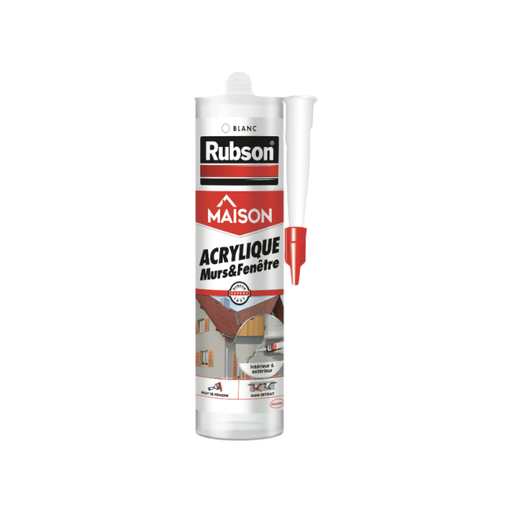
Why this choice suits this profile: It is ideal for interior and exterior renovation work, particularly for cracks and joints around walls, doors and windows.
The product sheet specifies compatible materials and excluded surfaces, which reduces the risk of applying the product to an unsuitable surface.
280 ml cartridge, white finish and can be painted after drying, according to the manufacturer's instructions.
We have selected a comprehensive, real-time updated list of products that meet these strict criteria, while complying with European safety regulations.
To join two floor coverings, self-adhesive PVC transition strips can be cut to the desired length and applied to a clean, dry floor. On artificial grass, synthetic grass joining tape is placed under the strips and must be used with a glue suitable for grass.
Insulation work may also require a jointing strip for glass wool or rock wool. Tearable by hand, it is used to connect panels or rolls, but does not replace the fixings provided by the insulation system.
Finally, the term "joints" can refer to a need unrelated to home improvement. A joint supplement, such as Nutri&Co Articulation – 60 Capsules, remains a food product and not a treatment. Follow the stated dosage and usage precautions. If you are pregnant, breastfeeding, on medication or have a specific health condition, seek advice from a healthcare professional.
Clean and degrease the frame, dry it thoroughly, then measure each side. Cut the seal without stretching it. Gradually remove the protective film and press firmly along the entire length. Wait before closing the door or window firmly, to give the adhesive time to bond properly.
The lifespan depends on the material, exposure and how often it is opened. Some products claim resistance to over 37,500 cycles, but this figure is not a universal guarantee. Check regularly for compression, peeling and cracks. Replace the seal as soon as it no longer springs back into shape properly.
The cost varies depending on the length to be treated, the type of silicone, the colour and the tools required. A 280 ml cartridge may be enough for a small job, whereas a full renovation may require several cartridges, a sealant gun and a smoothing tool. Measuring the length to be treated before you buy will help you avoid running out mid-job or ending up with unused cartridges.