
Livraison le jour même ou le lendemain

Qualité garantie

Débloquez vos offres de bienvenue: Livraison GRATUITE | Jusqu'à -80 % | 30 jours d'essai gratuits à JoyPlus
Téléchargez l'application
A leak around the sink, a blackened bath sealant joint, or a fixing that's coming loose can quickly turn a small DIY job into an unexpected expense. Under the name sealant, however, you'll find very different products: sanitary silicone, butyl tape, fixing adhesive, construction adhesive, or automotive sealant.
Before placing an order, it's best to avoid three common mistakes.
The first question is simple: what surface does the product need to adhere to? Rubson sanitary sealants are indicated for substrates such as enamel, porcelain, glass, ceramic tiles, stoneware, ceramics, or certain metals.
However, several references are not suitable for polyethylene (PE), polypropylene (PP), PTFE, certain acrylic surfaces, or flexible plastics. For plastics, painted surfaces, and composite materials, testing on an inconspicuous area is a sensible precaution.
If you're looking for a fixing without drilling, also check whether one of the two substrates is porous. Pattex extra-strong construction adhesive intended for indoor use, for example, requires that at least one of the materials be porous, such as wood, brick, stone, or plaster.
A silicone sealant for bathrooms needs to remain flexible in a humid room. For a shower, basin, or bath, choose a sanitary formula designed for joints exposed to water and, where necessary, one with a fungicidal protection indicated by the manufacturer.
For a boat window, a campervan, or an outdoor repair, the requirements change: ultraviolet rays, vibrations, salt water, de-icing salts, and temperature fluctuations must all be taken into account. Rubson automotive and marine sealant is presented as suitable for assemblies and repairs on glass, metal, rubber, and wood.
A butyl sealing tape can also form a flexible barrier around a window, a rooflight, a roof, or a bodywork element. However, it is not applied like a cartridge silicone and does not automatically replace a structural seal.
A 50 or 80 ml tube is sufficient for a touch-up or a joint of a few dozen centimetres. For redoing several lengths around a bath, a worktop, or joinery, a 280 to 300 ml cartridge will be more suitable.
Most cartridges are used with a cartridge gun. The WORKPRO model available on Joybuy accepts standard cartridges from 295 to 310 ml and offers two thrust ratios: 9:1 for more fluid products and 18:1 for thicker formulations. Its flow-stop mechanism helps to limit drips.
Finally, remember to check the repositioning time and the curing time. Some adhesives can still be adjusted for a few minutes, but their maximum strength is generally only reached after several hours. Do not immediately expose a joint to water and do not stress a fixing before the time indicated on the packaging.
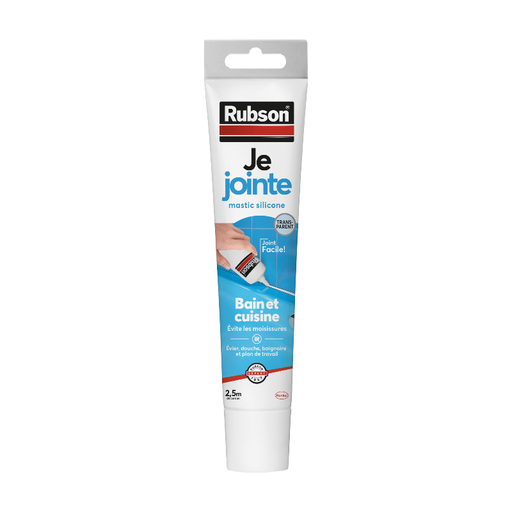
Why this choice suits this profile: Its ready-to-use 50 ml tube is ideal for small repairs around a basin, sink, bath, or worktop, without needing to buy a cartridge gun.
Its small format avoids buying a cartridge and a tool for a short seal. However, you must respect the compatibility exclusions, particularly with acrylic, PE, PP, and PTFE.
A transparent finish, an integrated applicator, and stated suitability for several sanitary substrates.
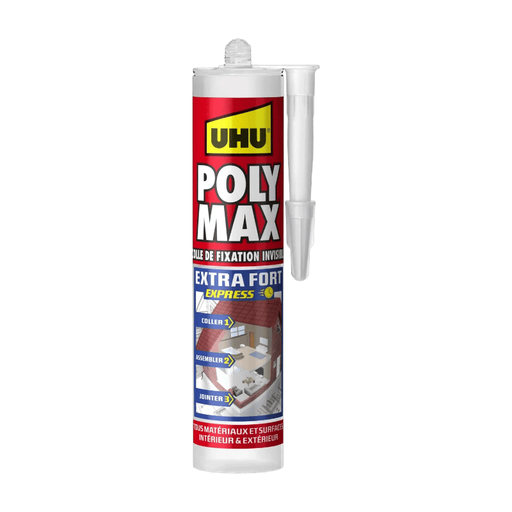
Why this choice suits this profile: Its 300 g cartridge is suitable for varied projects that combine bonding, assembly, and sealing on multiple materials, indoors and outdoors.
The product sheet specifies the excluded substrates, notably PE, PP, PTFE, and bitumen. This product should not be used in permanent immersion.
A formula stated to be solvent-free, acid-free, and odourless, with permanent elasticity and a stated resistance from -40 °C to +100 °C.
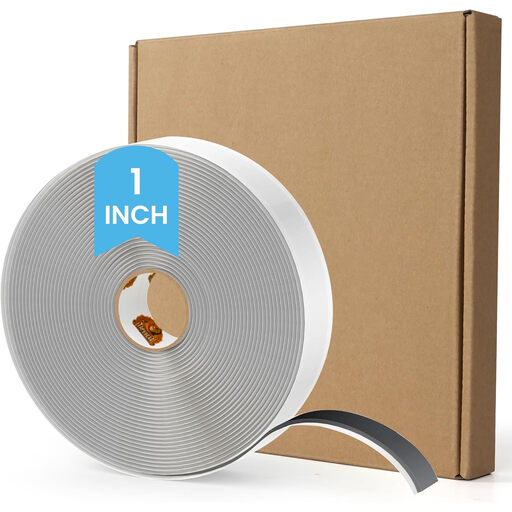
Why this choice suits this profile: This 25 mm x 9 m roll is suitable for campervan windows, boats, bodywork, pipework, and outdoor repairs that require a flexible tape to be pressed directly into place.
Its width and thickness are clearly stated, unlike some generic tapes whose coverage may prove insufficient. The surface must be clean and perfectly dry.
It conforms to irregular shapes and its adhesion is stated for metal, plastic, wood, glass, and fibreglass.
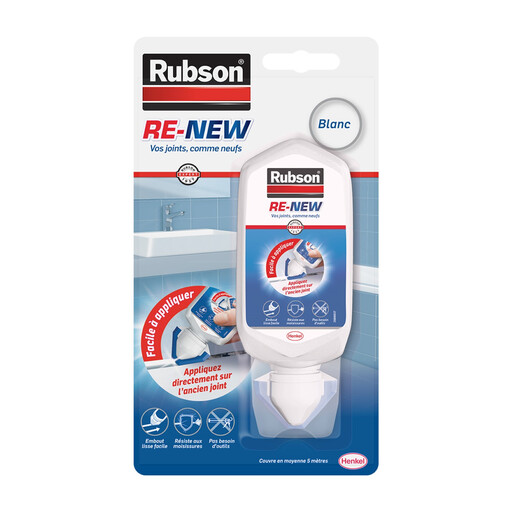
Why this choice suits this profile: It allows you to visually refresh existing silicone joints in a shower, around a bath, basin, or worktop.
It is designed to cover an existing joint that is clean, dry, and stable. It does not eliminate the need to remove any loose or crumbling parts.
An 80 ml tube, stated anti-mould protection, and an integrated smoothing applicator.
We have put together a comprehensive, real-time updated selection of products that meet these demanding criteria and European safety standards.
For a threaded fixing subject to vibrations, a threadlocker such as LOCTITE Nut Lock Adhesive is applied to clean, dry metal threads. It should not be used with pure oxygen, chlorine, or strong oxidising agents.
Choose a sanitary anti-mould sealant based on silicone, designed for joints around a basin, shower, bath, or sink. Always check its compatibility with the substrate and allow it to dry before exposing the area to water again.
Not always. Butyl tape is mainly suitable for connections, overlaps, and irregular surfaces that require a flexible, adhesive barrier. For creating a visible, smooth joint in a bathroom or around joinery, silicone is generally more suitable.
Its lifespan depends on exposure to water, UV rays, vibrations, cleaning products, and substrate movement. Regularly inspect outdoor and sanitary joints. A cracked, detached, or porous joint should be removed or renovated, after identifying the source of the problem.