
Livraison le jour même ou le lendemain

Qualité garantie

Débloquez vos offres de bienvenue: Livraison GRATUITE | Jusqu'à -80 % | 30 jours d'essai gratuits à JoyPlus
Téléchargez l'application
A sealant can stop a leak around a sink, fill a crack near a window, or fix a decorative element in place. But choosing a cartridge purely for its colour or because it says "waterproof" on the label can lead to a few nasty surprises.
The most common pitfall is applying a silicone bathroom sealant to a wall you then intend to paint. Silicone adheres perfectly to sanitary surfaces, but it generally can't be painted over with standard paint. Conversely, an acrylic sealant for walls and windows is far better suited to cracks and joinery joints, especially where a painted finish is planned.
Another frequent mistake is applying a new product over an old joint that's dirty, crumbly or covered in mould. Even an anti-mould sealant won't work miracles if the surface hasn't been properly prepared. Finally, an oversized cartridge for a small repair leads to waste, while a ready-to-use tube isn't necessarily the most practical choice for a job involving several metres of joints.
Take the time to read the list of compatible materials before you start. The sanitary silicones featured here adhere particularly well to enamel, porcelain, glass, tiles, ceramic, aluminium and certain laminates. However, several products are not suitable for acrylic, Perspex, polyethylene, polypropylene or PTFE.
This check is especially important when renovating joints in a bathroom fitted with a shower tray or bath made from synthetic material. If in doubt, test on an inconspicuous area and consult the instructions as well as the safety data sheet.
A 280 to 310 ml cartridge is suitable for larger jobs and is typically used with a sealant gun. For a simple touch-up, a 50 or 80 ml tube is more manageable.
Make sure the gun accepts the cartridge volume. A model with a high thrust ratio makes applying thick sealants easier, while a standard ratio offers more precision with runnier formulations. In all cases, respect the curing time stated before exposing the joint to water.
If the old joint is slightly yellowed or stained but still firmly attached, a covering product may be sufficient. However, if it's peeling, letting water through or has crumbly areas, it's best to remove it completely.
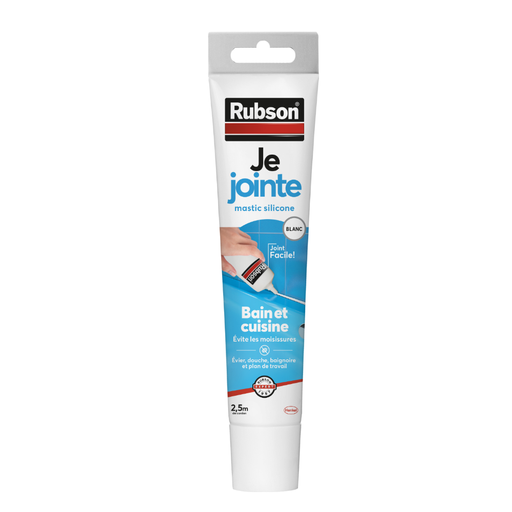
Why this suits this profile: its ready-to-use format is ideal for small touch-ups around a basin, sink or bath, without needing to buy a sealant gun.
The tube stops you from buying an oversized cartridge for a one-off repair and applies directly, as long as you check the compatible surfaces.
50 ml format, no gun required and adhesion claimed on several sanitary materials.
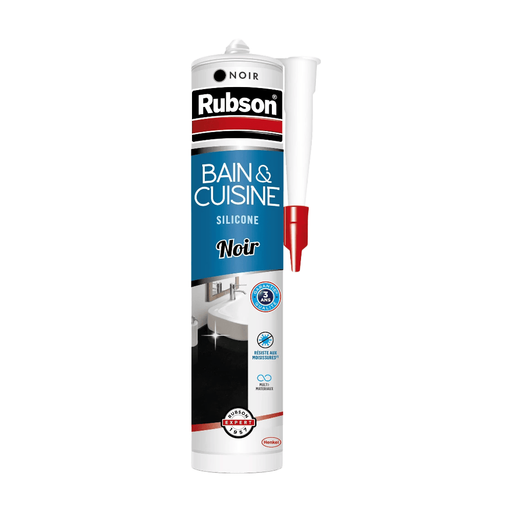
Why this suits this profile: its black finish lets you combine waterproofing with a strong decorative statement in a kitchen or bathroom.
The colour is clearly identified before purchase, so you avoid applying a white joint to a dark or contemporary finish.
280 ml cartridge, flexible silicone, fungicidal protection stated by the manufacturer and pre-cut nozzle.
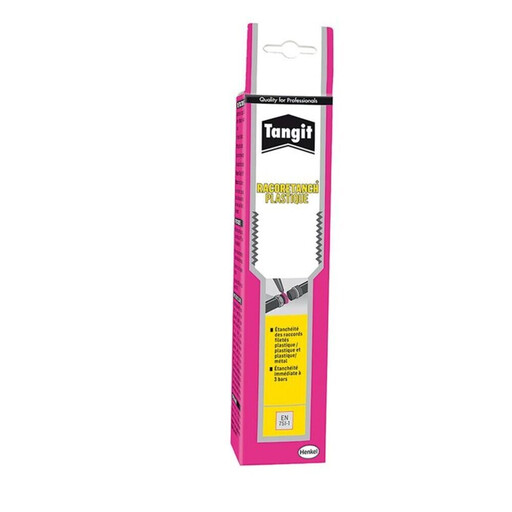
Why this suits this profile: its runny formulation is designed for threaded plastic and metal fittings, particularly for irrigation, swimming pools or compressed air lines.
It stops you from misusing a sanitary silicone for a threaded fitting, an application that requires a dedicated formulation.
Resistance claimed to hot and cold water, oils and certain diluted chemicals, with the possibility of disassembling the fitting.
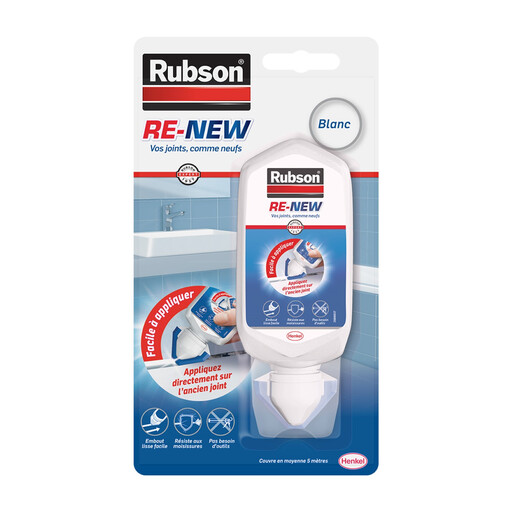
Why this suits this profile: it's aimed at those who want to cover an existing silicone joint, provided it still adheres properly and has been thoroughly cleaned.
It's designed for the visual renovation of a stained, yellowed or slightly cracked joint; this method is not suitable for a joint that's peeling or letting water through.
80 ml format, integrated smoothing applicator and application designed directly onto a clean, dry existing silicone joint.
We've put together a comprehensive, real-time updated selection of products that meet these demanding criteria and European safety standards.
For the edges of a shower, bath, basin or sink, choose a flexible sanitary silicone designed for wet rooms. The anti-mould label can help preserve the joint's appearance, but it doesn't replace regular cleaning or good ventilation.
It depends on the product. A renovation solution like Rubson Re-New is designed to cover certain existing joints after cleaning and drying. If the old sealant is peeling, crumbling or letting water through, remove it completely before applying the new one.
The time depends on the formulation, the thickness of the bead, the temperature and the humidity level of the room. Always consult the manufacturer's instructions. To be safe, avoid splashes and wet cleaning until the stated curing time has passed.