
Livraison le jour même ou le lendemain

Qualité garantie

Débloquez vos offres de bienvenue: Livraison GRATUITE | Jusqu'à -80 % | 30 jours d'essai gratuits à JoyPlus
Téléchargez l'application
Choosing a new sea bass fishing rod can quickly become overwhelming. Between the sheer number of models, the technical jargon, and the marketing promises, it's easy to feel lost and end up regretting your purchase. This guide breaks down the essential criteria for finding gear that is perfectly suited to your fishing style and, most importantly, for avoiding the most common pitfalls.
The market is flooded with rods that have enticing technical specs. But be warned, some of them hide flaws that can cripple their effectiveness or shorten their lifespan. Here are the three key things to watch out for.
To make an informed choice, you need to understand a few key parameters that determine a rod's performance.
A good carbon fishing rod is distinguished by the quality of its carbon sheets. High-modulus (HM) carbon is a hallmark of lightness, sensitivity, and responsiveness. It's ideal for feeling the most subtle bites and imparting precise action to your lures. A well-designed rod strikes the right balance between these properties and the backbone needed to control a powerful fish.
A 2-piece fishing rod currently represents the best compromise between performance and ease of transport. Modern ferrules are ultra-reliable and preserve the blank's action almost perfectly. For an all-around fishing rod for saltwater/freshwater, ensure the guides and reel seat are treated with an anti-corrosion coating. This is a non-negotiable feature for any self-respecting saltwater fishing rod.
To put theory into practice, here are a few models that meet the needs of specific angler profiles, selected based on the criteria we've just discussed.
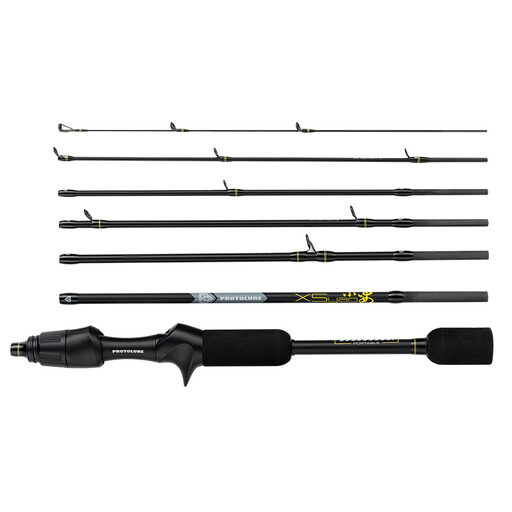
Why this model is a great fit: Ideal for those who want to get into sea bass fishing without breaking the bank. Its design offers an excellent balance of performance and value, perfect for discovering lure fishing in both saltwater and freshwater.
It sidesteps the "false versatility" trap. By being clearly advertised for both sea bass AND freshwater, it suggests a design genuinely engineered for both uses, not just a catch-all marketing claim.
Its price-to-performance ratio is excellent for a first rod. Its carbon construction gives it a welcome lightness during long fishing sessions.
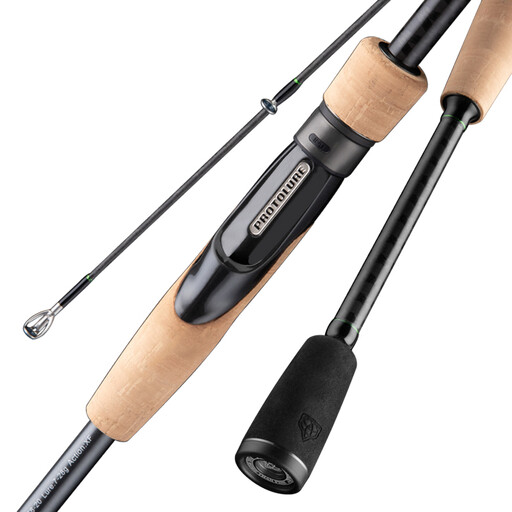
Why this model is a great fit: Built for regular anglers who work the coastline in search of sea bass. Its construction is focused on lure performance, with an action that optimizes casting distance and bite detection.
This is not a generic rod. The "Protolure" name and "Sea Bass" specialisation signal a targeted design. It avoids the trap of the "do-it-all" rod that is often average at everything and good at nothing.
Its fast action allows for pinpoint lure animation. Its 2-piece design makes it easy to transport to your spots, even the most remote ones.
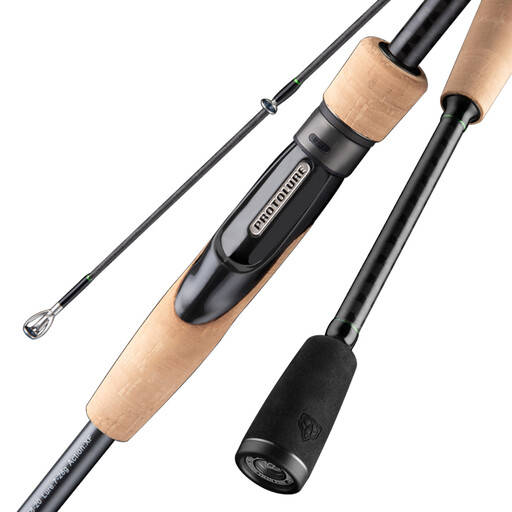
Why this model is a great fit: For the angler who alternates between sea trips for bass and freshwater sessions for zander or pike. This model from the ECOODA line offers a power range and sensitivity that adapt perfectly to both environments.
It offers true versatility, backed by quality, corrosion-resistant components. That's what makes all the difference compared to low-end "all-purpose" rods.
A responsive blank that is equally at home with saltwater and freshwater predators. The assurance of investing in a single quality rod to cover multiple types of fishing.
We have curated a complete selection of gear that meets our strictest quality criteria.
The lifespan of a carbon fishing rod depends primarily on its maintenance. Carbon itself is a very durable material. The crucial point, especially for a saltwater fishing rod, is systematically rinsing it with fresh water after every trip. This simple action removes salt that corrodes the guides and reel seat. With this habit, a quality rod can last for many, many years.
For shore fishing for sea bass, a rod with a power rating of 10-40g or 15-50g is an excellent, highly versatile starting point. It will allow you to cast the vast majority of hard baits, soft plastics, and jigs used for this technique. If you are fishing in strong currents or with very heavy lures, a more powerful rod will, of course, be more suitable.
This is an old concern that is now completely unfounded with quality rods. Modern ferrule technologies (spigot or over-fit) are extremely reliable and designed to preserve the integrity of the rod's curve and the strength of the blank. A 2-piece fishing rod offers an undeniable practical advantage for transport and storage, with no noticeable sacrifice in performance for most fishing techniques.