
Livraison le jour même ou le lendemain

Qualité garantie

Débloquez vos offres de bienvenue: Livraison GRATUITE | Jusqu'à -80 % | 30 jours d'essai gratuits à JoyPlus
Téléchargez l'application
Assembling flat-pack furniture, carrying out a small repair at home, or maintaining your car: for all these tasks, a good screwdriver set is an indispensable ally. The problem? The shelves are overflowing with options that all look the same, and it's easy to fall for a set that will give up the ghost on the very first screw. As a product expert at Joybuy, I'm here to guide you through this jungle, help you avoid the marketing traps, and ensure you invest in a kit that will go the distance.
Before we even get into the technical details, let's learn to spot the signs of a poor-quality product, often hidden behind flashy packaging.
To avoid falling into these traps, focus on a few key factors that make all the difference in terms of quality and versatility.
This is the non-negotiable criterion. The durability of your tool depends directly on it. Look for bits made from S2 steel or, failing that, chrome-vanadium (Cr-V) steel. S2 steel is generally more resistant to impact and torsion, making it ideal for jobs that require serious torque. A lower-quality steel will wear out at lightning speed and damage your screws.
The handle determines the comfort and efficiency of your work.
A good DIY tool kit doesn't contain hundreds of superfluous bits, but rather a relevant selection for common uses. Make sure the screwdriver set includes the most frequent bit types: Phillips (PH), Pozidriv (PZ), Slotted (SL), Torx (T), and Hex (H). A well-designed storage case, where each piece has its place, is the best way to avoid wasting precious time searching for the right bit (and to prevent losing them).
To put theory into practice, here are a few models that perfectly illustrate this advice, each tailored to a different type of DIYer.
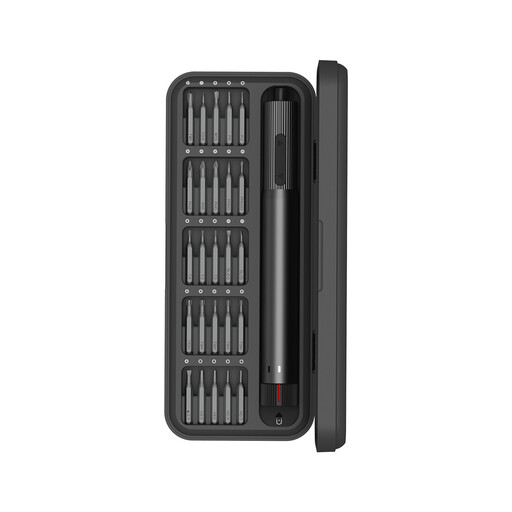
Why we chose it: It's designed for those who frequently assemble furniture or tinker with their electronic devices. The goal? To gain speed and comfort on repetitive screwing tasks without being weighed down by a heavy tool.
Rather than focusing on quantity, it concentrates on the essentials: a set of 25 useful bits, a powerful motor, and a comfortable 80-minute battery life.
Its mini size and portability make it a tool you can slip into a kitchen drawer or a glove box, so it's always on hand.
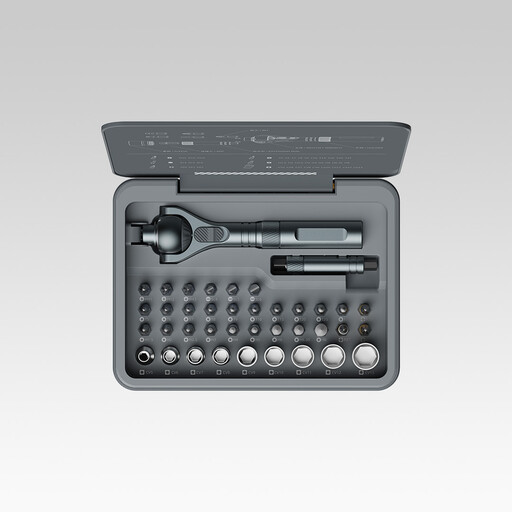
Why we chose it: This is the ideal solution for the all-around DIYer who needs a reliable manual tool for everyday small repairs, and even some automotive repair. Here, the focus is on versatility and robustness above all else.
It relies on the quality of its ratchet mechanism and retractable handle. The magnetic design directly addresses the problem of lost screws, and the 40-piece accessory set is designed for versatility without the fluff.
The retractable handle offers unique flexibility for reaching screws in tight spots where a standard screwdriver would give up.

Why we chose it: For some, the pleasure isn't in the tool but in the project itself. They love the challenge of a meticulous assembly that results in a beautiful object. This is a different kind of assembly kit, focused on hobby and collection.
This isn't a tool, but a creative hobby project. It sidesteps the trap of poor functionality by focusing on the quality of the materials (die-cast metal) and realistic details for a rewarding building experience.
The level of detail, with its opening doors and bonnet, makes it a perfect collector's and display item for any car enthusiast.
Explore our complete selection of products, all tested and approved according to our quality and safety criteria.
Although they look similar, they are not interchangeable. The Phillips (PH) bit has a simple cross shape. The Pozidriv (PZ) bit has a main cross and a second, smaller cross offset at 45°. Using a PH bit on a PZ screw (or vice versa) increases the risk of "cam-out" (slipping) and damaging both the screw and the bit. Most screws in flat-pack furniture are Pozidriv type.
Not entirely. An electric screwdriver is unbeatable for speed on long or repetitive screwing tasks with little resistance. However, a manual screwdriver (especially a ratchet screwdriver) offers better control and more torque for the final tightening or for loosening a very tight screw. The ideal setup is often to have both: the electric one to do 90% of the work, and the manual one for the finishing touches.
Maintenance is simple but essential. After each use, clean the bits to remove any dust or debris. Always store the tools in their screwdriver case to protect them from moisture and impact. Avoid using a screwdriver as a pry bar or chisel, as this will damage the tip and the handle. A well-maintained tool is a companion for years to come.