
Livraison le jour même ou le lendemain

Qualité garantie

Débloquez vos offres de bienvenue: Livraison GRATUITE | Jusqu'à -80 % | 30 jours d'essai gratuits à JoyPlus
Téléchargez l'application
Cutting dies, or stencils, are the indispensable tools for adding a professional and delicate finish to all your craft projects. Whether for card making, decorating a photo album, or personalising an invitation, these metal shapes cut paper with surgical precision. But faced with an overwhelming number of options, it's easy to get lost and end up with disappointing products. As a product expert and avid scrapbooker, my mission is to guide you through the jungle of options to help you make the right choice, regret-free.
First, let's review the most common pitfalls that too often turn a promising purchase into a real headache.
Fortunately, avoiding these setbacks is as simple as checking a few key points that will make all the difference.
Relying solely on a design's beauty is the classic mistake. To ensure your creative card making projects are a success, you need to keep a close eye on three technical criteria.
While most dies claim to be universal, there are always exceptions. Compatibility depends on the width of your machine and the thickness of the die. Before any purchase, check that the die is compatible with standard machines (Sizzix Big Shot, Cuttlebug, etc.). The die's thickness, often linked to its quality, determines the famous 'sandwich' of plates you'll need to assemble for a clean cut without straining your machine. A high-quality die is typically made of carbon steel, a material that offers an excellent balance between thinness and durability.
A die's performance hinges on the quality of its cutting edge. Opt for dies made of high-density carbon steel. This material not only ensures a clean, precise cut, even on thick paper, but it also guarantees the longevity of your tool. A low-grade steel will dull very quickly, especially if you work with materials like cardstock or thin felt. Furthermore, a robust metal better withstands the repeated pressure of the machine and prevents the die from warping.
This is an often-overlooked detail, yet it's crucial for intricate designs like flower dies or highly detailed border dies. Well-designed dies include small holes on their non-cutting side. Far from being a defect, these holes allow you to gently eject the cut-out with a pointed tool without tearing it. The absence of these holes on a complex die turns paper extraction into a tedious, if not impossible, task without damaging your creation.
To help you see how these criteria apply in practice, here are a few products we've selected, each meeting a specific need.
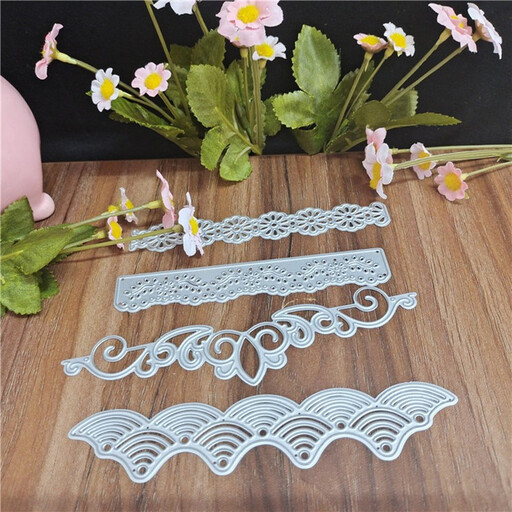
Why it's a great choice: Perfect for starting out, this set of rectangular frames is a true classic. It allows you to create card backgrounds, labels, or photo frames. Its versatility makes it an excellent first investment to get familiar with the technique.
Made from carbon steel, it resists warping and ensures a clean cut. Its simple shapes minimise the risk of tearing, which is perfect for building your skills.
A set of four different sizes offers great flexibility for layering and creating frames for card making.
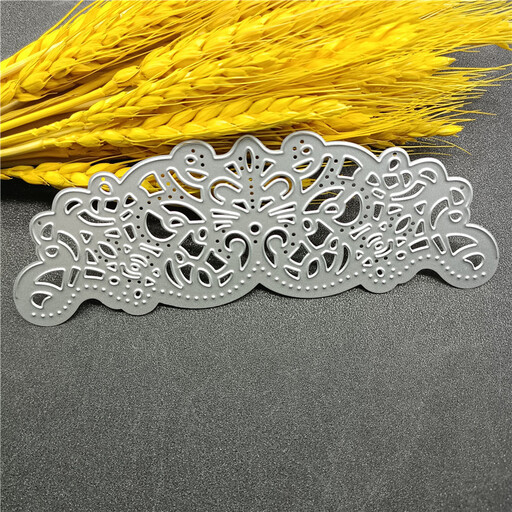
Why it's a great choice: For fans of elegant finishes, this border die is a premium addition to any collection. It creates sophisticated decorative edges on cards or invitations for an instant touch of refinement.
Despite the intricate pattern, its open-work design facilitates cutting without snagging the paper. Its precise cutting edge ensures every detail of the lace is perfectly rendered.
It allows you to create long, continuous decorative borders, perfect for standard-sized cards or scrapbooking pages.
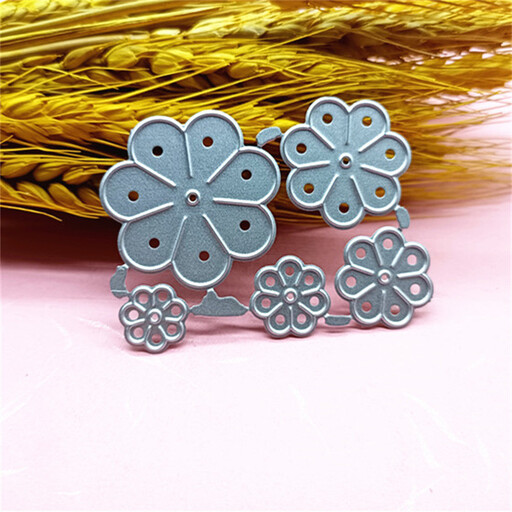
Why it's a great choice: This set is for those who want to take their skills to the next level by creating 3D embellishments. It contains multiple dies of varying petal and leaf sizes, designed to be layered to build flowers with dimension and volume.
Each die has ejection holes to easily remove the cut-outs without damaging them. The quality of the steel guarantees a clean cut, which is essential for a flawless assembly of the different layers.
The ability to create raised floral decorations for a striking visual effect. Perfect for embossing and advanced scrapbooking projects.
We've curated a complete selection of products that meet all our quality criteria.
Finally, let's answer the questions you ask most often.
The vast majority of thin dies (often called "wafer-thin dies") are compatible with standard die-cutting machines. The easiest way is to check the width of the die and compare it to the opening of your machine. As for thickness, you just need to adjust the 'sandwich' of plates according to your machine manufacturer's recommendations.
Yes, most cutting dies can also be used for embossing. To do this, simply replace the bottom cutting plate with a silicone embossing mat. The die will then press the paper into the soft mat to create a raised design, without cutting it.
After each use, small pieces of paper may get stuck. Use a stiff-bristled brush or a pointed tool to gently dislodge them through the ejection holes. For storage, magnetic solutions (sheets or folders) are ideal: they hold the dies securely in place, protect them from damage, and allow you to see your entire collection at a glance.