
Livraison le jour même ou le lendemain

Qualité garantie

Débloquez vos offres de bienvenue: Livraison GRATUITE | Jusqu'à -80 % | 30 jours d'essai gratuits à JoyPlus
Téléchargez l'application
Scrapbooking dies are invaluable tools for adding a touch of elegance and personality to your cards or photo albums. But with the vast array of available models, it's easy to make the wrong choice and end up with disappointing or, worse, incompatible cutting dies. This guide is here to shed light on the essential criteria and help you make the right decision.
Before you fall for a new design, let's review the most common pitfalls that could ruin your paper creations.
To ensure you don't make a mistake, here are the technical points to check before you check out.
The first step is to verify compatibility with your equipment. The good news: most thin dies (often called wafer-thin dies) are designed to work with the majority of machines on the market (Sizzix, Spellbinders, etc.). However, it's still wise to check two things:
A compatible die guarantees smooth operation and a flawless result, without having to force the "sandwich" through the machine.
A die's longevity depends on its composition. Opt for carbon steel, which ensures a lasting sharp edge and a structure that won't warp. Also, examine the sharpness of the cutting edges. Well-sharpened blades are essential for clean cuts, especially on complex designs or for embossing techniques. A good die is versatile: it's not just for cutting. It can also serve as a stencil for inking or be used for dry embossing (with the appropriate silicone mat).
To help you out, here are a few models that meet specific needs, all selected for their quality and versatility.
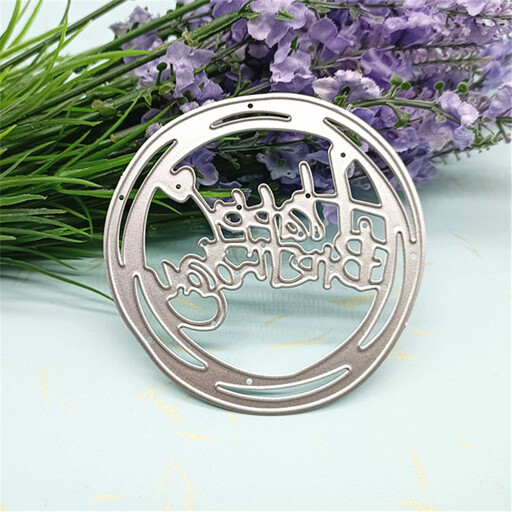
Why we love it: Perfect for anyone who regularly creates birthday cards. This die offers a clear, elegant message, making it a true must-have for card making.
Its clean design and sharp lines minimize the risk of an imprecise cut. Its standard size ensures compatibility with almost all machines.
A perfect text-based design for a recurring occasion. It's an excellent investment for any card-making enthusiast.
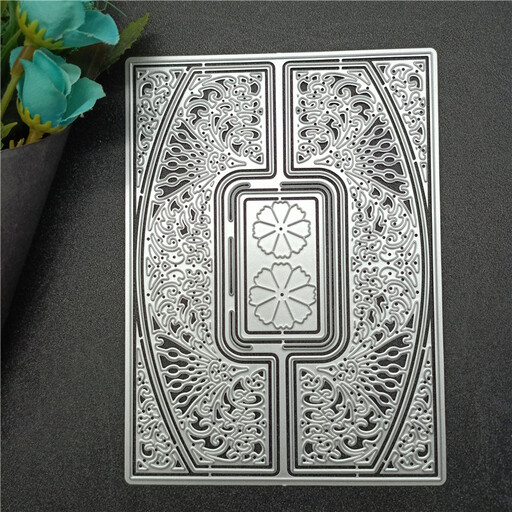
Why we love it: Ideal for creating sophisticated backgrounds or decorative frames. This die brings a touch of elegance and finesse to a scrapbook page or card.
Its open "frame" design ensures a clean cut even on a complex pattern. This avoids the risk of tearing the paper, which is common with solid, highly detailed dies.
It allows you to create a layering and depth effect in a single cut. Perfect for more ambitious card-making projects.
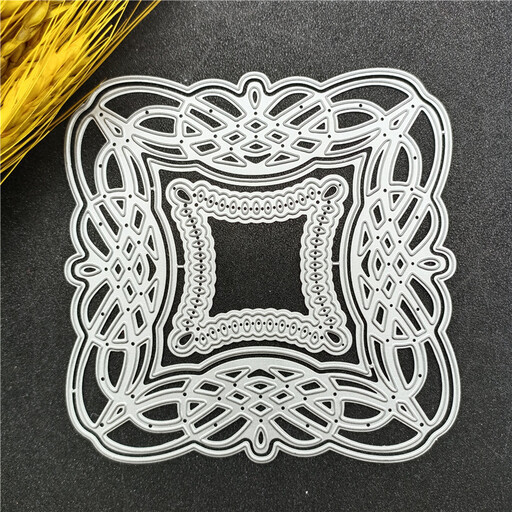
Why we love it: This set is a great entry point into the world of dies. It offers a variety of small designs (butterfly, bird, frame) to use alone or combined for a multitude of projects.
By offering several simple shapes, this kit allows you to practice without investing in a large, complex die that might be difficult to use or incompatible.
Excellent value for money with several designs in one set, ideal for encouraging experimentation and creativity.
These cutting dies are the foundation for even more ambitious creative projects. Explore our complete collection to gather new ideas.
Most thin metal dies are compatible with standard machines. This information is often listed in the product description (look for "compatible with most die-cutting machines"). If in doubt, the easiest way is to consult your machine's manual to find the accepted die thickness and the recommended plate "sandwich."
Yes, absolutely! It's a very common technique. To emboss with a die, you just need to replace one of your cutting plates with a silicone embossing mat. The die will then press the paper to create a raised pattern, without cutting it. It's perfect for adding texture and dimension to your creations.
Proper maintenance significantly extends the life of your dies. After each use, remove any small, stuck paper pieces with a brush or a fine-tipped tool. For storage, magnetic sheets are ideal: they keep the dies flat, protect them, and allow you to see your entire collection at a glance. One final tip: never force a "sandwich" that is too thick into your machine, as you risk bending or breaking the die.