
Livraison le jour même ou le lendemain

Qualité garantie

Débloquez vos offres de bienvenue: Livraison GRATUITE | Jusqu'à -80 % | 30 jours d'essai gratuits à JoyPlus
Téléchargez l'application
Not all scouring sponges for washing up are created equal. An overly abrasive side can mark a frying pan, while a sponge that is too soft may leave stubborn residue behind. For families, frequent cooks and anyone looking for a versatile accessory for the kitchen and bathroom, the choice of material and texture matters more than the colour or claims printed on the packaging.
A scourer designed for very dirty saucepans is not necessarily suitable for a ceramic hob, a non-stick frying pan or decorated crockery. The term “non-scratch” should be interpreted with caution: it generally describes the side intended for certain uses, not necessarily every part of the sponge or every type of material.
For a delicate surface, check the manufacturer’s instructions and test the sponge on an inconspicuous area first. A sponge for fragile surfaces, with a soft or microfibre side, can help reduce the risk, but this test is still essential.
How long a sponge lasts depends on how often it is used, the type of dirt, rinsing and drying. A sponge advertised as “long-lasting” can quickly lose its effectiveness if it remains damp, covered in grease or poorly rinsed. So check the care instructions, including whether it is machine washable, the recommended temperature and how often it should be replaced.
Grease and food residue trapped in the fibres make the sponge less pleasant to use and can encourage unpleasant odours. An absorbent sponge should retain enough water for wiping, while still being easy to rinse. So-called “anti-grease” treatments may help remove dirt during rinsing, but they do not replace thorough washing after every use.
Plant-based cellulose, often made from fibres such as cotton, wood pulp or flax, is valued for its absorbency. It is suitable for wiping worktops as well as for everyday washing up. Some sponges combine this absorbent part with a scouring surface made from synthetic fibres, polymer or reinforced material.
For versatile use, a two-sided design lets you adapt your approach: the soft side for glasses and wiping, and the scouring side for dried-on residue. A machine-washable sponge can also be practical, provided you follow the temperature stated on the packaging.
Scouring surfaces can be categorised, as a practical guide, according to their intended use:
Commercial descriptions are not a universal standard. Instead, compare the compatible surfaces, warnings and conditions of use. The products featured below specify restrictions for non-stick coatings, hot surfaces and very delicate materials.
Rinse the sponge before using it for the first time and after every wash. Wring it out without deforming it, then leave it to dry in a well-ventilated place. Several products recommend replacing the sponge approximately every two months, even if it still appears usable. In a busy household, alternating between two sponges makes drying easier and helps prevent premature wear.
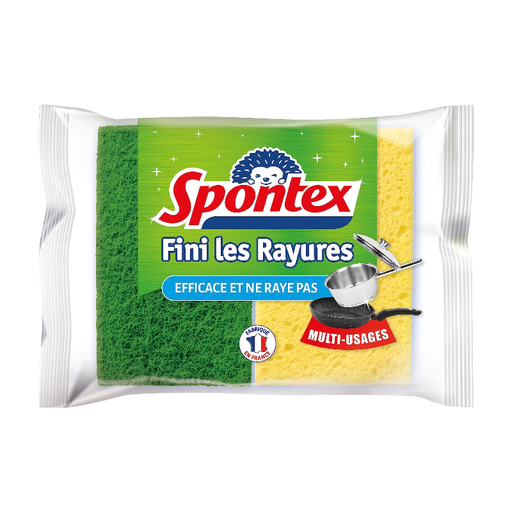
Why this choice suits this profile: This pack of two sponges is suitable for everyday household use if you are looking for a non-scratch model for washing up and certain sensitive surfaces. The product details state that it can be washed in a washing machine or dishwasher at 40 °C.
Its scouring side is described as suitable for delicate surfaces, but the product details still recommend testing it first.
Plant-based section made from cotton, wood pulp and flax; resistant to diluted bleach, in the proportions specified.
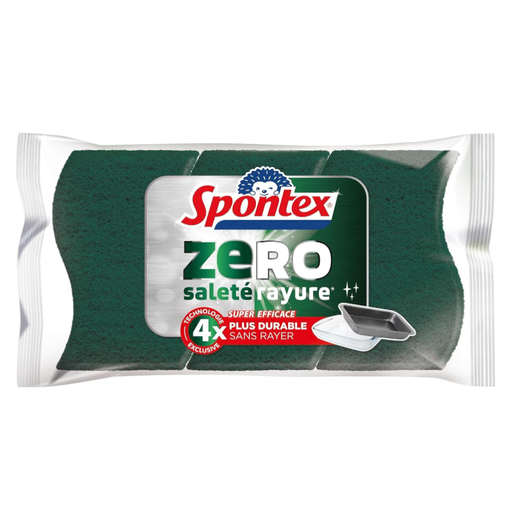
Why this choice suits this profile: This pack of three sponges is aimed at households looking for good resistance against stubborn dirt, while retaining a side described as non-scratch.
The product details state that it lasts up to four times longer than a standard sponge; this comparison nevertheless depends on the conditions of use.
Three sponges; plant-based sponge; machine washing at 40 °C specified by the manufacturer.
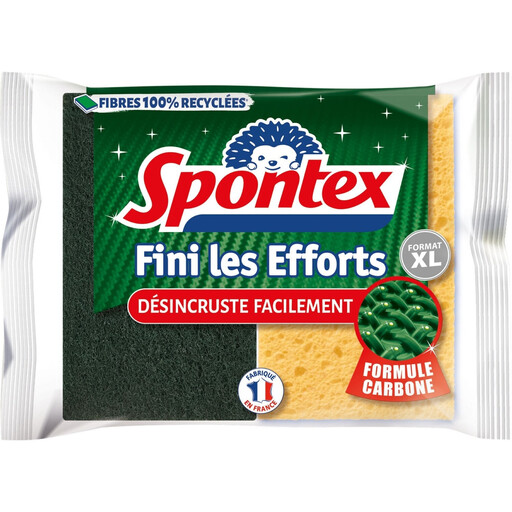
Why this choice suits this profile: Its carbon-reinforced surface is intended for intensive cleaning, particularly when stubborn residue builds up in the kitchen.
The product details recommend rinsing the scouring surface thoroughly and allowing it to dry completely between uses.
Two sponges in cellulose; reinforced surface for tackling persistent dirt; use with washing-up liquid as required.
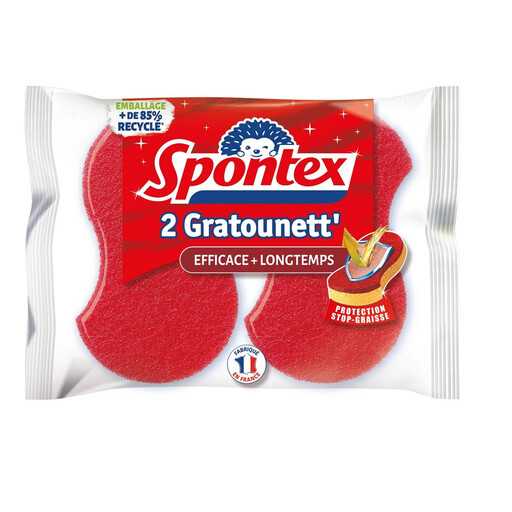
Why this choice suits this profile: People who regularly wash greasy dishes may prefer an absorbent sponge designed to make rinsing the scouring side easier.
The Stop-Grease treatment is described as helping to remove residue when rinsing; nevertheless, rinsing the sponge after every use remains essential.
Two sponges; construction described as durable and absorbent; made in France.
We have put together a complete, real-time updated list of products that meet these demanding selection criteria and European safety regulations.
An antibacterial sponge does not make these steps unnecessary. The advertised treatment applies to a specific part of the product and does not turn the accessory into a disinfecting device. For non-stick or very delicate surfaces, follow the restrictions stated on the packaging.
Choose a side explicitly described as non-scratch and check that the product details authorise this use. Avoid reinforced surfaces designed for very stubborn dirt if they are not recommended for non-stick coatings. A discreet test, without applying excessive pressure, is still advisable.
Its lifespan varies according to how often it is used and how well it is cared for. Several manufacturers recommend replacing the sponge approximately every two months. With intensive use, replace it sooner if it gives off a persistent odour, becomes misshapen or shows visible signs of wear.
They can reduce how often you need to buy replacements if they withstand washing properly and are replaced at the first signs of wear. Compare the permitted temperature, the number of pieces in the pack and the drying instructions, rather than relying solely on the promise of long-lasting performance.