
Same-day & Next-day Delivery

Quality Guaranteed

Unlock Your Welcome Offers: FREE Delivery | Up to 80% OFF | Free 30-day JoyPlus trial
Download the APP
A sponge that tears within a few days, holds on to odours or scratches a non-stick pan ends up costing far more than expected. Scouring sponges should not be chosen based solely on their colour or claims of effectiveness: their composition, texture and care requirements all play a decisive role in everyday use.
Before you add anything to your basket, bear these three pitfalls in mind:
A double-sided sponge generally combines an absorbent section with a side designed for scrubbing. This side may be made from synthetic fibres, microfibres, abrasive particles or even a metal mesh.
For everyday washing-up, it is best to choose a non-scratch sponge, especially if you regularly clean a ceramic hob, pans or glasses. This does not mean it will be suitable for every surface: manufacturers often recommend testing it in an inconspicuous area first.
For heavily encrusted dishes, oven racks or barbecues, a firmer sponge can be useful. Stainless-steel spirals are designed to tackle stubborn dirt, but should not be used on delicate or non-stick surfaces.
A cellulose sponge, made from plant fibres such as cotton, wood pulp or linen, absorbs water and helps washing-up liquid foam. It can also be used to wipe a worktop or mop up a splash.
This absorbency does, however, require a little care: rinse the sponge after every use, wring it out and leave it in a well-ventilated place. Retaining water is useful while washing up, but becomes a drawback if the sponge stays wet all the time.
Some three-layer models contain synthetic foam between the cellulose and the scouring side. This construction can make the sponge easier to hold and help distribute the cleaning product, while keeping the absorbent and scrubbing functions separate.
The displayed price of a pack of sponges is not enough to judge its value for money. Also compare:
A model presented as durable should be cared for according to its instructions. Washing does not eliminate the need for regular replacement: as soon as the sponge starts to fray, becomes misshapen or retains odours, it is time to replace it.
The models below meet different needs. The features listed are taken from the product descriptions and do not guarantee identical results on every surface.
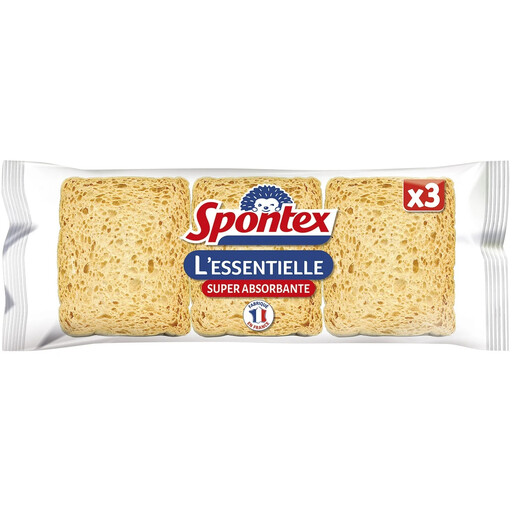
Why this choice suits this profile : This pack of three sponges is a practical starting point for equipping the kitchen and bathroom, as well as tackling everyday household cleaning.
The three-unit pack means you do not have to replace your sponges too quickly. The product description states that the absorbent texture remains flexible over repeated use.
Three sponges suitable for washing-up and everyday cleaning. The product is presented as being made in France.
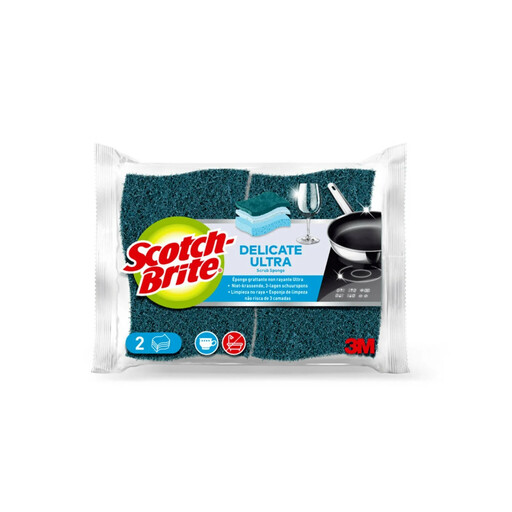
Why this choice suits this profile : Its three-layer design is ideal for households looking for a comfortable grip and several functions combined in one accessory.
The side described as non-scratch helps reduce the risk of excessive abrasion. However, testing it first on delicate surfaces is still recommended.
A synthetic layer distributes the cleaning product, while a cellulose layer absorbs liquids. The pack contains two sponges.
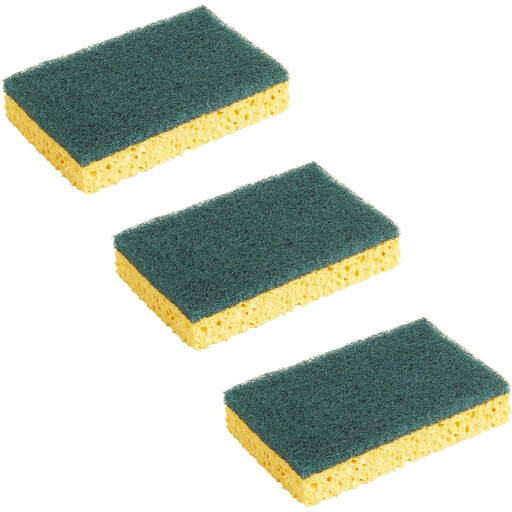
Why this choice suits this profile : This model is aimed at households that do a lot of washing-up or want to use the same product for both the kitchen and everyday cleaning.
The product description mentions machine washing at 70 °C, along with a surface designed to withstand repeated use. However, the scouring side is not recommended for delicate surfaces.
Absorbent plant-based cellulose, a three-piece pack and care at 70 °C stated by the manufacturer.
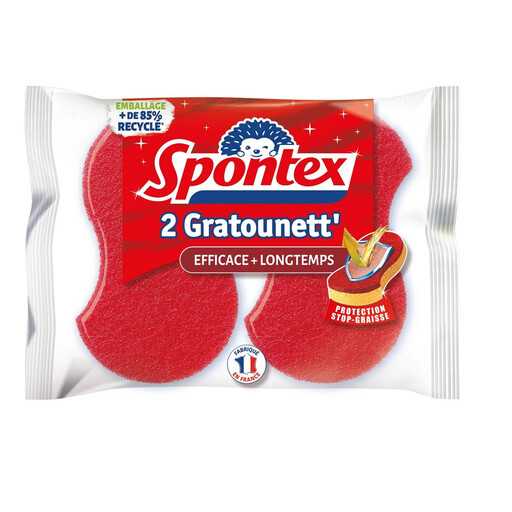
Why this choice suits this profile : This pack is intended for anyone who regularly cleans greasy pans, saucepans and utensils.
The product description states that its treatment is designed to make it easier to rinse away grease and dirt caught in the scouring fibres.
A model presented as absorbent, durable and easy to rinse. The product description states that it is made in France.
We have selected a complete, real-time updated range of products that meet these selection criteria and European safety requirements.
A few simple habits are enough to limit wear and unpleasant odours:
Choose a side described as non-scratch and check the pan manufacturer's recommendations. Even a sponge labelled non-scratch should be tested in an inconspicuous area first. Avoid metal spirals and abrasives intended for heavily encrusted dirt.
It depends on how often it is used, which household cleaning products are applied and the condition of the sponge. Replace it as soon as it starts to fray, becomes misshapen, absorbs less effectively or still smells unpleasant after rinsing. Some product descriptions recommend replacing a sponge approximately every two months, while other models can be washed to extend their lifespan.
Rinse it immediately after cleaning a greasy surface, wring it out and leave it to dry upright in a well-ventilated place. Machine or dishwasher washing is only suitable if authorised in the product instructions. For hygiene reasons, use a different sponge for washing-up, the bathroom and the toilet.