
Livraison le jour même ou le lendemain

Qualité garantie

Débloquez vos offres de bienvenue: Livraison GRATUITE | Jusqu'à -80 % | 30 jours d'essai gratuits à JoyPlus
Téléchargez l'application
A sponge that absorbs poorly, becomes misshapen within a few days or holds on to grease can turn washing up and cleaning into an endless chore. Conversely, an abrasive side that is too harsh could mark a non-stick frying pan, ceramic hob or delicate sink.
Before buying scouring sponges, it is therefore worth looking beyond the colour, number of pieces and promises on the packaging. Here are the criteria to consider when choosing sponges suitable for washing up, the kitchen or the bathroom.
The non-scratch sponge label does not mean that every material can be scrubbed without care. A particle trapped between the sponge and the surface, excessive pressure or cleaning a hot surface may be enough to leave marks.
Manufacturers generally recommend testing the sponge on an inconspicuous area first. For non-stick frying pans, glass, glossy surfaces and certain hobs, use only the side intended for gentle cleaning.
A pack of 24 sponges may seem economical, but its value also depends on durability, absorption and how often the sponges need replacing. A sponge that remains wet or greasy after every use can become unpleasant to use long before it shows signs of wear.
Instead, compare the number of pieces, whether they can be washed and the replacement recommendations. A smaller pack that is machine washable may be more appealing to a household looking for long-lasting sponges.
The requirements are not the same for plates, saucepans, shower limescale or mirrors. A sponge designed for stubborn dirt is not necessarily suitable for shiny taps. Conversely, a bathroom sponge may not have the right texture for food residue.
To avoid mixing them up, assign a colour or type of sponge to each area: kitchen, washing up, bathroom and general cleaning.
Double-sided sponges make it easy to switch between different tasks. The scouring side helps loosen residue, while the absorbent side is used to wipe, rinse and create lather with the cleaning product.
Some three-layer models combine synthetic foam, a cellulose layer and a scouring surface. This construction can improve grip and help distribute liquid more evenly. An ergonomic shape is also useful during long washing-up sessions.
A good sponge should retain enough water for wiping without staying soaked for hours. After each use, rinse it thoroughly, wring it out and leave it to air-dry in a well-ventilated place.
Plant-based materials, such as cellulose made from cotton, wood or flax depending on the product specifications, are often chosen for their absorbency. However, they still require regular care.
Some machine-washable sponges can withstand a temperature specified by the manufacturer, often 40 °C and, for some models, even higher. Always follow the care label: fabric softener, tumble drying or excessive heat can weaken the fibres.
Washing does not remove the need to replace the sponge regularly. Replace it as soon as it starts to break down, develops a persistent odour, loses its shape or no longer rinses properly. For several Spontex products featured below, the stated indicative lifespan is around two months, depending on the condition of the product and how often it is used.
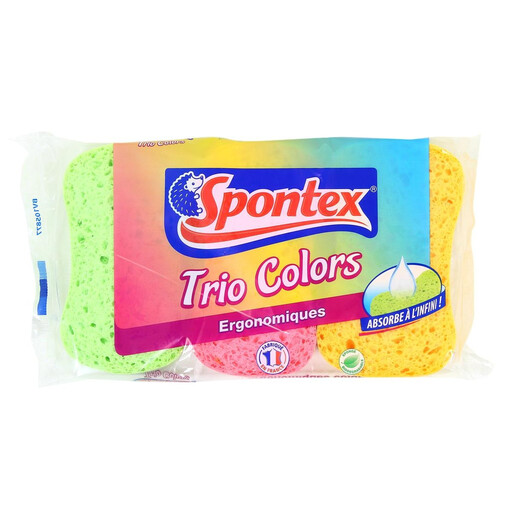
Why this choice suits this profile : This pack of three sponges is a good first option for washing up and everyday kitchen cleaning. Their ergonomic shape makes them comfortable to hold, while the polyurethane material is described as highly absorbent.
The smaller pack means you do not have to build up a large stock before checking that the shape and absorbency suit you.
Ergonomic grip, high absorbency according to the product description, and versatile use in both the kitchen and bathroom.
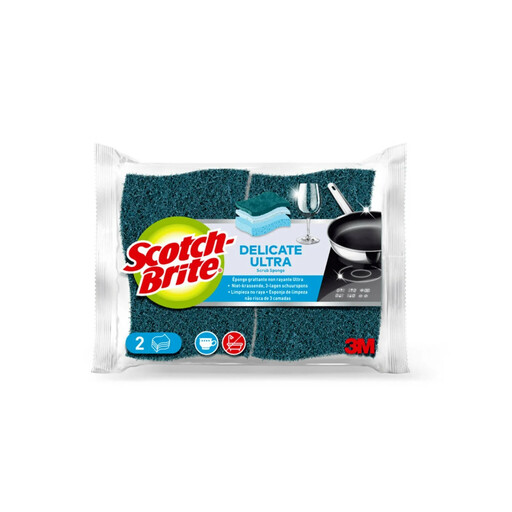
Why this choice suits this profile : Users who pay close attention to design will appreciate the combination of three layers: synthetic sponge to distribute the product and a cellulose layer to absorb liquids and help create lather.
The non-scratch claim is accompanied by a recommendation to test the sponge first, so each surface should be checked separately.
Three-layer construction, grey colour and intended use on different surfaces throughout the kitchen and home.
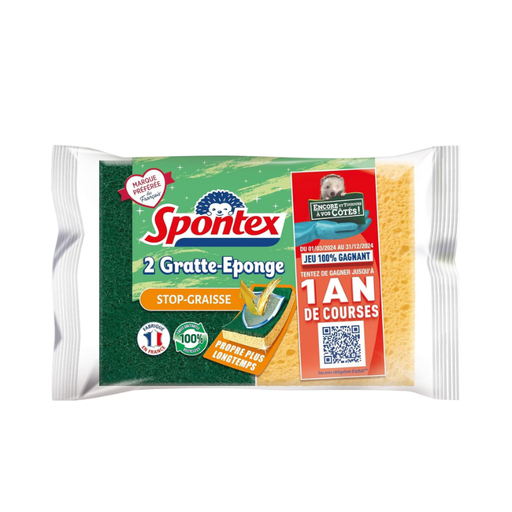
Why this choice suits this profile : This model is aimed at households that frequently wash greasy dishes and want an absorbent sponge that can be washed at 40 °C. According to the product description, its plant-based section combines cotton, wood pulp and flax.
The Stop-Grease system is described as helping to limit grease and dirt being retained in the green fibres. The sponge must still be rinsed after every use.
Machine washable at 40 °C, plant-based absorbent section and a design suited to washing up and everyday cleaning.
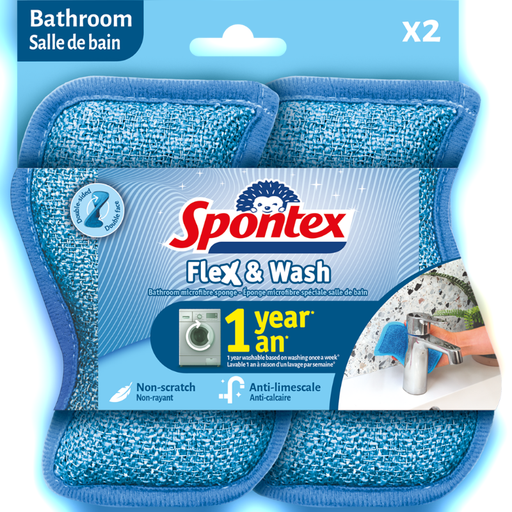
Why this choice suits this profile : Its microfibre side is designed for cleaning mirrors and glass, while the scouring side tackles limescale and bathroom dirt.
The two sides separate gentle wiping from scrubbing. The product description recommends washing at up to 40 °C and testing the sponge first on an inconspicuous area.
Machine washable up to 52 times according to the product description, flexible shape and microfibre side designed to help minimise marks on glass.
We have put together a complete, real-time updated selection of products that meet these demanding criteria, as well as European safety regulations.
Choose a side described as non-scratch and test it on a small, inconspicuous area. Do not use the standard abrasive side without first checking the manufacturer's recommendations. Also avoid scrubbing a hot surface or allowing particles to get trapped between the sponge and the coating.
It depends on how often it is used, the products applied and drying conditions. Several products recommend replacing the sponge after around two months, but a sponge that smells unpleasant, frays or remains greasy should be replaced sooner.
They can reduce how often you need to buy replacements if they retain their shape and effectiveness after several washes. Check the permitted temperature, whether fabric softener is prohibited and the stated number of wash cycles. The true cost also depends on the price of the pack and how long the sponge actually lasts at home.