
Livraison le jour même ou le lendemain

Qualité garantie

Débloquez vos offres de bienvenue: Livraison GRATUITE | Jusqu'à -80 % | 30 jours d'essai gratuits à JoyPlus
Téléchargez l'application
Choosing a scouring sponge?? It seems simple enough. Yet, disappointment is all too common. You thought you'd found the perfect tool for your kitchen cleaning, but after just a few uses, your brand-new non-stick pan is covered in micro-scratches. Worse, the sponge splits in two after a week, with the scrubbing layer separating from the absorbent part. These mishaps aren't inevitable; they're often the result of marketing promises that are too good to be true.
Before your next checkout, keep these two common pitfalls in mind?:
non-scratch sponge label doesn't guarantee absolute safety on all surfaces. A material that's harmless on stainless steel can easily ruin a delicate non-stick coating or a glass cooktop.This guide is here to help you decode the technical jargon and choose a sponge that truly meets your needs, combining effectiveness with care for your cookware.
To avoid any more unpleasant surprises, you first need to understand what sets a good sponge apart from the rest. Three criteria are under the microscope?: the scrubbing-side material, the composition of the absorbent side, and the durability of its construction.
The abrasive side, the well-known scouring pad, is designed to lift the most stubborn residues. But be warned, not all materials are created equal.
The soft side of a dual-sided sponge is just as crucial. It's used to wipe surfaces, absorb liquids, and lather up dish soap.
A good dish sponge must stand the test of time and repeated use. The quality of the adhesive bonding the scrubbing and absorbent sides is therefore paramount. As for ergonomic shapes (S-shaped, with curved edges...), they are far from being mere gimmicks; they offer a better grip and make it easier to clean tight corners, like the inside of a glass or the bottom of a casserole dish.
Instead of a random list, we've selected products for specific user profiles. The goal is to help you find the sponge that will truly fit into your daily routine.
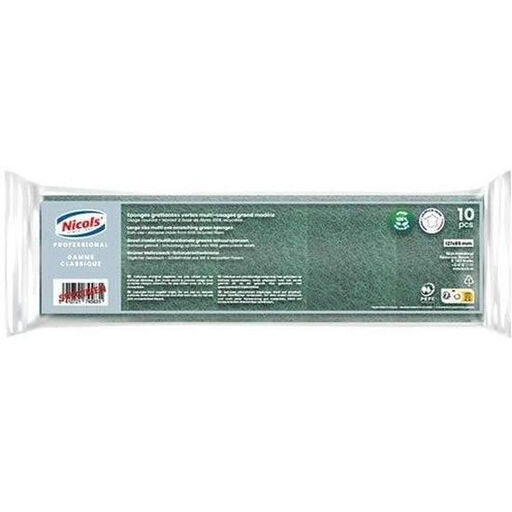
Why we recommend it : For those seeking a simple, effective, and economical solution for everyday cleaning. This 10-pack offers excellent value for money for all common tasks, from washing dishes to wiping countertops.
No false promises here. Its classic green side is made for standard scrubbing, period. This avoids the disappointment of "all-in-one" products that end up being good at nothing.
Unbeatable value : A multi-month supply for a low price. All-around versatility : Perfect for dishes, sinks, tiles, and other non-delicate surfaces.
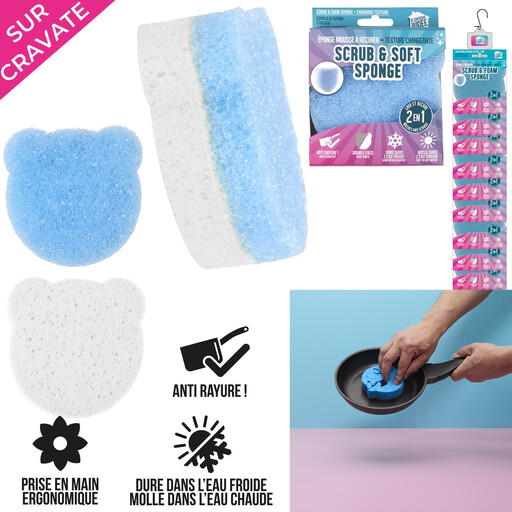
Why we recommend it : The essential ally for anyone juggling non-stick pans, valuable glassware, or glass cooktops. This chameleon-like sponge changes texture on demand, offering a two-in-one solution to scrub without scratching.
It solves the "non-scratch" sponge dilemma by putting you back in control. A quick rinse under warm water, and its surface becomes soft enough for the most delicate coatings. The risk of scratching is simply eliminated.
Temperature-reactive technology : It firms up in cold water for heavy-duty cleaning and softens in warm water for a gentle touch. Truly non-scratch design : Its special polymer is engineered never to scratch, even when rigid.
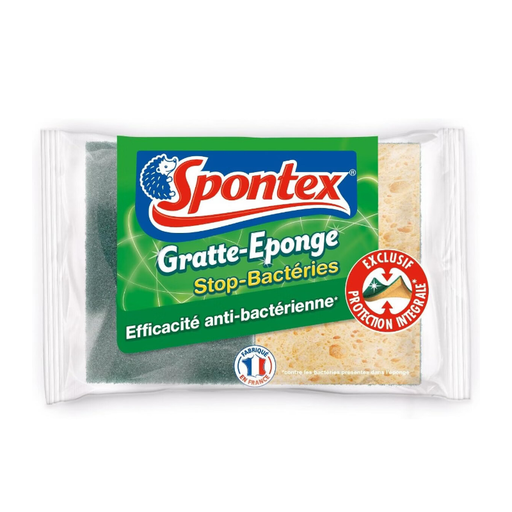
Why we recommend it : For anyone unsettled by the idea of a bacterial breeding ground in their sink. This model from Spontex, a leading brand, tackles the problem at its source by integrating an antibacterial treatment into the core of its fibres.
It addresses the weak point of all sponges: hygiene. According to Spontex, the exclusive treatment in the scrubbing layer prevents the growth of bacteria and bad odours.
Antibacterial treatment : Integrated directly into the abrasive layer for impeccable hygiene. Plant-based sponge : The cellulose absorbent side is ultra-effective. Machine washable for easy disinfection.
Explore our full selection of products that meet our selection criteria and current safety standards.
For basic hygiene reasons, experts agree that you should replace it every two to four weeks, depending on your usage. The tell-tale signs include a scrubbing side that's falling apart, a misshapen sponge, or a persistent odour even after washing. If you notice any of these, it's time to toss it?!
The basics: after each use, rinse it thoroughly with clean water to remove food residue and soap. Squeeze it out well and let it air-dry (a sponge holder is ideal)—never leave it in the bottom of a wet sink. For a deep clean, many sponges (especially cellulose ones) can be safely run through the dishwasher or a 40?°C machine wash cycle.
Caution is still advised. A sponge labelled scratch-free will always be safer than the classic green scourer. However, the fragility of non-stick coatings varies greatly from one brand to another. The best practice is to always test it on a small, hidden area first. For absolute peace of mind, temperature-reactive models or those explicitly designed for delicate surfaces remain the safest choice.