
Livraison le jour même ou le lendemain

Qualité garantie

Débloquez vos offres de bienvenue: Livraison GRATUITE | Jusqu'à -80 % | 30 jours d'essai gratuits à JoyPlus
Téléchargez l'application
A scouring sponge? It seems like a simple, almost trivial purchase. Yet, between marketing promises and the reality of daily use, it's easy to make the wrong choice. A sponge that crumbles in a week, another that scratches your brand-new pan… you know these frustrations all too well. This guide is here to help you cut through the noise and choose the model that truly fits your needs, whether for everyday dishwashing or a deep clean of your kitchen and bathroom.
Before you buy, let's break down the most common pitfalls:
To avoid falling into these traps, focus on three key points that make all the difference in the performance and lifespan of your dual-sided sponge.
This is the heart of the matter: the part that scrubs. There are two main types:
Its absorbency is just as crucial for wiping surfaces, holding water, and dish soap.
A sponge's quality is also judged by its long-term resilience and ease of care. A scrubbing sponge that is machine or dishwasher safe (usually at 40°C) can be used for much longer, which is both more hygienic and more economical. Buying a quality multi-pack of sponges is often a smart move to reduce the cost per unit and always have a fresh one on hand.
Rather than an endless catalogue, here is a selection of products that meet specific needs, all validated against our criteria.
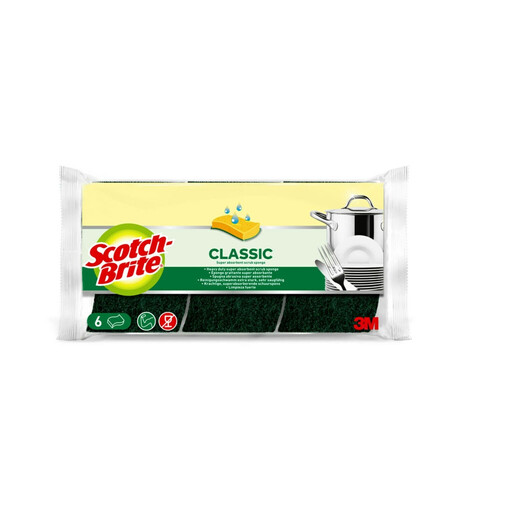
Why we recommend it: This multi-pack offers an excellent price-to-performance ratio for everyday cleaning. It's the reliable choice for those who want no-fuss results on dishes and durable surfaces.
The false economy. By relying on proven durability and a multi-pack format, the math is simple: no more buying cheap sponges that don't even last a week.
Robustness and efficiency: The green scouring pad is built to last, while the vegetable sponge is machine washable at 40°C for impeccable hygiene.
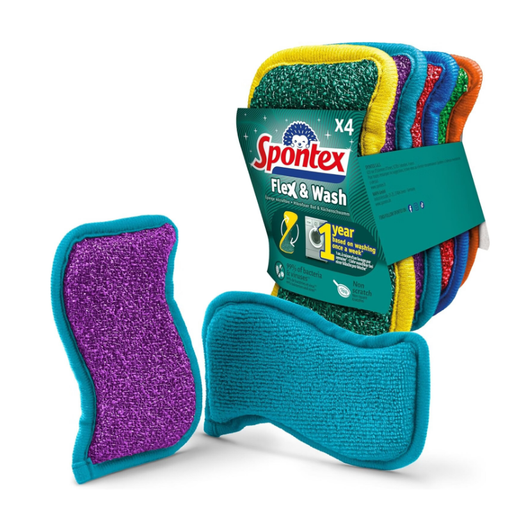
Why we recommend it: Perfect for modern kitchens with fragile surfaces (induction hobs, non-stick pans, lacquered worktops) and for anyone looking to invest in a long-lasting solution.
The "universal non-scratch" myth. Its scouring side is specifically engineered not to scratch, and its microfibre side ensures a streak-free finish. You can clean with complete peace of mind.
Ultra-reusable and hygienic: Machine washable over 50 times, it's designed to last for about a year. The manufacturer even claims its microfibre side eliminates 99% of bacteria with water alone.
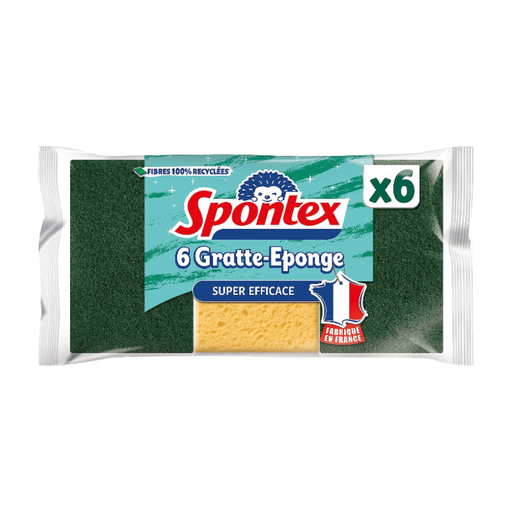
Why we recommend it: For those who want to combine an ecological conscience with effectiveness, without compromise. The bonus? It's made in France from recycled materials.
Superficial greenwashing. Here, the commitment is tangible: the "100% recycled fibres" claim for the scouring pad is a verifiable fact that goes far beyond simple cardboard packaging.
Smart composition and maintenance: Its sponge side is 100% vegetable-based and its scouring pad is entirely recycled. The icing on the cake is that it's machine washable at 40°C to extend its life and reduce waste.
We've curated a complete selection of products that meet our demanding selection criteria.
For obvious hygiene reasons, the rule of thumb is to change it every two weeks or so (or up to a month with moderate use). If your sponge is washable, its lifespan is extended accordingly. The warning signs? A persistent odour, deformation, or a scouring pad that no longer grips.
Several methods can keep it sanitary for longer. The simplest: run it through the dishwasher on the top rack during a normal cycle. You can also wash it in a washing machine at 40°C or 60°C (check the label first). A modern take on an old trick? Submerge it in a bowl of water and microwave it on full power for one to two minutes (be careful, make sure it's fully saturated and contains no metal!).
The term "non-scratch" means it is much gentler on delicate surfaces than a classic abrasive sponge. However, caution is still advised. Our advice: always test it on a small, inconspicuous area before tackling a very fragile or new surface (like a lacquered cabinet or glossy plastic). Don't forget that the pressure you apply also plays a crucial role.