
Livraison le jour même ou le lendemain

Qualité garantie

Débloquez vos offres de bienvenue: Livraison GRATUITE | Jusqu'à -80 % | 30 jours d'essai gratuits à JoyPlus
Téléchargez l'application
Buying a children’s or adult scooter is about more than simply choosing a colour or design you like. From three-wheeled models for beginners and folding scooters designed for everyday journeys to freestyle versions built for performing tricks, each design has a direct impact on stability, comfort and durability.
However, some marketing claims need to be viewed with a little caution. A scooter described as “all-terrain” may prove uncomfortable on uneven ground if its wheels are too small. A light-up model will probably catch a child’s eye, but that does not guarantee an effective brake or a suitable handlebar. As for an adult electric scooter with a long claimed range, it may lose several kilometres depending on the rider’s weight, the terrain, the temperature and tyre pressure.
Here are the key points to check before you buy.
A three-wheeled children’s scooter generally offers greater stability when setting off. Its two tilting front wheels allow the rider to turn by shifting their body weight – an intuitive technique for children who are gradually learning to steer their scooter.
A two-wheeled scooter is more manoeuvrable and better suited to older children, teenagers and adults. However, it requires greater balance. For a child aged 3 to 5, a three-wheeled model can make those first outings easier, particularly on a flat surface.
The recommended age is not enough to choose a scooter. You should also check the maximum permitted load. Some models designed for young children are limited to 20 kg, while versions for teenagers and adults can sometimes support up to 220 pounds, or around 100 kg.
Exceeding this limit accelerates wear on the wheels, brake and folding mechanism. The load refers to the rider’s weight and, depending on the manufacturer’s instructions, the weight of any accessories being carried.
For an adult electric scooter, the headline figures are generally achieved under very specific conditions. A slope, headwind or heavier rider can significantly reduce the range. Also check for a mechanical brake, lighting and tyres suitable for your journeys.
In France, using a motorised personal mobility vehicle on public roads is subject to specific rules. Before riding on the road, check the current requirements relating to age, insurance, equipment and permitted areas. The children’s models featured here are not intended for use on roads open to traffic.
A height-adjustable scooter can grow with a child or be used by several members of the family. The handlebar should be adjusted so that the rider’s arms remain slightly bent, without forcing them to lean too far forwards.
For a beginner, tilt steering is often easier to master. For freestyle riding, it is better to prioritise a rigid frame and a handlebar capable of withstanding repeated movements.
Large polyurethane wheels roll more easily over smooth surfaces and absorb minor unevenness better than models fitted with very compact wheels. ABEC 5 bearings are common on leisure scooters. An ABEC-9 bearing, as found on some freestyle models, is a different specification stated by the manufacturer; this rating alone is not enough to assess overall quality.
A non-slip aluminium deck, a steel or aluminium frame and non-slip grips all contribute to more controlled riding. For an all-terrain scooter, focus mainly on the tyre diameter, their design – pneumatic or solid – and whether suspension is fitted.
A rear brake operated by foot is often fitted to children’s models and two-wheeled scooters. It allows you to slow down gradually, provided you learn to use it without suddenly locking the wheel.
The mechanism on a folding scooter should lock securely once the handlebar has been extended. Regularly inspect the hinge, screws and brake. Folding makes it easier to store the scooter in a boot or cupboard, but it should never compromise the rigidity of the handlebar.
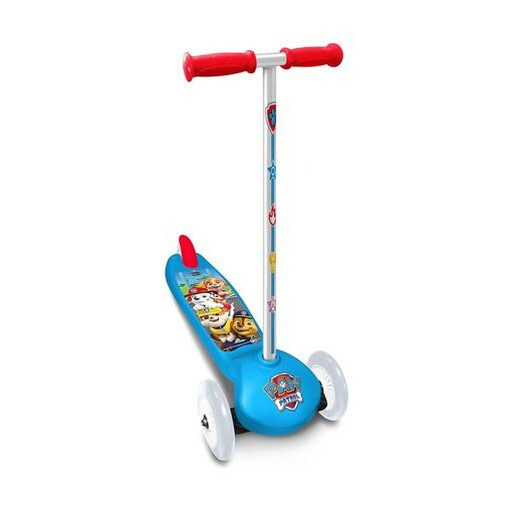
Why this choice suits this profile : Its three-wheel configuration is suitable for children aged 3 and over who are discovering steering and balance in a garden, courtyard or pedestrian park.
The 20 kg limit and use on flat surfaces are clearly stated. This makes it easier to avoid choosing the wrong product for an older child or urban journeys.
Two tilting front wheels, non-slip deck, ABEC 5 bearings and a rear foot brake.
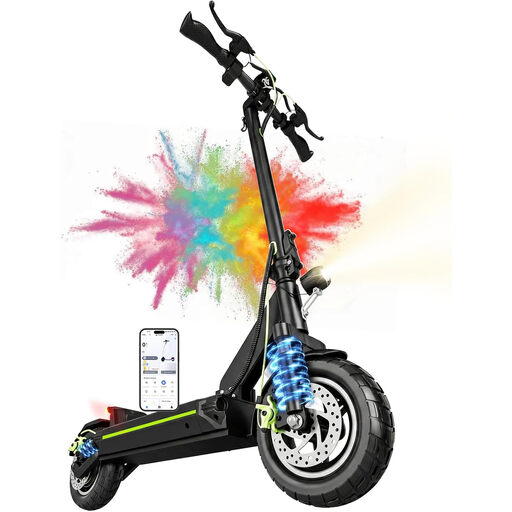
Why this choice suits this profile : This adult electric scooter is designed for regular journeys and routes that combine different types of surface.
The product listing states a maximum speed of 25 km/h, dual braking and 10-inch tyres. However, the stated range should be considered in light of real-world riding conditions.
Motor rated at 500 W, front and rear suspension, lighting, indicators and an IP55 rating according to the product listing.

Why this choice suits this profile : This model is aimed at children aged 8 and over, teenagers and adults who practise freestyle in a suitable environment.
Its rigid construction and T-6061 aluminium deck are suited to tricks, unlike a folding scooter designed for leisurely rides.
110 mm solid wheels, ABEC-9 bearings, rear brake and a handlebar described as adjustable aluminium.
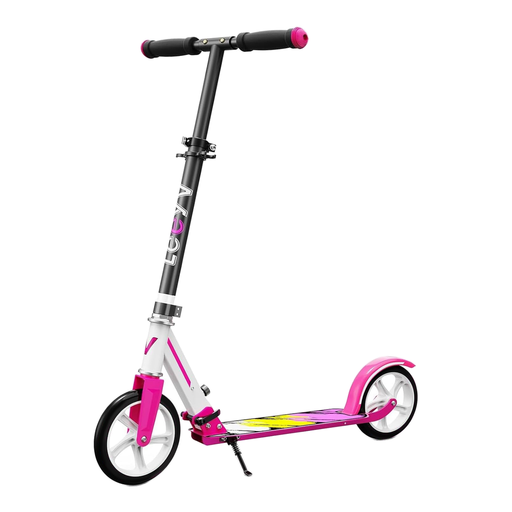
Why this choice suits this profile : Its adjustable handlebar and stated maximum load of 220 pounds make it suitable for a child aged 6 to 12, a teenager or an adult.
The maximum load, brake type and wheel diameter are specified, making it easier to compare with a more limited children’s model.
Compact folding, 205 mm polyurethane wheels, non-slip grips and a rear brake.
We’ve brought together a complete, real-time updated selection of products that meet these demanding criteria, as well as European safety standards.
It depends on the child’s balance and confidence, but two-wheeled models are generally better suited to older children, often from the age of 6. Always check the manufacturer’s stated recommended age, handlebar height and maximum load.
Clean the frame and deck with a slightly damp cloth. Regularly check that the wheels are tightened, that the brake works correctly and that the folding mechanism locks securely. On an electric model, also check the tyre pressure and avoid using high-pressure water jets.
The cost mainly depends on electricity consumption, how often you recharge, and wear on the tyres and battery. You should also budget for protective equipment, maintenance and, where required by law, suitable insurance. The stated range never guarantees the same distance in every condition.