
Livraison le jour même ou le lendemain

Qualité garantie

Débloquez vos offres de bienvenue: Livraison GRATUITE | Jusqu'à -80 % | 30 jours d'essai gratuits à JoyPlus
Téléchargez l'application
Finding a gift that's both fun and educational can often be a real challenge. Faced with overflowing shelves, it's easy to feel a bit lost. However, a great science toy for kids can change everything: it sparks curiosity, sharpens logic, and introduces the core principles of the world around us, all while having fun.
This guide is here to help. As product recommendation experts at Joybuy, our mission is simple: to give you practical advice and a selection of top picks to help you make the right choice, without the marketing fluff.
Before diving into our selection, let's review a few essential criteria to ensure you get it right.
A toy that's too simple will quickly be forgotten, while one that's too complex can lead to frustration. Following the manufacturer's recommended age range is an excellent rule of thumb. For example, a gift for a 5-year-old should focus on hands-on, sensory discovery, whereas an older child can tackle more abstract concepts or assemblies that require greater precision.
Science is a vast universe. Does your child have their head in the stars? A miniature solar system or a planet projector will surely be a hit. If they prefer exploring the garden, an insect observation kit will be perfect for discovering local wildlife. For curious minds who love to understand how things work, a kid's human body model or a logic game will be captivating. Observing their passions is always the best guide.
Safety is non-negotiable. Ensure the toy displays the CE mark, which guarantees compliance with European safety standards. Opt for sturdy, non-toxic materials like ABS plastic, known for its durability and impact resistance. This will ensure hours of play in complete safety.
Here are a few gems that stand out for their playful approach and genuine educational potential.
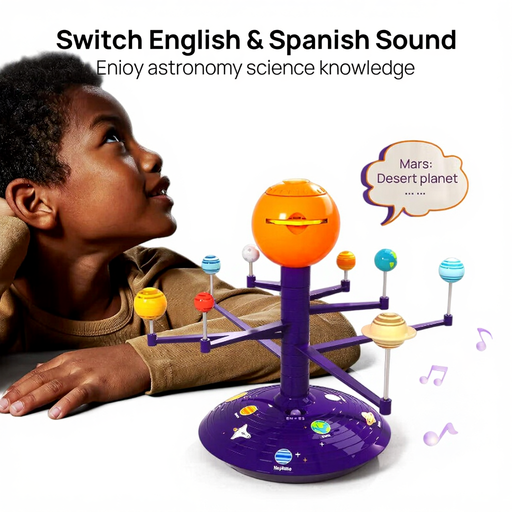
What makes it stand out: This 2-in-1 toy combines a buildable planet model with a projection function and audio guide. It transforms a bedroom into a mini-planetarium for a fully immersive astronomy lesson.
Highlights:
Who is it for? Perfect for budding astronomers aged 3 to 8. An excellent first educational toy to introduce the basics of our solar system.
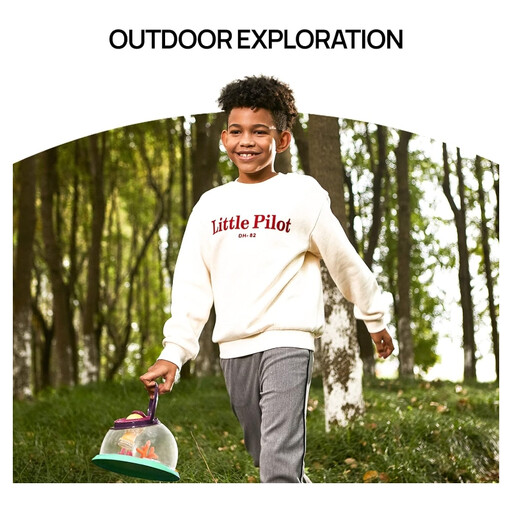
What makes it stand out: This kit encourages outdoor exploration. Its clever design, featuring a 360° rotating magnifier and an animal-friendly capture system, allows kids to observe little critters without harming them.
Highlights:
Who is it for? Ideal for budding naturalists aged 3 to 12. An excellent STEM toy for reconnecting with nature and the fascinating world of insects.
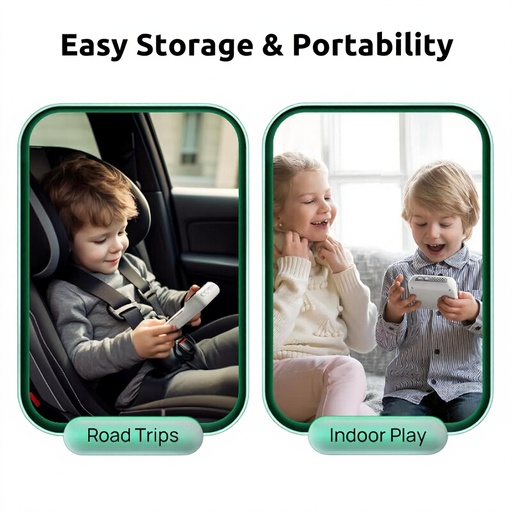
What makes it stand out: This pocket-sized electronic game features a hundred challenges to build concentration, observation, and memory. Its compact format makes it the ideal travel companion.
Highlights:
Who is it for? For kids aged 5 and up, and even for adults! It's an excellent logic game for fans of puzzles and speed challenges. A great Christmas gift idea or birthday present.
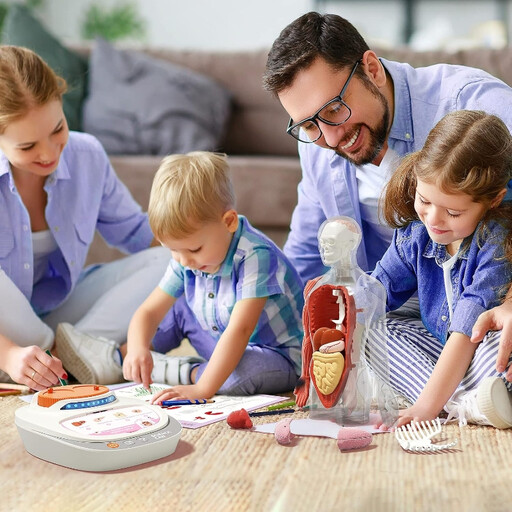
What makes it stand out: This model finally makes anatomy fun and accessible. With its removable organs and audio quizzes, children learn how the human body works in a very hands-on way.
Highlights:
Who is it for? For curious kids aged 6 to 12 who have a thousand questions about the human body. A stunning educational tool for visualising and understanding the basics of anatomy for kids.
Our selection highlights some of our top picks, but the world of educational toys is vast. If you haven't found what you're looking for or want to explore other themes, feel free to browse our complete collection.
Discover our educational supplies category
1. At what age can you give a science toy? There are science toys for all ages! From age 3, simple exploration kits or building sets are perfect for sparking curiosity. The most important thing is to choose a product with a complexity level that matches the child's abilities.
2. What is a STEM toy?STEM is an acronym for Science, Technology, Engineering, and Mathematics. A STEM toy is therefore a toy designed to develop skills in these four disciplines. It encourages problem-solving, critical thinking, creativity, and logic through hands-on activities.
3. How can a science toy help my child in school? By familiarising children with scientific concepts through play, these toys build their confidence in related school subjects. They also develop transferable skills like patience, methodical thinking, and logic, which are valuable in all areas of learning.