
Livraison le jour même ou le lendemain

Qualité garantie

Débloquez vos offres de bienvenue: Livraison GRATUITE | Jusqu'à -80 % | 30 jours d'essai gratuits à JoyPlus
Téléchargez l'application
Finding a gift that captivates a child while also stimulating their development can often be a puzzle. Yet, a well-chosen science toy can transform a simple play session into an exciting adventure, sowing the seeds for a future passion for science and discovery. This guide is here to help you navigate the options, with our advice and selection of the best toys to help you make an informed choice.
Before diving into our selection, let's review a few essential criteria to ensure you make the right choice.
We've selected three gems that perfectly blend fun with educational potential.
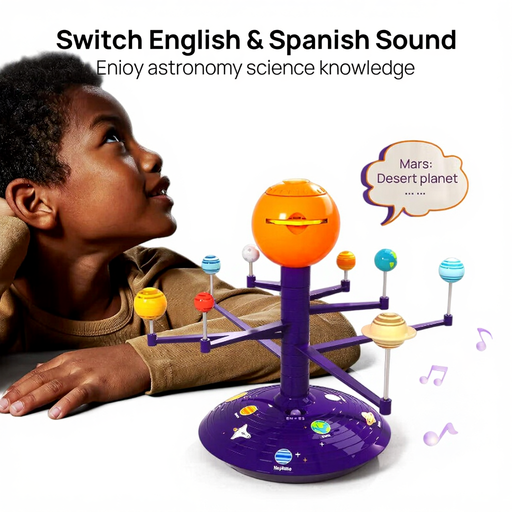
What sets it apart This solar system projector transforms your child's bedroom into a real planetarium. It doesn't just project images of planets, stars, and nebulae; it also names them and provides information through its bilingual audio function (English/Spanish). The child handles the slides and assembles the planets themselves, making learning about astronomy tangible and interactive.
Key features
Who is it for? This is the ideal science gift for curious little space enthusiasts aged 3 to 12. It's perfect for parents looking for a visual aid for bedtime stories or a gentle introduction to the wonders of the universe.
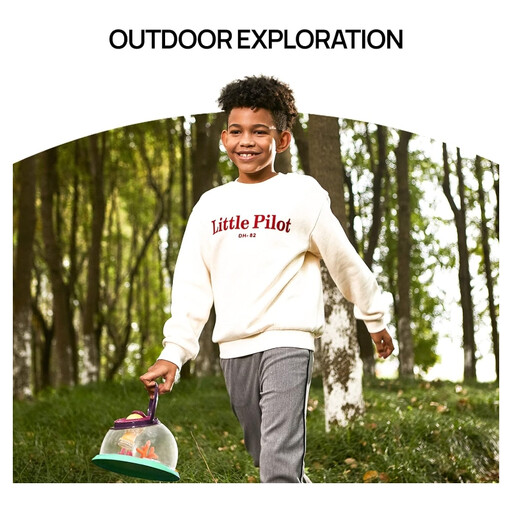
What sets it apart This nature discovery toy encourages children to get outdoors and explore their environment. The kit allows them to gently catch insects and observe them without harm, thanks to a 5x magnifying glass that rotates 360°, before releasing them back into their habitat. It's an excellent way to demystify the world of insects and raise awareness about biodiversity.
Key features
Who is it for? Ideal for budding explorers aged 3 to 12 who love outdoor exploration games. It will appeal to families who want to strengthen their children's connection with nature and instil a respect for the animal world.
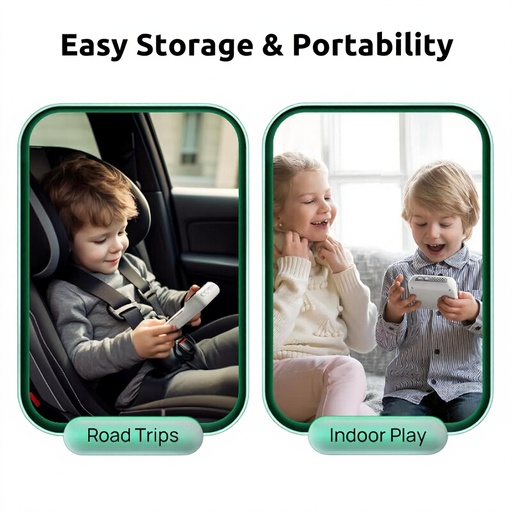
What sets it apart This kids' logic game is a portable electronic puzzle that offers 100 challenges across 3 game modes. It stimulates concentration (Schulte mode), observation (Graphic mode), and memory (Memory mode). Its pocket-sized format makes it the perfect travel companion to keep children intelligently occupied.
Key features
Who is it for? Recommended for ages 5-12, this STEM toy is perfect for fans of challenges, puzzles, and speed games. It's also an excellent screen-free alternative for the car or train.
Our selection is just a glimpse of the many ways to introduce children to science through play. To find the perfect gift that will make your child's eyes light up, feel free to browse our entire collection.
Discover our full collection of educational supplies and games to find the gift that will make your child's eyes light up.
Explore our Kids' School & Office Supplies category
You can find science toys for almost any age! From as young as 3, nature observation games or simple models like a solar system projector can already work wonders. The key is to choose a product whose complexity and safety rules match the child's age.
An educational toy generally aims to teach a specific skill (letters, colours, etc.). A STEM toy, on the other hand, is specifically focused on scientific disciplines (Science, Technology, Engineering, Mathematics). It encourages an active approach based on problem-solving, experimentation, and construction. It's an excellent way to develop logical thinking and analytical skills.
Your involvement is the key to success! Participate in the first few experiments with them, show enthusiasm for their discoveries, and ask open-ended questions: "What did you observe?", "What do you think will happen if...?". Turn using the toy into a family activity: a trip to the forest with the exploration kit, for example, will make the experience unforgettable.