
Livraison le jour même ou le lendemain

Qualité garantie

Débloquez vos offres de bienvenue: Livraison GRATUITE | Jusqu'à -80 % | 30 jours d'essai gratuits à JoyPlus
Téléchargez l'application
The new school year, homework, meetings and creative activities often have one thing in common: you want to buy everything you need quickly. But a well-stocked pencil case is not necessarily a practical one. Between brightly coloured assortments, promises of long-lasting performance and unsuitable formats, some supplies end up forgotten in a drawer after just a few weeks.
1. Confusing quantity with usefulness. A pack of 18 or 36 pieces may seem like a good deal, but not every colour will necessarily be used. For a pupil, a few multicoloured ballpoint pens and HB pencils may be more than enough. For someone who enjoys drawing, however, a wide range of shades and compatibility with different surfaces will be more important.
2. Underestimating the format. An A7 notebook is perfect for jotting down an idea or reminder on the go, but not for writing up an entire lesson. Conversely, an A3 drawing pad provides a generous working area, at the cost of taking up more space in your bag. The format should primarily suit your everyday needs, rather than simply look appealing at first glance.
3. Trusting a claim without checking the technical details. An ink described as “indelible”, a “precision” nib or “multi-technique” paper should be backed up by verifiable information: line width, paper weight, binding type, ink composition or recommended age. The result may also vary depending on the paper used and the pressure applied.
For taking notes, a 0.7 mm ballpoint pen offers a common balance between readability and precision. Multicoloured 4-in-1 models allow you to switch from black to blue, red or green without filling your pencil case with different pens. With a 0.5 mm mechanical pencil, check above all that replacement leads are easy to find and that the mechanism appears sufficiently robust.
HB pencils offer an intermediate hardness, making them suitable for both writing and light sketches. Their hexagonal barrel prevents them from rolling across your desk and improves grip. A pencil sharpener with a container helps keep your school bag clean; a model with two openings can also accommodate thicker coloured pencils.
Paper weight provides a useful initial guide: 140 g/m² paper will generally cope better with layered dry media and light watercolour applications than a very thin sheet. For coloured pencils, dry pastels or watercolour markers, the texture of the paper directly affects adhesion, colour blending and the final result.
An A3 drawing pad with sewn binding can be useful for sketches, composition studies and work that requires a relatively stable opening. For lists, reminders and ideas jotted down while out and about, A7 notebooks are considerably easier to slip into a pocket.
Pastel highlighters with a chisel tip are particularly practical when they offer two line widths. Remember to replace the cap after every use, even when anti-drying technology is advertised. For whiteboard markers, also check compatibility with the surface concerned: a marker designed for paper will not necessarily behave in the same way on an erasable board.
For drawing materials intended for children, check the recommended age, the possible presence of small parts and the usage instructions before placing your order. Dry pastels produce dust, so they require suitable use, a well-ventilated room and, for younger children, adult supervision.
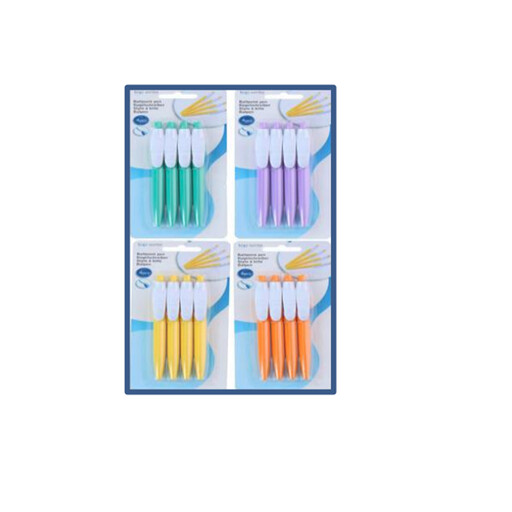
Why this choice suits this profile: This compact pack is ideal for children who are beginning to use several colours for homework, drawings and annotations at home.
It avoids buying a large assortment before you know the child’s habits: four pens and four colours are included, no more.
Barrels designed for small hands, with four assorted-colour ballpoint inks.
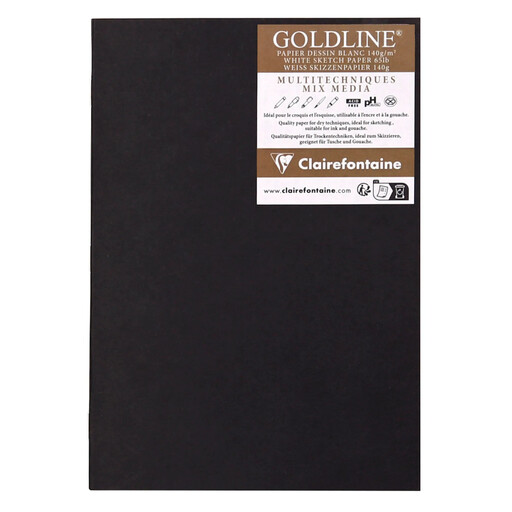
Why this choice suits this profile: Its large format is aimed at amateur artists and creatives who want to work on a structured surface compatible with several techniques.
The 140 g/m² paper weight and “multi-technique” description provide concrete points of reference, rather than a purely aesthetic promise.
White 140 g/m² paper, A3 format, portrait orientation and sewn binding for pencils, pastels and light watercolour applications.

Why this choice suits this profile: Students, teachers and employees who regularly colour-code their notes save space with three pens, each containing four colours.
The 0.7 mm tip diameter, retractable mechanism and selection buttons are clearly specified for everyday use.
Three pens, four inks per pen, rubber grip and 0.7 mm metal ballpoint tip.
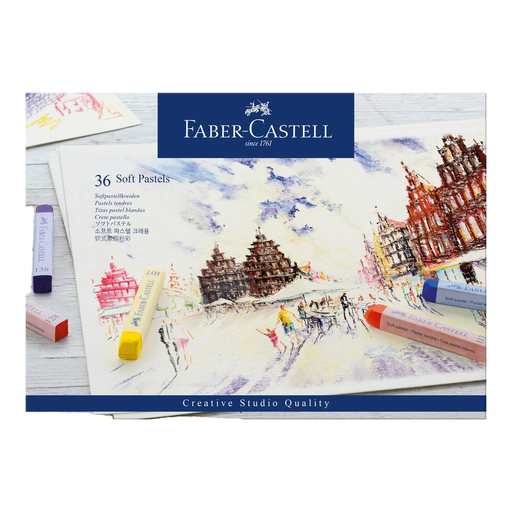
Why this choice suits this profile: Artists who work with gradients, solid areas and blending have an extensive palette for creating on paper, card or canvas.
The product details specify the number of sticks, their soft texture and the compatible surfaces, helping you choose the right support instead of relying solely on the photos.
36 assorted soft pastels, a powdery texture and the option to layer or blend colours.
To complete a pencil case or set up a workspace, other formats may also prove useful: M&G A7 notebooks sold in packs of four for organising lists and lessons, M&G HB pencils in boxes of twelve, 0.5 mm mechanical pencils in packs of three, or Deli watercolour markers. Jar Melo rainbow scratch paper lets you create without liquid paint, while STABILO, WRITECH and Deli pastel highlighters suit different preferences when it comes to tip style and colour range.
We have put together a complete, real-time-updated selection of products that meet these demanding selection criteria, as well as European safety standards.
It depends on the school year and the planned activities. A sensible starting point includes HB pencils, a pencil sharpener with a container, an eraser, a few multicoloured ballpoint pens and two or three highlighters. You can then add the drawing supplies needed for specific projects: coloured pencils, soft pastels, watercolour markers or an A3 notebook.
Keep pens and markers securely capped, store paper flat in a dry place and empty the pencil sharpener’s container regularly. For pastels, the original box helps protect them from knocks and breakage. The mechanisms in mechanical pencils should also be kept clean to prevent blockages.
Choose products that are comfortable to hold, simple formats and a clearly stated recommended age. Small parts and dust produced by pastels require particular care. For a first creative activity, a small pack of coloured pens or a set of scratch paper allows you to discover the child’s preferences before investing in a more complete range.