
Livraison le jour même ou le lendemain

Qualité garantie

Débloquez vos offres de bienvenue: Livraison GRATUITE | Jusqu'à -80 % | 30 jours d'essai gratuits à JoyPlus
Téléchargez l'application
The start of term, homework, meetings and to-do lists all have one thing in common: they need school supplies and stationery that are right for the job. But a colourful assortment or a promise of comfort isn’t enough to guarantee a sensible purchase. Parents, pupils, students and professionals can quickly end up with items that are impractical, don’t suit their habits or are hard to replace.
Before you fill your basket, it’s worth taking a closer look at three common pitfalls.
A pack of 12 ballpoint pens or HB pencils might look like a good deal, but start by asking yourself what they’ll actually be used for. A child who regularly loses their things has very different needs to a student looking for a precise instrument for note-taking. Buying in bulk won’t make up for an uncomfortable nib, ink that dries out, or a barrel that’s too fragile.
Pastel colours, floral patterns and decorative finishes make creative stationery particularly appealing. Yet a pretty notebook can turn out to be too small for taking notes in class, while a bulky exercise book will just weigh down the bag unnecessarily. Design should come after format, paper type and binding.
Nib width, ruling type and cover durability all have a direct impact on how comfortable something is to use. A 0.5 mm mechanical pencil is great for fine writing, but you’ll need the right refill leads. Similarly, erasable gel pens are handy for correcting notes, but they won’t replace permanent ink on official documents.
In schools in France, Seyès (French-ruled) exercise books are still very common thanks to their grid pattern, which helps guide handwriting. The 17 × 22 cm format slips easily into a school bag and works well for everyday exercises. For longer assignments or documents you want to keep, the 24 × 32 cm format offers more generous space.
A6 notebooks are best suited for quick reminders, ideas and lists. A5 notebooks are better for journaling, professional notes and creative projects. Spiral-bound notebooks lie flat, making them easy to write in at the office or on the go.
For everyday writing, a 0.7 mm nib usually gives a legible line. A 0.5 mm nib offers more precision, especially for annotations. Pastel highlighters with a chisel tip let you vary the line thickness. However, do check the ink type and whether there’s any risk of it bleeding through to the other side.
Erasable gel pens use thermosensitive ink. Their friction-based erasing is very handy for drafts and diaries, but the manufacturer’s instructions state they are not intended for thermal receipts or documents that need permanent ink. They also need to be kept away from extreme temperatures.
A wooden pencil with a hexagonal barrel is less likely to roll off the table. A sharpener with a built-in reservoir stops shavings spilling into your pencil case, while a two-hole model can take both standard pencils and thicker coloured pencils.
For exercise books, check how the pages are fixed, whether there are any flaps, and what the cover material is. A polypropylene cover stands up better to everyday spills than an untreated soft cover. Whatever product you choose, storing it in a dry place away from direct sunlight will help preserve the paper and inks.
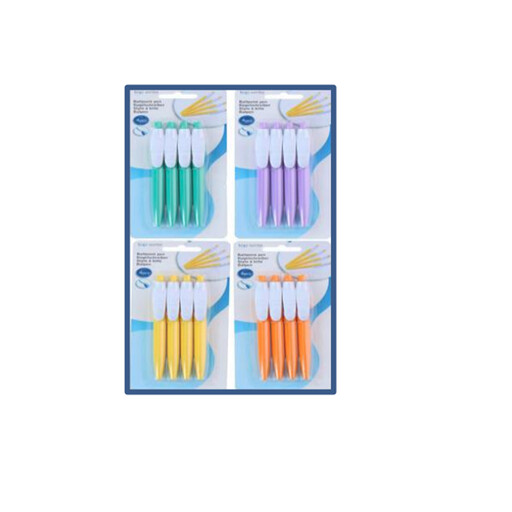
Why this choice suits this profile: This pack of four colourful ballpoint pens supports early writing tasks, homework and drawing, both at home and in the classroom.
The pack is simple to use and saves you buying several colours separately for everyday activities.
Four assorted colours, a barrel designed for a comfortable grip, and ballpoint ink described as consistent.
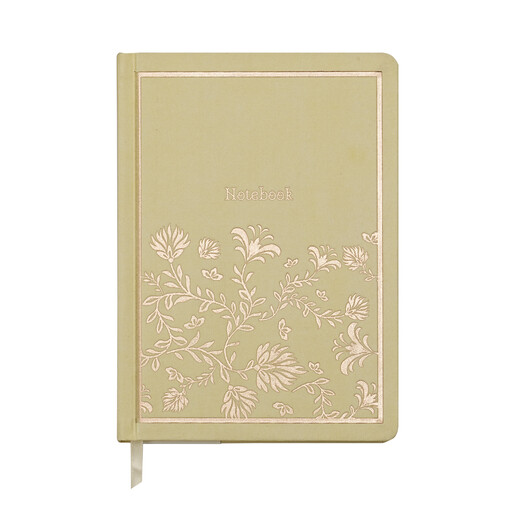
Why this choice suits this profile: Its A5 format and decorated fabric cover are aimed at those who want to combine writing, journaling and a polished presentation.
The features are clearly stated: 96 sheets, 100 g/m² ivory paper and a hard cover – going well beyond just a pretty promise.
100 g/m² lined paper, fabric cover, bookmark and elastic closure as per the product description.

Why this choice suits this profile: This pack is ideal for students, teachers and anyone who often rewrites their notes and appreciates a fine nib.
The 0.5 mm nib and built-in eraser clearly define the intended use, while also reminding you that this ink isn’t suitable for permanent documents.
Twelve blue pens, 0.5 mm needle-point nib and thermosensitive ink that erases with friction.
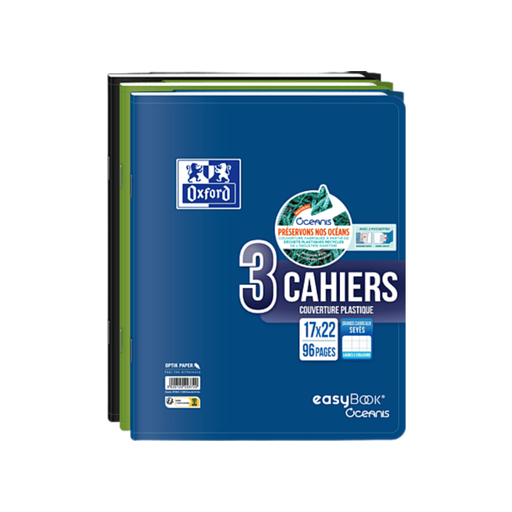
Why this choice suits this profile: This pack of three exercise books makes it easy to prepare for several subjects, homework and writing tasks.
The format, Seyès ruling and page count are all clearly stated, making it easy to compare with the school’s stationery list.
Three exercise books, each with 96 pages, French Seyès ruling, 17 × 22 cm format and stapled binding.
We’ve put together a full, real-time updated selection of products that meet these exacting criteria as well as European safety standards.
It all depends on the school year, the number of subjects and how often things need replacing. To keep costs under control, compare the number of units per pack, choose the formats your school asks for, and avoid piling on decorative items before you’ve covered the essentials: exercise books, ballpoint pens, HB pencils, an eraser and a sharpener.
Put the lids back on after every use, and store felt-tip pens flat if the instructions recommend it. Ballpoint pens can be stored nib-up, while liquid-ink products should be kept away from heat and sunlight. A separate compartment in your pencil case also helps reduce knocks and the risk of leaks.
An A6 notebook is good for lists and quick notes. An A5 notebook offers more space for lessons, work and journaling. For heavy use, check the paper weight, the quality of the binding, and whether it has an elastic closure or pen holder. That way, you’ll choose stationery that suits your real needs, rather than just its appearance.