
Livraison le jour même ou le lendemain

Qualité garantie

Débloquez vos offres de bienvenue: Livraison GRATUITE | Jusqu'à -80 % | 30 jours d'essai gratuits à JoyPlus
Téléchargez l'application
Buying school supplies and creative stationery can quickly become expensive if you’re guided only by colours, marketing promises or jumbo packs. Whether it’s for back to school, the office, arts and crafts or drawing, a few practical details can make all the difference to your daily routine.
A pen that smudges, a pencil that snaps the first time you sharpen it, or a notebook that’s too small for its intended purpose – these often end up at the bottom of a drawer. Here are the criteria to consider before putting together your selection, along with a range suited to different needs.
A large pack is only good value if its contents genuinely match what you need. Twelve graphite pencils can be useful in a classroom or for a family, whereas a set of colours you rarely use is likely to gather dust. On the other hand, a few well-chosen multi-coloured ballpoint pens or pastel highlighters can be enough for a student’s needs for several months.
Not all pencils have the same diameter. Coloured pencils, triangular models and certain drawing pencils may need a wider opening. With a standard sharpener, the tip can end up uneven and the wood may splinter. A model with a double opening and a reservoir usually avoids this problem, while also keeping shavings from ending up at the bottom of your pencil case.
The claim ‘quick-drying’ doesn’t guarantee the same result on every paper. A gel pen can work perfectly on a thick notebook but may bleed through a thin sheet. Soft pastels, meanwhile, produce dust that requires a suitable surface and careful storage. Always check the paper type, the nib and the conditions of use.
For everyday writing, a 0.7 mm nib offers a good balance between readability and smoothness. Retractable pens stop you losing a cap and let you switch colours quickly. Multi-coloured 4-in-1 models are handy for colour-coded note-taking, as long as you operate the mechanism gently.
Mechanical pencils are chosen according to the lead diameter. A 0.5 mm lead is suitable for fine annotations and precise lines, while a 1.8 mm mechanical pencil or clutch pencil is better suited to drawing and sketching.
HB graphite pencils are versatile for writing, school exercises and light sketching. They sit between harder leads, which are good for fine lines, and softer, greasier leads, which are better for shading. For a child learning to write, the shape of the barrel also matters: a triangular barrel can help with correct finger placement, while a hexagonal barrel stops the pencil rolling off the desk.
An A7 grid notebook slips easily into a pocket or small pencil case. It’s ideal for lists, reminders, quick ideas and notes on the go, but its small surface area isn’t suitable for long lectures. Students and teachers would be better off reserving this size for reminders and choosing a larger notebook for detailed note-taking.
For products intended for children, check the warnings on the packaging, especially those concerning small parts, ingestion and inhalation of dust. Soft pastels should be used with care, in a well-ventilated room and kept out of reach of young children.
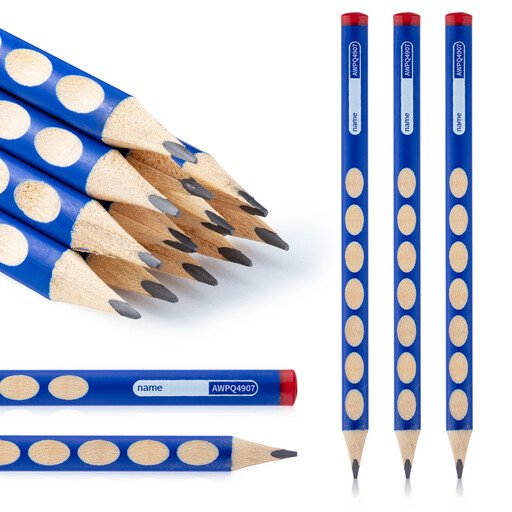
Why this choice suits this profile: This pack provides a handy supply for school, homework and drawing, without cluttering your pencil case with too many different types. The triangular barrel with grip zones is designed to support handwriting development.
The HB grade and natural wood are clearly stated. This means you won’t end up with a lead that’s too hard or too greasy for general use.
Pack of 12 pencils, HB lead and triangular barrel with grip zones.
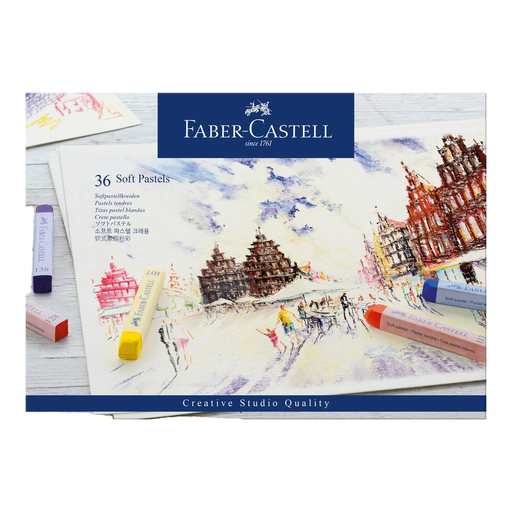
Why this choice suits this profile: Drawing enthusiasts who enjoy working with gradients and layers will find 36 soft pastel sticks here, suitable for use on paper, card or canvas.
The soft, easily blendable texture is explicitly described. The storage and fixing instructions also highlight the specific requirements of soft pastels.
36 assorted colours, powdery texture and application on multiple surfaces.
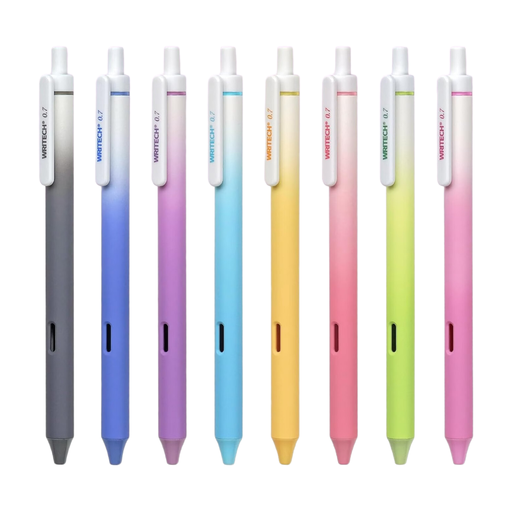
Why this choice suits this profile: Those who take lots of notes, keep a journal or organise their documents by colour will appreciate the eight shades and the retractable mechanism.
The 0.7 mm nib, non-slip barrel and quick-drying ink are all specified, rather than relying on a vague promise of smoothness.
Eight colours, 0.7 mm medium nib and retractable barrel with a matte finish.

Why this choice suits this profile: These compact notebooks let you separate lists, lessons, ideas and reminders, while remaining easy to carry in a bag or pocket.
The A7 size and grid paper are clearly stated: you know these are notebooks for quick notes, not full lesson pads.
Four notebooks, 50 sheets per notebook, top spiral binding and grid paper.
We’ve put together a comprehensive, real-time updated list of products that fully meet these strict selection criteria and European safety regulations.
Depending on your needs, add gradually:
For young children, coloured ballpoint pens can make writing more appealing, but the recommended age must be respected and small parts supervised. For drawing, storing pastels, pencils and felt-tips separately reduces the risk of breakage and stains.
There’s no universal quantity. For one pupil, start with the items actually requested by the school, then keep a small reserve of HB pencils, erasers, refills and pens. Packs of 12 are practical for families or classrooms, while smaller sets are better suited to individual use.
A pen can remain usable for several months if its cap is replaced properly or its mechanism is retracted. Highlighters and felt-tips should be stored away from heat and direct light. For water-based inks, closing the product immediately after use helps prevent the nib from drying out.
A simple set is usually enough: HB graphite pencils, coloured pencils, a sharpener with a reservoir and a suitable notebook. Soft pastels and brush pens can be added later, once the user knows which techniques they want to try. The paper should be chosen according to the technique used to minimise smudging, dust and show-through.