
Livraison le jour même ou le lendemain

Qualité garantie

Débloquez vos offres de bienvenue: Livraison GRATUITE | Jusqu'à -80 % | 30 jours d'essai gratuits à JoyPlus
Téléchargez l'application
The start of the school year is approaching, and with it, the unavoidable chore of the school supplies list. Between tempting deals and overcrowded aisles, it's easy to feel overwhelmed. Yet the goal is simple: find quality materials that will last the entire year without breaking the bank. But be warned, deals that seem too good to be true are everywhere and can quickly drive up your final bill.
To avoid falling into the trap, let's focus on the three most common mistakes people make when filling their shopping carts:
Making the right choices from the start is the key to a more organised and stress-free school year.
To stop making mistakes, you just need to look at a few simple technical specifications. These are the true markers of a product's quality, far more than any marketing claims.
Paper weight, expressed in grams per square metre (g/m?), defines the paper's thickness and density. It's the number one criterion for optimal writing comfort and for preventing ink from bleeding through to the other side.
The ruling (the type of lines) should be suited to the subject, the student's grade level, and, of course, the teachers' requirements.
The way the pages are held together plays a crucial role in the notebook's durability and everyday usability.
Because every student has different needs, here are a few tried-and-true products that meet the quality criteria we've just discussed.
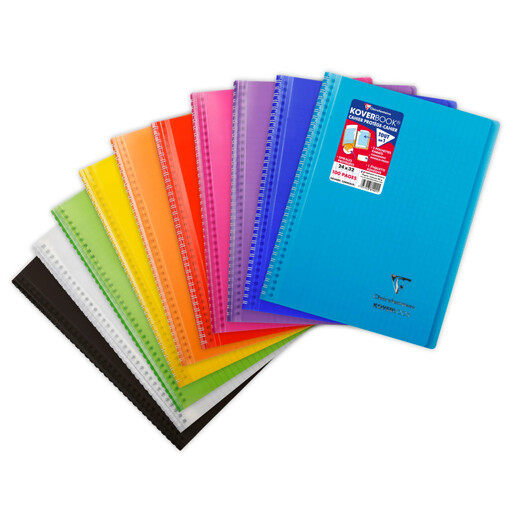
The Verdict: This is the ultimate all-in-one solution, merging a notebook and a protective cover. Its polypropylene cover is virtually indestructible and waterproof, while its flaps serve as both a bookmark and a pocket for loose papers. Perfect for handling an intensive school year without a hitch.
No more torn or forgotten notebook covers. Here, everything is integrated. Its Clairefontaine 90 g/m? paper is a guarantee of zero bleed-through.
Its spiral binding is protected by the cover, making it much more durable. The 360° opening is super practical for writing, even when space is limited.
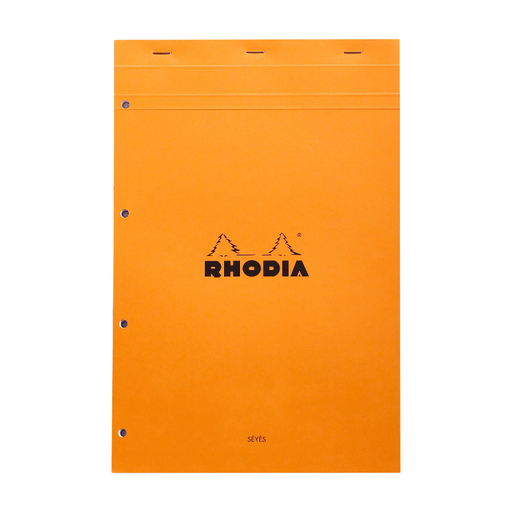
The Verdict: The ideal tool for students who like to take notes in class before filing them by subject. The sheets detach cleanly thanks to micro-perforations and are already 4-hole punched for quick filing in a binder. Its ultra-rigid cardboard back even lets you write while standing.
It checks all the compatibility boxes: nearly A4 size and universal perforations for all binders. Its 80 g/m? paper ensures excellent writing comfort.
Total flexibility: take notes on a light, handy pad, then organise everything in a binder. The best of both worlds.
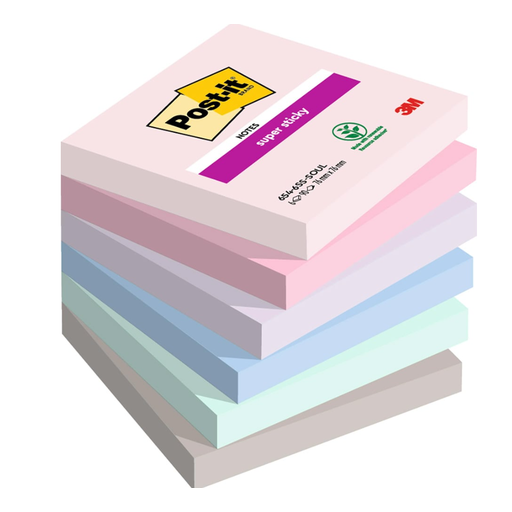
The Verdict: For a reminder that needs to stay put, an annotation in a textbook, or a brainstorming session on a wall, adhesion is non-negotiable. The Super Sticky technology from Post-it guarantees a rock-solid hold, even on vertical or tricky surfaces like a computer screen.
No more anxiety over cheap sticky notes that peel off after five minutes. 3M's promise is delivered: an adhesive power twice as strong as classic Post-it Notes.
Flawless reliability and great versatility. The colour-coding is perfect for prioritising ideas or organising your schedule.
We have curated a complete range of products that meet our quality standards.
The 24x32 cm size is the classic "large format" for French schoolchildren. It's slightly wider and taller than the A4 format (21x29.7 cm). This is no accident: this extra space allows you to glue in an A4 sheet (a handout, for example) without it sticking out of the notebook. Smart!
A 90 g/m? paper offers unparalleled writing comfort. Its main advantage is its opacity: ink never bleeds through, even with a heavily inked fountain pen. The pages are also more robust, better withstanding repeated erasing and the wear and tear of time. It's a small investment for peace of mind, saving you from having to leave a blank page behind every sheet you use.
It all depends on the use case!