
Livraison le jour même ou le lendemain

Qualité garantie

Débloquez vos offres de bienvenue: Livraison GRATUITE | Jusqu'à -80 % | 30 jours d'essai gratuits à JoyPlus
Téléchargez l'application
The annual chore of the back-to-school list is a ritual that can quickly turn into a headache. Between notebooks getting dog-eared before the first half-term and pens with ink that bleeds through the page, choosing the right school supplies is the key to a successful year. Our mission? To help you navigate the overwhelming selection of online stationery and find reliable, truly suitable items for school, office supplies, or your creative projects.
Before you fill your cart, let's review two common mistakes that too often turn a well-intentioned purchase into a major disappointment.
To avoid these nasty surprises, a few technical details are all you need to know. They make all the difference between a disposable item that needs replacing mid-year and a reliable partner that will last right through to the final exams.
Paper weight, expressed in grams per square metre (g/m?), determines the paper's thickness and opacity. It's a key indicator of how the paper will handle ink.
The way the pages are bound has a direct impact on the notebook's durability and handling.
Beyond the paper, the cover is your notebook's shield. A laminated card or polypropylene version will offer unmatched resistance to daily wear and tear compared to a simple, thin card cover. Also, remember to check for certifications like PEFC, which guarantee that the paper comes from sustainably managed forests.
To put theory into practice, here’s how these criteria apply to a few flagship products suited for different profiles.
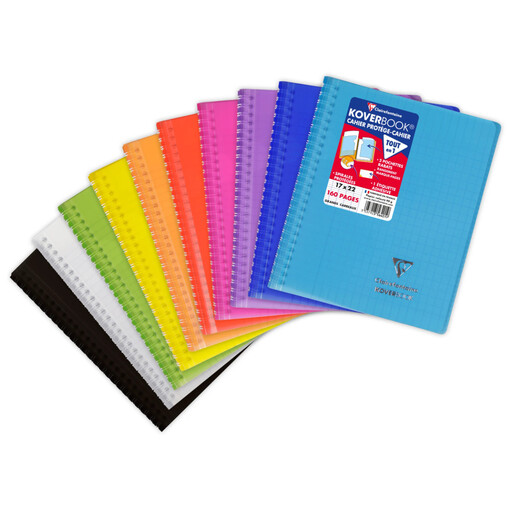
Why we chose it: This clever product merges a notebook and a protective cover. Its flexible yet ultra-durable polypropylene cover, spiral binding, and storage flaps make it the perfect all-in-one tool for the demanding daily routine of a middle or high school student.
The integrated polypropylene cover ends the nightmare of damaged notebooks. As for the Clairefontaine 90g/m? paper, it guarantees zero bleed-through, even with the wettest ink pens.
A sturdy and smart 2-in-1 design, with thoughtful storage pockets.
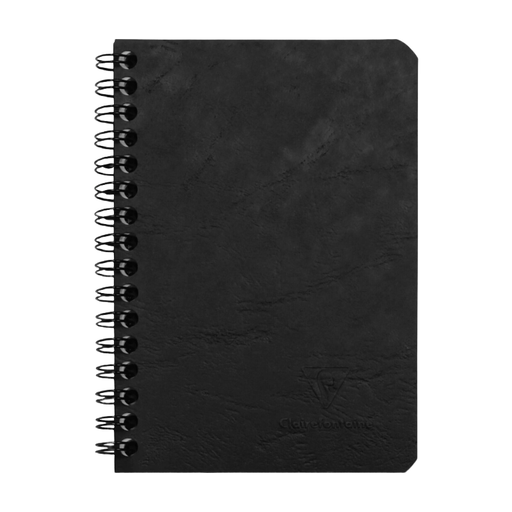
Why we chose it: For those who appreciate beautiful objects as much as their functionality. This notebook combines an understated aesthetic and a textured feel with a construction designed to last. Its pocket-sized format is ideal for on-the-go notes, meetings, or *journaling*.
The famous Vélin Velouté 90g/m? paper is a true guarantee against bleed-through. Its hardcover and sewn binding give it rock-solid durability, making it a far cry from an ordinary notebook.
Premium paper quality and a perfect lay-flat opening, for total writing comfort from the first page to the last.
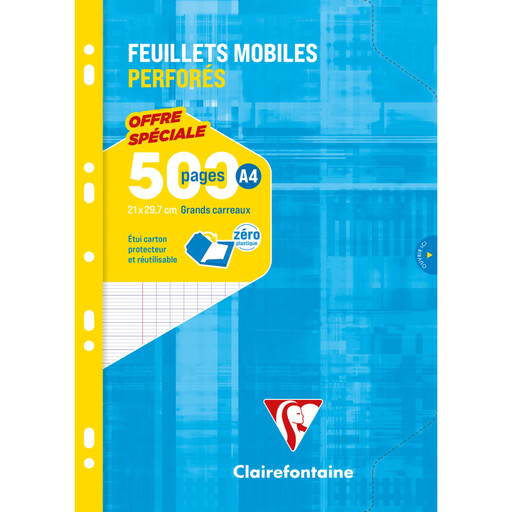
Why we chose it: For families, buying in bulk is often the smartest and most economical choice. This maxi-pack of 500 high-quality A4 loose-leaf sheets will last the whole year for one or more children, with the guarantee of impeccable quality for all subjects.
By stocking up on 90g/m? paper, you can be sure your children won't resort to using low-quality sheets for lack of a better option. No more papers tearing as they're placed in a binder!
The perfect combination of value and superior quality, for peace of mind guaranteed until the summer holidays.
To plan out the year, a good diary remains an invaluable tool. We've put together a selection of diaries and planners that meet these same standards of quality and practicality.
Seyès ruling, also known as "French ruling," is the standard in the French school system, especially in primary and middle school. Its lines are designed to guide handwriting by calibrating letter height. The 5x5?mm grid ruling is more common in high school and higher education, particularly for science subjects, as it is better suited for diagrams, graphs, and tables.
To put it simply, it all depends on the intended use:
More than ever! Even in the all-digital era, a paper 2026-2027 school diary retains some serious advantages. The act of writing helps with memorising homework and deadlines, it limits screen time (and the distractions that come with it), and most importantly, it never runs out of battery. It's the perfect complement to a digital family organiser for getting a complete overview of the family's schedule.