
Livraison le jour même ou le lendemain

Qualité garantie

Débloquez vos offres de bienvenue: Livraison GRATUITE | Jusqu'à -80 % | 30 jours d'essai gratuits à JoyPlus
Téléchargez l'application
With the new school year, a new art project or a home office set-up on the horizon, choosing between the many school and arts & crafts supplies available can quickly become difficult. Colourful packaging does not guarantee a comfortable grip, suitable ink or a satisfactory lifespan.
Three common pitfalls are worth avoiding:
To shop with confidence, it is therefore best to start with how the products will actually be used: primary school, studying, drawing, colouring, creative journalling, office work or a studio.
The width of the tip has a direct impact on writing comfort and precision:
Gel pens generally provide smooth writing, but you should allow the ink to dry before closing an exercise book or running a ruler over the page. For a child, a stable grip and a sufficiently thick barrel may be more important than an ultra-fine tip.
Coloured gel pens are perfect for structuring notes visually, creating mind maps or personalising a notebook. Metallic inks, particularly those in pens designed for black paper, are better suited to cards, scrapbooking and decorative details.
Erasable gel pens use heat-sensitive ink that disappears through friction. This feature makes corrections easier, but it also requires a few precautions:
For drawing and colouring, colouring pens with water-based ink work well in exercise books and for creative activities. On thin paper, always test the colour in the margin to check that it does not show through on the reverse.
A manual pencil sharpener remains lightweight, quiet and easy to store in a pencil case. However, a model with a shavings container prevents shavings from ending up at the bottom of your bag. A dual-hole pencil sharpener is especially useful when alternating between standard and thicker pencils.
A battery-operated pencil sharpener offers greater freedom, particularly in the classroom, studio or while travelling. Before choosing a model, check:
Electric models powered by a mains adapter are often better suited to an office or classroom. Some advertise automatic shut-off, several sharpening levels and a sharpening time of 3 to 5 seconds. These details correspond to the specifications provided by the manufacturer; results may vary depending on the pencil used and the condition of the blade.
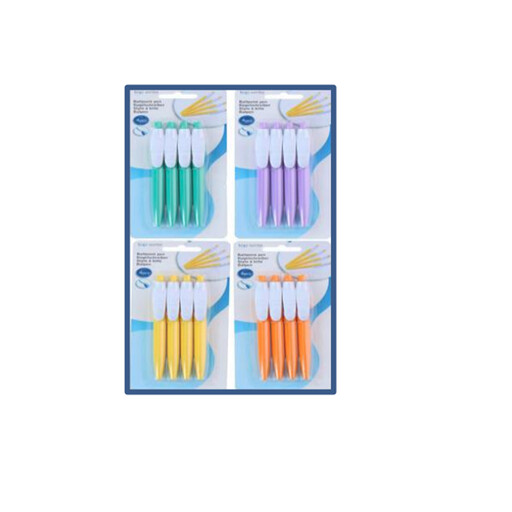
Why this choice suits this profile : These four ballpoint pens for children are a great way to get started with writing and simple drawings without investing in an oversized assortment.
The compact format reduces the risk of paying for accessories that will be left at the back of a drawer, and is suitable for everyday use at home or at school.
Four colours, a barrel described as suitable for children and ballpoint ink advertised as smooth-flowing.
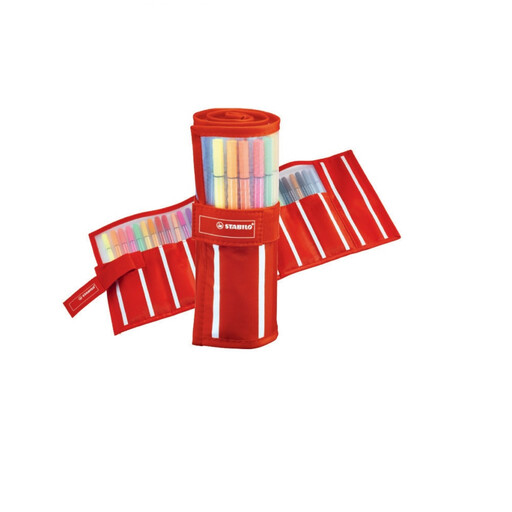
Why this choice suits this profile : The organised roll is aimed at drawing enthusiasts who want to carry several pens while keeping their colours close at hand.
The advertised 1 mm line width and bullet tip make it possible to check the intended use before buying, rather than relying solely on the colours in the case.
30 colouring pens, water-based ink and a roll-up case with a zipped compartment.
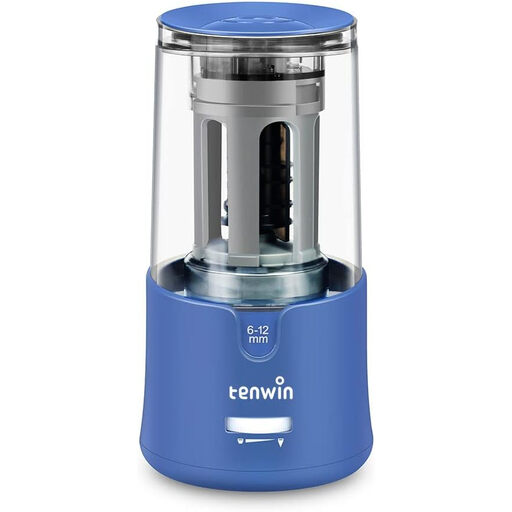
Why this choice suits this profile : A drawing studio, classroom or office where different pencils are sharpened regularly can benefit from a mains-powered device.
The advertised 6 to 12 mm compatibility avoids choosing a device intended only for slim pencils. However, it is not suitable for wax pencils or oil pastels.
Three sharpening levels, advertised automatic shut-off and a large-capacity shavings container.
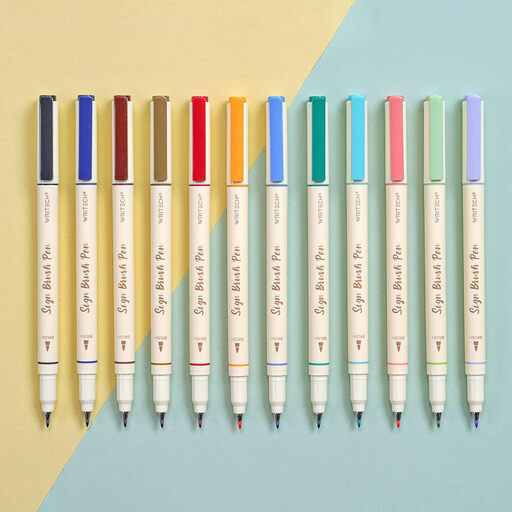
Why this choice suits this profile : Fans of lettering, creative notebooks and drawing on the go can make the most of a brush tip that allows you to vary the pressure and finish.
The flexible tip is clearly intended for lettering and varied strokes : it is unlikely to be mistakenly chosen as a simple note-taking pen.
12 pastel shades, water-based ink and a pressure-sensitive felt brush tip.
We have brought together a complete, real-time selection of products that meet these exacting criteria, while also taking European safety regulations into account.
For the early years, prioritise a stable grip, smooth-flowing ink and colours that are easy to tell apart. Ballpoint pens for children are suitable for everyday writing, while coloured gel pens are better suited to visual organisation and creative activities.
A mains-powered model does not require batteries, but it uses electricity and needs to remain close to a socket. A battery-operated pencil sharpener is easier to move around, with running costs linked to replacing the four AA batteries. In both cases, emptying the container regularly and removing debris helps preserve the mechanism.
Close pens and felt-tip pens after each use, store them according to the manufacturer’s instructions and avoid extreme temperatures. For a pencil sharpener, unplug the device before cleaning it, empty the container and use only the recommended pencil sizes. These simple steps help prevent tips from drying out and blades from wearing prematurely.