For sandwiches made at home, choose an amount your household will use. A multipack of small jars is only worthwhile if you need to keep several portions separate. Before putting a spread in a school lunchbox, check the product label and the school’s guidance, particularly if an Individualised Support Plan (PAI) is in place.
Who are these formats for?
Parents dealing with an allergy or PAI
Whether the spread is suitable for your child’s diet matters more than its packaging. Check the ingredients, any declared allergens and possible trace warnings on the product you choose, then follow the arrangements agreed with the school. The French Ministry of National Education explains that a PAI can be put in place, including in cases of food allergy.
Families preparing several lunchboxes
A jar can be used for sandwiches made at home; separate containers meet a different need. Before choosing a multipack, compare the number of units, their weight and how much you realistically expect to use.
Shoppers comparing recipes
To compare two spreads, look at the ingredients, allergens and nutritional information per 100 g. According to the DGCCRF, Nutri-Score is voluntary, so its absence is no substitute for reading the nutrition declaration on the relevant prepacked products.
What should you look for?
First decide where the spread will be served: on sandwiches made at home or in a container opened at school. This will determine whether a jar, a portion to take away or a multipack is right for you.
Jar for home
Choose this: if you make several sandwiches at home and can use the amount you buy.
Bear in mind: the jar doesn’t come with individual portions already separated.
Portion to take away
Choose this: if a portion will be eaten away from home and the school allows this way of serving it.
Bear in mind: a single portion won’t necessarily provide enough for several meals.
Multipack of small jars
Choose this: if several separate containers suit the lunchboxes you’re preparing.
Bear in mind: check the number of jars, their weight and whether the multipack is available, rather than relying on the words “multi-pack” alone.
| What matters |
What to check |
Who is this for? |
| Allergens and school guidance |
Ingredients, declared allergens and trace warnings on the exact product; the arrangements in the PAI, if there is one. |
If my child follows a diet agreed with the school, I need to make sure the product I choose meets those requirements before thinking about the format. Around 31% of consumers would put this compatibility first. |
| Separate portions |
Number of units, weight of each one and whether the container is allowed at school. |
When I’m preparing lunchboxes for several children, I may need separate containers rather than one shared jar. Keeping portions separate would come first for around 25% of consumers. |
| Amount to use |
Total net weight and the number of sandwiches or portions planned; availability of the format you choose. |
For sandwiches made at home, I want an amount that suits how we eat, without ending up with lots of unused jars. Around 25% of consumers would prioritise finding a format that suits their needs. |
| Ingredients and nutrition |
Ingredients and nutritional information per 100 g; Nutri-Score only if it appears on the product. |
If I’m choosing between two recipes, I want to compare their sugars, fat and other nutritional information on a like-for-like basis. This would be the top priority for around 19% of consumers. |
Mistakes to avoid
-
Choosing a multipack based only on the number of jars
Twelve small jars and one large jar don’t necessarily contain the same amount or provide the same number of useful portions. A multipack listing may also remain visible when the product is out of stock.
Compare the total net weight with how you plan to use it, then check that the format you’ve chosen is available.
-
Assuming all products contain, or are free from, gluten
Recipes and warnings vary between products. For example, an E.Leclerc listing for Bio Village warns of traces of cereals containing gluten; this doesn’t apply to all spreads.
Read the label on the product you buy and, if a PAI is in place, follow the diet agreed with the school. A “organic” or “palm oil-free” label doesn’t tell you whether allergens are present.
-
Assuming Nutri-Score is compulsory
The DGCCRF says Nutri-Score is voluntary, while a nutrition declaration is compulsory for the relevant prepacked foods.
If a Nutri-Score is shown, use it as extra information and also compare the nutritional values per 100 g and the ingredients.
Brands to know when comparing formats
Nutella
Nutella products featured by Carrefour include jars in several sizes. Nutella also describes Nutella & Go as a format to take away.
- The range of jar sizes makes it easier to choose an amount that suits sandwiches made at home.
- Nutella & Go shouldn’t be treated as a multipack of small jars of spread; check the product and whether it’s suitable for use at school.
Carrefour Classic' / Carrefour Bio
These own-label ranges include hazelnut spreads in jars of different sizes, depending on the Carrefour range.
- The stated weights make it easier to compare how much you’re buying.
- A product’s range alone doesn’t tell you whether it’s suitable for an individual diet: check the specific product.
E.Leclerc / Marque Repère
E.Leclerc features Nustikao spreads in several formats, as well as other products from its ranges.
- The range of weights makes it easier to match the amount you buy to the portions you plan to serve.
- The E.Leclerc listing for Bio Village 350 g spread warns that it may contain traces of cereals containing gluten. Check each recipe separately.
Auchan
The Auchan range includes the Pasta Cao line in several sizes, alongside other spreads.
- Compare jar sizes to find the amount you need for your sandwiches.
- A feature such as being palm oil-free doesn’t mean the spread is free from milk, hazelnuts or other allergens.
Spreads available on Joybuy
These products include jars for making sandwiches at home and a 25 g spread to consider if you need a portion to take away. For several lunchboxes, check the amount and number of units in the offer you choose.
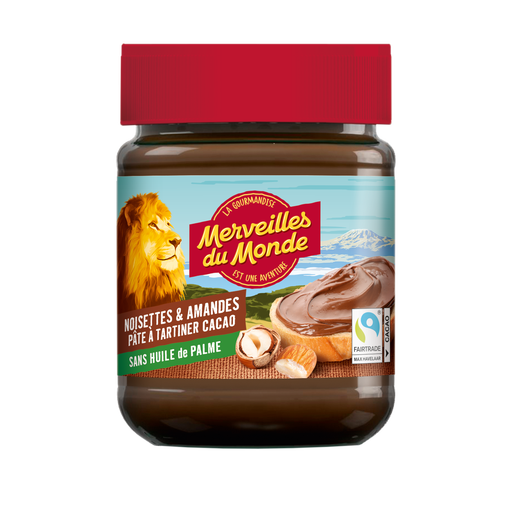 Image unavailable
MERVEILLES DU MONDE family-sized spread, 340 g
A jar to consider for sandwiches made at home if the amount suits your needs. It doesn’t separate portions for several lunchboxes, so check the label against the school’s guidance.
View on Joybuy
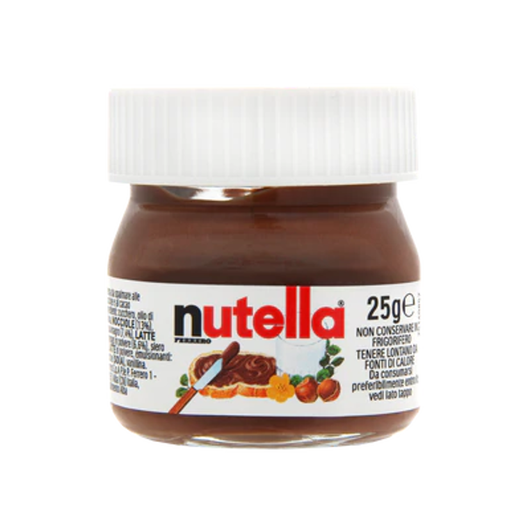 Image unavailable
Nutella hazelnut and chocolate spread, 25 g
The 25 g format is worth considering if you need a portion to take away and the school allows it. If you need several portions, confirm how many units are included in the offer. Also check the label for the child who will be eating it.
View on Joybuy
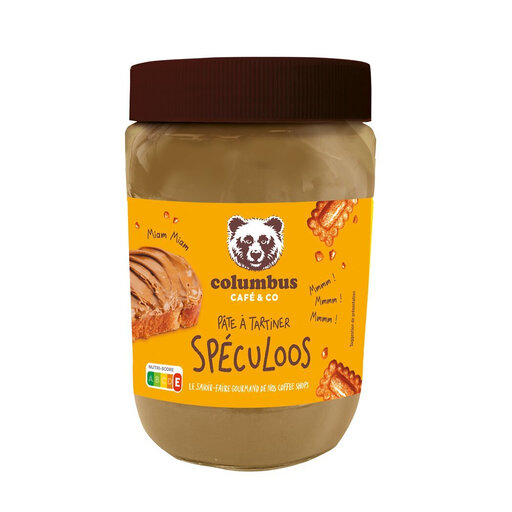 Image unavailable
COLUMBUS speculoos spread, 400 g
This jar is an option for making sandwiches at home, but it doesn’t provide separate individual portions. Whether it’s suitable for a lunchbox depends on the exact label and the child’s dietary requirements.
View on Joybuy
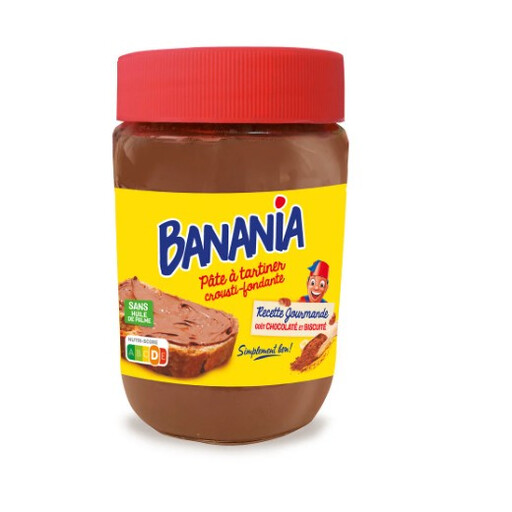 Image unavailable
Banania spread with no palm oil, 400 g
The 400 g jar is suited to making sandwiches at home rather than providing ready-separated portions. “No palm oil” doesn’t mean it’s free from allergens, so read the label before choosing this product for school.
View on Joybuy
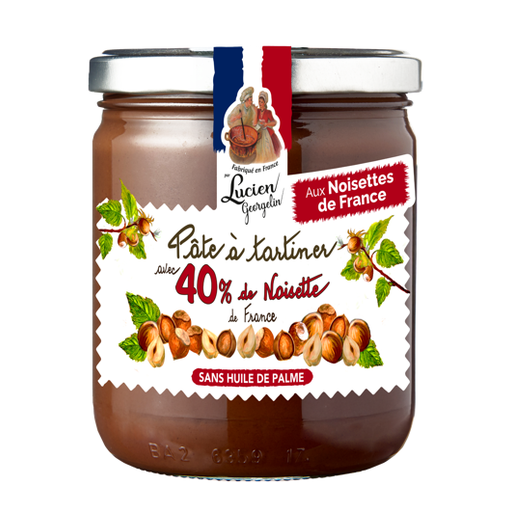 Image unavailable
LUCIEN GEORGELIN Lot & Garonne hazelnut and cocoa spread, 400 g
This jar is worth considering when comparing spreads for sandwiches made at home, but it doesn’t provide separate portions. The product name states that it contains 40% hazelnuts; check the ingredients on the packaging against your child’s needs and the school’s rules.
View on Joybuy
Frequently asked questions
Is Nutri-Score compulsory on spreads sold in France?
No. The DGCCRF says Nutri-Score is voluntary. A nutrition declaration is compulsory for the relevant prepacked foods and lets you compare their values per 100 g.
Do all spreads contain gluten?
You can’t assume that all products in this category contain gluten. Ingredients and trace warnings vary between products, so check the label on the specific jar rather than relying on its name or format to tell you what it contains.
What should I check if my child has a PAI at school?
Choose a product that meets the arrangements agreed with the school and check its exact label. The French Ministry of National Education explains that a PAI can be put in place, including for a food allergy, and may set out a diet or other adjustments.
How do I choose between a multipack of small jars and one large jar?
Start with how the spread will be served. Sandwiches made at home don’t necessarily need separate containers, unlike several portions served individually. Then compare the total weight, the number of jars and how much you’ll use. If a container needs to be taken to school, check the school’s guidance too.


