
Livraison le jour même ou le lendemain

Qualité garantie

Débloquez vos offres de bienvenue: Livraison GRATUITE | Jusqu'à -80 % | 30 jours d'essai gratuits à JoyPlus
Téléchargez l'application
The back-to-school season is approaching, and with it, the endless list of school supplies. For many parents, it's also a time to find solutions to help their child concentrate better in the classroom. If your child tends to fidget, chew on their pens, or get easily distracted, a sensory school kit can be an invaluable aid.
However, the market is flooded with products that promise the world but often prove to be ineffective or even counterproductive. Before you start shopping, it's best to know the common pitfalls to avoid turning a good investment into a regrettable purchase.
To sort through the options and choose the right ADHD school supplies or tools for any child needing a focus aid, here are the key points to check.
The purpose of a sensory tool at school is to discreetly channel a child's restlessness without disrupting the class. The best options are those that blend in with standard school supplies. A ruler with a textured area, a pencil with a chewable top, or a kneadable eraser are excellent examples of tools for hyperactive children that go unnoticed. They allow the child to self-regulate without drawing attention.
Safety is non-negotiable. Before any purchase, systematically check the following:
Understanding your child's needs is the first step. Educational materials for autism or ADHD often fall into several categories:
Rather than offering a generic list, we've matched products to specific user profiles to help you find the most suitable solution.
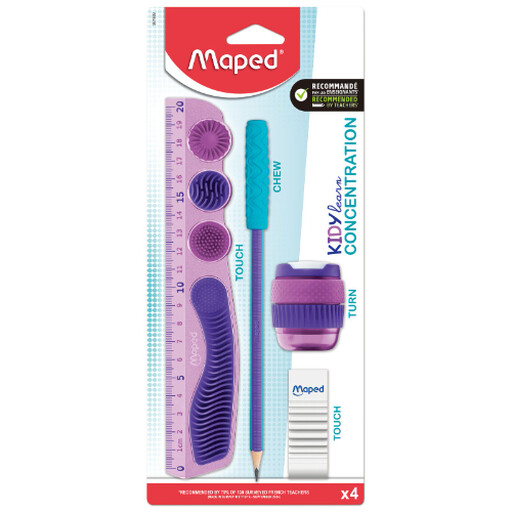
Why we chose it: This kit is an excellent all-in-one solution designed for school. It transforms everyday supplies (ruler, pencil, eraser...) into discreet sensory tools, ensuring they are accepted in the classroom.
There are no gadgets here, just real work tools. Each item has a primary school function; the sensory stimulation is a bonus, not the other way around. The seal of a recognised brand like Maped is also a guarantee of safety and durability.
The manufacturer states that the kit has been approved by a majority of teachers in France for its ability to help children concentrate. It offers a complete solution for both tactile and oral needs.
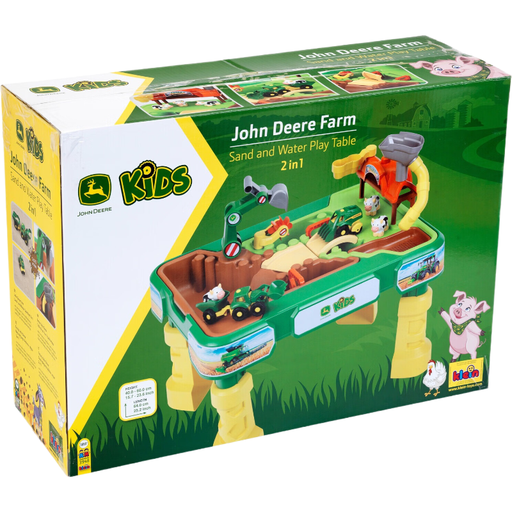
Why we chose it: Sensory regulation doesn't stop when school ends. At home, this play table provides a dedicated space for tactile exploration (sand, water...). It's an excellent way for a child to channel their energy and calm down after a day at school.
Unlike a small, portable toy, this table establishes a clear framework for play. It channels the child's energy into a structured activity, preventing the sensory need from turning into mess or constant restlessness.
The two large basins allow for separating materials and offering varied experiences. The included accessories (tractor, animals) encourage imaginative play, which is also a pillar of cognitive development.
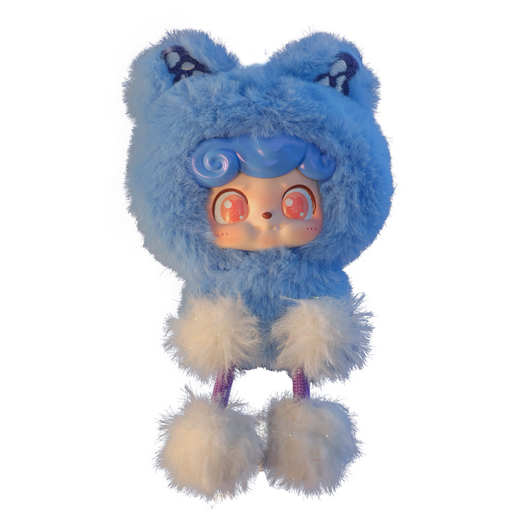
Why we chose it: Sometimes, focus also comes from motivation. These small collectible figurines are perfect as a reward after a sustained effort. Their small size and soft texture also make them a discreet tactile object to slip into a pencil case or pocket.
Used as a positive reinforcement tool, it isn't marketed as a miracle solution. Its use is structured: it's earned after completing work, and can then serve as a quiet "fidget" rather than a toy that distracts during lessons.
The surprise effect of the "blind box" creates strong anticipation and immediate gratification, a powerful motivational lever for children. The collectible aspect encourages long-term perseverance.
A stimulating learning environment also involves play. Discover our complete selection of tools and games that promote your child's development and concentration.
Generally, these tools become useful starting in preschool (ages 4-5), when a child encounters a more structured learning environment. In any case, it is imperative to check the minimum age recommended by the manufacturer to rule out any risk of choking on small parts.
Observation is your best asset. If your child constantly chews on their t-shirt collar, sleeves, or pens, a chewable pencil topper or a dedicated chewable will channel this need in a safer and more hygienic way. If they tend to tap their fingers, spin their pens, or knead objects, tactile stimulation tools (a textured ruler, a kneadable eraser) will be more suitable. If in doubt, discuss it with their teacher or a professional (such as an occupational therapist).
This is a legitimate concern. The key difference between a good sensory tool and a simple gadget is its discretion. Well-designed products, like those integrated into school supplies, are made to be used without attracting attention. They provide a motor or sensory outlet that actually frees up cognitive resources, allowing the child to better focus on their task. The goal is to channel restlessness, not replace it with a new distraction.