
Livraison le jour même ou le lendemain

Qualité garantie

Débloquez vos offres de bienvenue: Livraison GRATUITE | Jusqu'à -80 % | 30 jours d'essai gratuits à JoyPlus
Téléchargez l'application
A school pencil case needs to keep up with school days, homework, creative activities and, sometimes, travel. Looks and price alone are not enough to make the right choice. A pencil case that is too narrow, a fragile zip or poorly designed compartments can quickly become a nuisance in everyday use.
Here are the main points to check before buying a pencil case, a children’s pencil case or a model for the office.
A girls’ pencil case, a boys’ pencil case, a Disney pencil case, a Paw Patrol pencil case or a unicorn pencil case can be appealing thanks to its colours and characters. However, an attractive design says nothing about the available capacity or the strength of the stitching.
For everyday use, pay particular attention to the material, the quality of the lining and whether it has a handle. Fabric that is easy to wipe clean will also be much easier to maintain than a delicate surface.
Two pencil cases with similar dimensions can hold very different amounts of stationery. A cylindrical model measuring 22 × 7,5 cm may be suitable for standard pens and pencils, while a taller pencil case will accommodate thick felt-tip pens more easily.
The stated capacity should above all be considered in relation to your actual needs:
A 3-compartment pencil case makes organisation easier, but it generally takes up more space than a simple model. If the dividers are too narrow, they may prevent you from storing large felt-tip pens or a bulky pencil sharpener.
Conversely, a single-compartment pencil case provides immediate access, but all your stationery may end up mixed together. The right choice therefore depends on how often it will be used and how organised you want to be.
For a school pencil case intended for a child, a format around 20 to 22 cm long will generally fit into a schoolbag or rucksack. Models 6 to 8 cm wide and high can hold everyday stationery without taking up all the available space.
A 20 cm ruler requires sufficient internal length. If you carry paintbrushes or wide felt-tip pens, also check the diameter of the compartments and how flexible the fabric is.
The OXFORD Kangoo features three zipped compartments, an elastic holder for five pens and, on certain versions, a mesh pocket. Its rear elastic strap allows it to be attached to a notebook or ring binder.
Polyester is lightweight and can generally be cleaned with a damp cloth. It is suitable for everyday journeys and children’s pencil cases, provided it is not overfilled or exposed to sharp objects.
A leather pencil case offers a different texture and can be used at school, in the office or as a small travel pouch. Dyed or iridescent leather should be cleaned with a soft, dry cloth. Avoid excessive moisture and prolonged exposure to sunlight.
For children under 3, check the warnings regarding small parts, zip pulls and elastic components. A pencil case should not be filled to bursting point: this places unnecessary strain on the stitching and fastening.
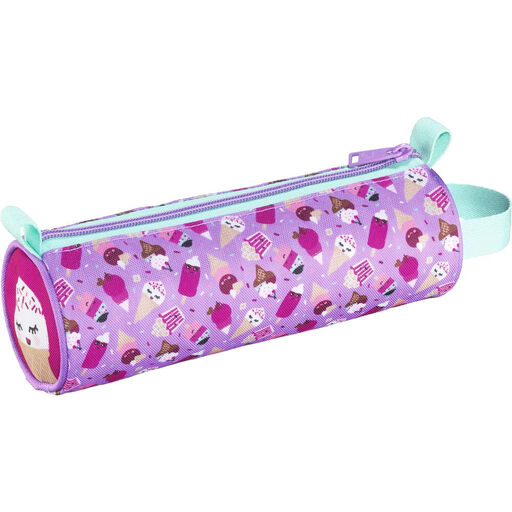
Why this choice suits this profile : its cylindrical shape is suitable for everyday school stationery, while its colourful design will appeal to a primary school pupil.
The zipped fastening and polyester fabric meet the needs of simple everyday use without adding unnecessary compartments.
Measures 22,5 × 7,5 cm, with a fabric handle and easy cleaning with a damp cloth.
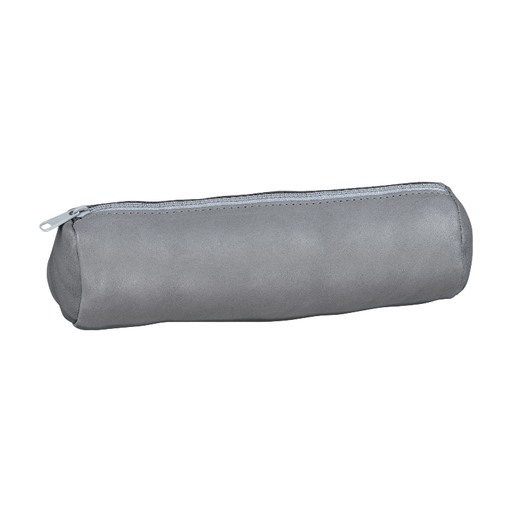
Why this choice suits this profile : this leather pencil case is ideal for anyone looking for a stylish, understated pouch for school, the office or creative hobbies.
The internal identification label makes it easier to return if lost, while the stated size helps you avoid choosing a pouch that is disproportionately large.
Full-grain dyed sheepskin leather, measures 22 × 6 × 4 cm and has a stated capacity of around fifteen pens.
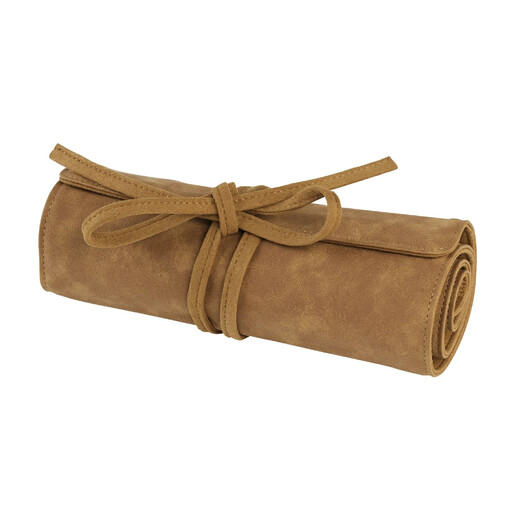
Why this choice suits this profile : its roll-up design is ideal for artists, graphic arts students and anyone who carries tools in a range of sizes.
The elastic or adjustable slots keep pencils, paintbrushes and markers separate instead of allowing them to knock against one another.
Roll-up design, integrated fastening and compact transport in a bag or suitcase.
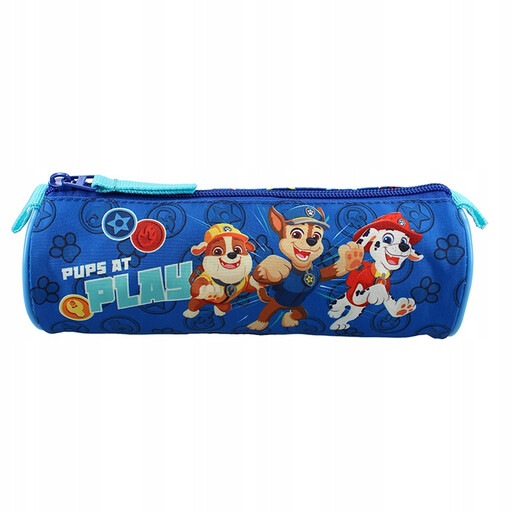
Why this choice suits this profile : this compact model can hold pencils, felt-tip pens and small accessories, while featuring a theme young children love.
Its 20 × 7 cm dimensions are suitable for a small bag, while the single fastening makes it easy for a child to use.
Polyester outer material, stated weight of 50 g and easy cleaning with a damp cloth.
To help your school pencil case last longer:
Leather models require extra care: use a dry cloth and avoid products that are not designed for this material.
We have put together a complete, real-time updated list of products that fully meet these strict selection criteria and European safety regulations.
A format around 20 to 22 cm long is generally suitable for pencils, pens, a rubber and a pencil sharpener. If your child uses a 20 cm ruler or lots of felt-tip pens, check the internal dimensions as well as the height of the pencil case.
Yes, if the user carries several categories of stationery. It allows pens, coloured pencils and accessories to be kept separate. For just a few items, a simple pencil case will be less bulky and quicker to open.
Avoid overfilling it, check the fastening regularly and clean it according to the manufacturer’s instructions. For intensive use, choose a material suited to everyday transport and an internal layout that limits friction between the stationery.