
Livraison le jour même ou le lendemain

Qualité garantie

Débloquez vos offres de bienvenue: Livraison GRATUITE | Jusqu'à -80 % | 30 jours d'essai gratuits à JoyPlus
Téléchargez l'application
Choosing a school pencil case may seem straightforward. However, a poorly designed model can quickly become bulky, difficult to clean or too fragile to last the whole school year. Between heavily decorated designs, claims of high capacity and compartments that are not always well thought out, it is worth carrying out a few checks before placing your order.
Parents, pupils, students and artists commonly encounter three pitfalls:
The right choice therefore depends on how much equipment needs to be carried, the user’s age and the context: primary school, secondary school, drawing, office use or travel.
A standard size of around 21 to 22.5 cm in length is generally suitable for pens, pencils and small accessories. Taller models or those fitted with several compartments offer more storage options, but also take up more room in a school bag.
For everyday use, check that the pencil case can hold:
The Maped Tropical Pencil Case, for example, measures 22.5 × 7.5 cm and can hold up to 35 pencils, as well as a 20 cm ruler. This type of information gives you a realistic idea of the available space, rather than relying solely on the phrase ‘high capacity’.
A 3-compartment pencil case is useful for separating pens, coloured pencils and accessories. It can also be used as an office pencil case or to store small accessories.
Models with several pockets are particularly useful when the user carries a lot of equipment. By contrast, a single-compartment pencil case is lighter and opens more quickly. It is ideal for a primary-school child or anyone who only carries a few writing instruments.
It is also worth checking for internal features such as a mesh pocket or elastic loops. These stop the contents from moving around and make stationery easier to reach.
Polyester is popular because it is lightweight and easy to care for. It can generally be cleaned with a damp cloth, unless the manufacturer states otherwise. Leather offers a more elegant finish and can work well at school, in the office or when travelling, but it requires greater care when exposed to moisture and sunlight.
Before ordering a durable pencil case, check:
Even the most robust pencil case should not be filled beyond its capacity. Overloading places unnecessary pressure on the fastenings and stitching, whatever the material.
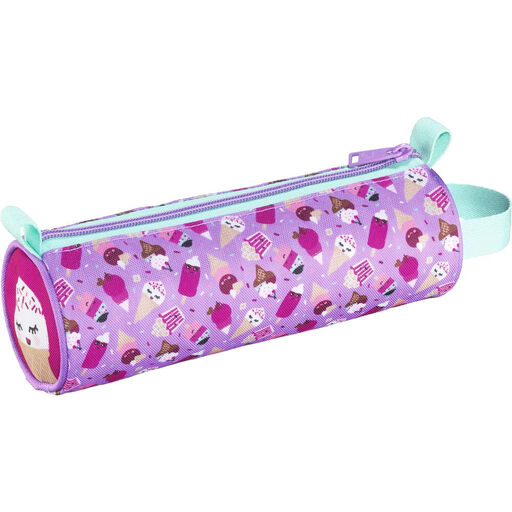
Why this choice suits this user profile : Its cylindrical 22.5 × 7.5 cm design is large enough for essential primary-school stationery. Its polyester fabric can also be cleaned easily with a quick wipe using a damp cloth.
Its capacity is backed up by precise dimensions rather than a vague marketing promise. Its metal zip pull is designed to withstand daily use.
Polyester, a compact design and a fabric handle. Its colourful pattern can work equally well as a girls’ pencil case or a children’s pencil case.
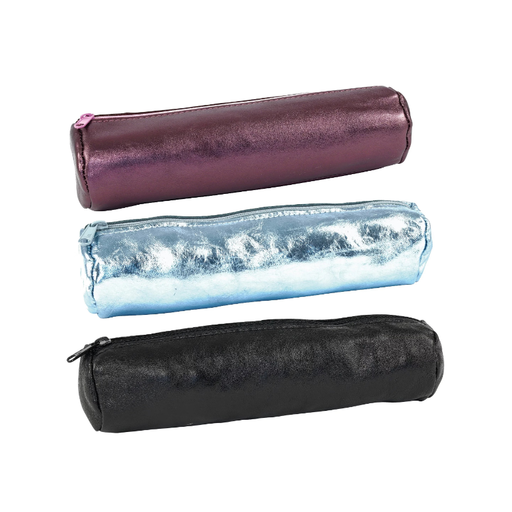
Why this choice suits this user profile : Its full-grain sheepskin leather and iridescent finish give it a smart appearance, making it suitable for school, the office or travel.
Its dimensions and stated capacity — around 20 pens and a 15 cm ruler — make it easy to check that it is suitable for the intended use before buying.
A single compartment, an internal identification label and dimensions of 22 × 6 × 6 cm.
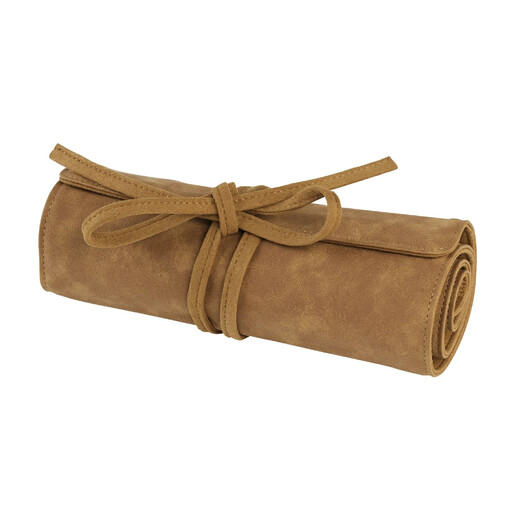
Why this choice suits this user profile : Its roll-up design is ideal for artists, graphic arts students and anyone carrying pencils, paintbrushes or markers in different sizes.
The loops and adjustable straps keep tools separate. Once laid flat, the pencil case gives you an immediate overview of its contents.
Fabric described as water-resistant, a protective lining and a tie fastening. The model rolls up for easier transport.
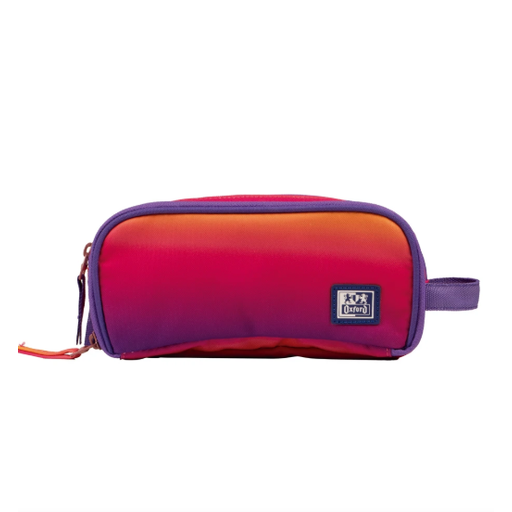
Why this choice suits this user profile : Its three zipped compartments make it easy to organise the stationery of a secondary-school pupil, student or office user.
The separate compartments stop stationery from getting mixed up. The Kangoo elastic system also lets you attach the pencil case to a notebook or folder.
Polyester, three zips and dimensions of 220 × 100 × 80 mm. A handle also makes it easier to carry.
We have put together a complete, real-time updated selection of products that meet these demanding criteria while complying with European safety regulations.
For a nursery or primary-school child, choose a lightweight children’s pencil case with an easy-to-grip fastening and enough space for pencils and felt-tip pens. Licensed designs, such as a Disney pencil case, a unicorn pencil case or a Paw Patrol pencil case, can help children take ownership of their school equipment. However, always check the dimensions and age recommendations.
For a secondary-school pencil case, several compartments are useful for separating writing instruments, highlighters and accessories. If the pupil carries only a few supplies, however, a simpler model will avoid adding unnecessary weight and bulk.
An art pencil case or roll-up model is better suited to paintbrushes, specialist pencils and markers. Before ordering, artists should check the width of the loops and make sure they are compatible with the tools they use.
It all depends on its shape and layout. Compact models measuring 21 to 22 cm are suitable for standard pens and pencils. Some products specify an exact capacity, such as around 20 pens or up to 35 pencils. The safest option is to compare these details with the stationery list provided by the school.
Yes, when the pupil carries several categories of stationery. It allows pens, coloured pencils and accessories to be kept separate. If the contents are limited, a single-compartment pencil case will often be lighter and quicker to use.
Avoid overfilling it, regularly remove pencil-sharpener residue and clean the exterior according to the manufacturer’s recommendations. For leather, use a soft, dry cloth and avoid moisture wherever possible. Always operate the zip without forcing it, particularly when the pencil case is full.