
Livraison le jour même ou le lendemain

Qualité garantie

Débloquez vos offres de bienvenue: Livraison GRATUITE | Jusqu'à -80 % | 30 jours d'essai gratuits à JoyPlus
Téléchargez l'application
Buying school and office supplies may seem straightforward… until the day your pens dry out, your notebooks warp or your documents spill out of a poorly chosen ring binder. For families, students, teachers and professionals alike, the right selection is defined less by its appearance than by a few easy-to-check criteria.
A brightly coloured set may look like a great deal, but a long list of items does not guarantee that they will be useful or long-lasting. Check the exact contents of the set, the nib type, capacity, format and accessories included. An A5 notebook with 112 sheets will not meet the same needs as an A6 pocket notebook designed for quickly jotting down an idea or shopping list.
An A4XL ring binder, a 17 × 22 cm Seyès exercise book and a 21 × 27 cm diary do not take up the same amount of space in a bag or on a desk. Choosing the wrong format can make dividers incompatible, cause pages to stick out or reduce the space actually available for writing.
Descriptions such as “smooth writing”, “large capacity” or “durable” deserve closer examination. It is better to look for concrete details: paper weight, number of sheets, nib width, ring-binder capacity, adhesive-tape dimensions or calculator power source.
For a school exercise book, the Seyès ruling makes it easier to write evenly, in line with French school conventions. The 17 × 22 cm format slips easily into a bag, while an A5 notebook measuring approximately 14.8 × 21 cm provides more room for planning or taking notes.
Paper weight is also a useful indicator. The notebooks featured here use 100 g/m² offset paper, with off-white ruled pages. This thickness is suitable for everyday writing, but you should still check compatibility with highly ink-loaded felt-tip pens.
For filing, check the number of rings, spine width and accepted formats. The OXFORD A4XL model with 4 rings and a 40 mm spine states that it can hold up to 250 sheets, depending on the actual thickness of the documents.
Multicoloured ballpoint pens make it possible to organise your notes without filling your pencil case with different instruments. A 4-in-1 model with 0.7 mm tips lets you switch from black to blue, red or green using separate buttons. For details and precise lines, a 0.3 mm felt-tip pen is better suited to technical drawing or sketching.
Pastel highlighters with chisel tips generally offer two line widths, such as 2 mm and 5 mm. Brush pens require more controlled pressure and are better suited to lettering, bullet journalling or illustration.
Also remember the small accessories that are easily forgotten: an appropriately sized rubber, a pencil sharpener with a container and caps that close properly. The container prevents shavings from ending up loose in your pencil case, although it naturally needs emptying from time to time.
A weekly academic diary should provide enough space for appointments, homework and tasks to complete. If you do not want to follow a fixed calendar, an undated planner offers welcome flexibility and avoids leaving blank pages when your periods of use change.
On a desk, a 12-digit desktop calculator with a large display and dual power supply — solar and battery — is suitable for everyday administrative calculations. For storage, a multi-compartment desk organiser helps separate notebooks, files and stationery accessories. However, measure the available space before placing your order.

Why this choice suits this profile : Each of the three pens combines four colours, reducing the number of items you need to carry for school, lists and note-taking.
The specifications are clearly detailed : 0.7 mm ballpoint tip, retractable mechanism and selection buttons. The contents of the pack are stated unambiguously.
Four inks per pen, a rubber grip and a transparent window for monitoring the ink level.
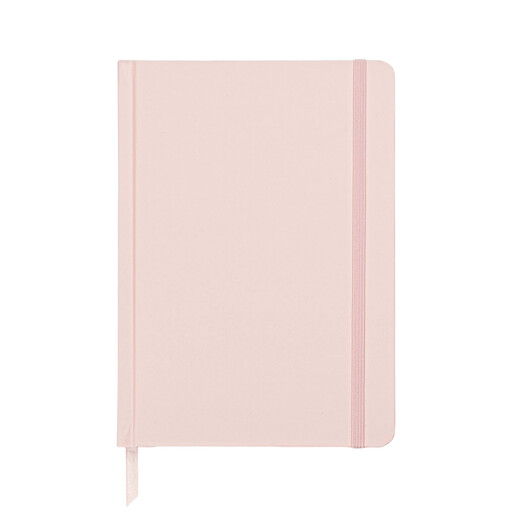
Why this choice suits this profile : Its A5 format and hard cover make it a reliable companion for regular organisation at home, in the office or on the go.
The undated system prevents unused pages from being wasted. The specifications mention 112 sheets of 100 g/m² offset paper, with monthly and weekly views.
Hard cover, elastic closure and ribbon bookmark, plus a dedicated notes page in the weekly views.
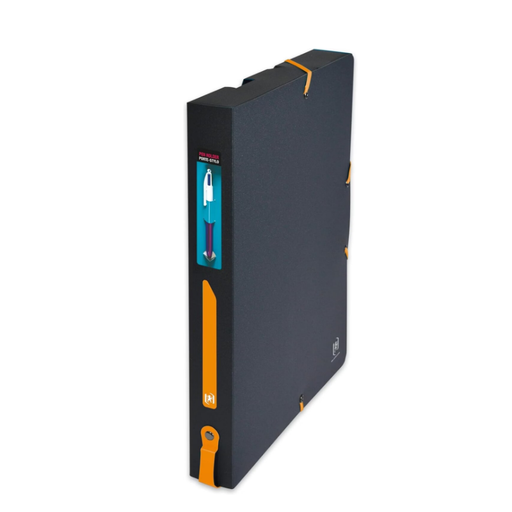
Why this choice suits this profile : Students and mobile professionals benefit from a complete filing system, with an integrated pocket for unpunched documents.
The A4XL format is designed to accommodate pockets and dividers without allowing pages to stick out. However, the stated capacity of 250 sheets must be respected.
40 mm spine, four rings, elastic closure and three-flap back pocket.
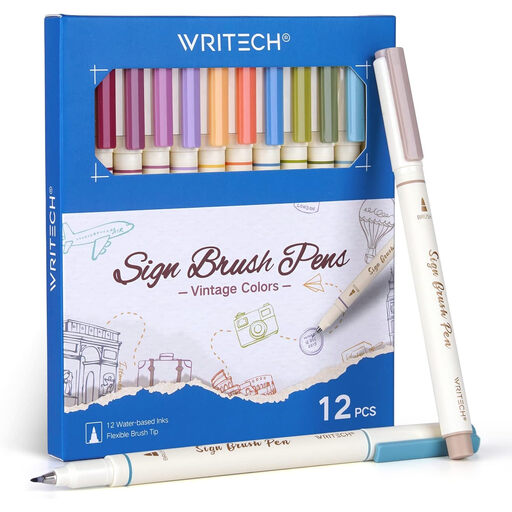
Why this choice suits this profile : Fans of lettering, creative journalling and illustration get a palette of vintage shades and a flexible brush tip.
The flexible felt tip responds to pressure, allowing you to vary the line width. The ink is water-based.
Twelve coordinated colours and the option to create shades with water on suitable surfaces.
We have brought together a complete, real-time updated selection of products that meet these demanding criteria as well as European safety standards.
A6 is suitable for quick notes, lists and ideas jotted down while you are out and about. An A5 notebook provides more room for detailing a meeting, planning your week or keeping a journal. Also check the number of sheets and whether it has an elastic closure or pen loop.
It depends on the materials, how often they are used and storage conditions. Keep exercise books and notebooks away from moisture, avoid overfilling a ring binder and replace highlighter caps after every use. Transparent adhesive tape should be kept in a dry place, with its cutting edge protected.
Start by identifying how you will actually use the items, then compare pack contents and the price per item. A pack of exercise books can cover several subjects, while a multicoloured pen avoids having to buy several separate instruments. To complete your supplies, grouping stationery accessories — rubber, pencil sharpener, writing supplies and pastel highlighters — can also help you avoid buying items one at a time.