
Livraison le jour même ou le lendemain

Qualité garantie

Débloquez vos offres de bienvenue: Livraison GRATUITE | Jusqu'à -80 % | 30 jours d'essai gratuits à JoyPlus
Téléchargez l'application
Between back-to-school shopping, setting up a home-working space and creative hobbies, school and office supplies can quickly pile up. The wrong choice can also prove costly: a lead that keeps breaking, ink that dries out, a notebook that is too flimsy or an accessory that is impossible to store properly.
Here are the criteria to review before filling your basket, along with a selection designed for pupils, students, parents, teachers, creatives and professionals.
A pack of pens or HB pencils may seem economical, but it still needs to match your requirements. An assortment of colours is useful for colour-coded notes, while a single-colour pack may be better suited to everyday writing and homework.
Always check the actual number of pieces included, the type of refill required and any accessories supplied. For a child, pens in different colours can make writing more enjoyable. However, a mechanism that is too complicated could make them frustrating to use.
An elegant desk organiser will not necessarily be practical if its compartments are too narrow. Similarly, an A6 notebook slips easily into a bag, but may quickly prove too small for lengthy lessons or detailed reports.
Photos are not always enough to assess the strength of the binding, the thickness of the paper or the genuinely usable dimensions. Before ordering, check the paper weight, number of pages, cover type and format.
A 0.5 mm mechanical pencil requires compatible leads. A pastel highlighter must be closed properly to prevent it from drying out. As for the hole punch and pencil sharpener, they should be emptied and cleaned regularly to help prevent blockages.
For retail professionals, choosing an anti-theft tagging gun also depends on the type of compatible needles and fasteners. The true cost is therefore not limited to the purchase price: remember to consider refills, consumables and the availability of accessories.
The format should suit your surroundings and the way you work. 17 × 22 cm school notebooks are easy to store in a bag, while a 24 × 32 cm notebook provides more room for homework, diagrams and lessons.
For A6 notebooks, look at the number of sheets rather than just the number of pages. An 80-sheet notebook generally contains 160 pages. Its thickness and the type of paper also affect writing comfort.
For a desk organiser, first measure the available space and check the capacity of each compartment. An A4 document shelf should be able to hold folders, ring binders and files without squashing them.
The tip size has a direct effect on the result:
HB pencils offer medium hardness, making them suitable for everyday writing and drawing. Their hexagonal barrel stops them rolling across the desk and makes them comfortable to hold. If you use coloured pencils, check that the sharpener opening is wide enough.
With brush pens, the flexible tip allows you to vary the line according to the pressure applied. Water-based inks are suitable for lettering, creative notebooks and certain blending techniques. However, it is best to check that they are compatible with the paper you are using.
Metal is generally heavier than plastic and can provide a more stable grip, particularly with some mechanical pencils. Plastic remains a good choice for its light weight and ease of transport.
For notebooks, examine the quality of the cover and binding. A polypropylene cover protects the contents from splashes better than a paper cover. Depending on the pen you use, 90 g/m² or 100 g/m² paper may also feel more pleasant than very thin paper.
Environmental claims should be verifiable. A certification such as PEFC should be clearly shown on the product page concerned. Do not assume that a product is certified based solely on a mention of « recycled » or « eco-friendly ».
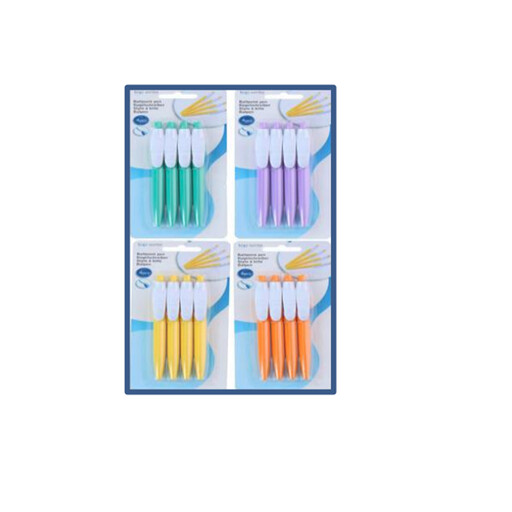
Why this choice suits this profile : This pack of four assorted-colour pens is suitable for children who switch between writing, homework and drawing, whether at home or in the classroom.
The pack clearly states that it contains four pens in four colours. There are no nasty surprises or hard-to-identify assortments, and the format is suited to school use.
Four ink colours, a barrel designed for small hands and a format intended for use at school, at home or on the go.
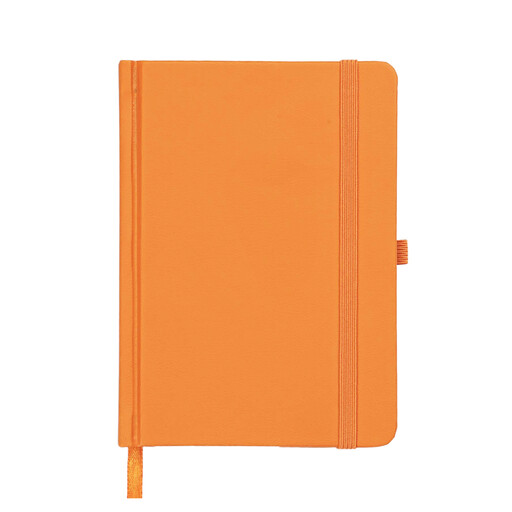
Why this choice suits this profile : Its compact format is ideal for appointments, creative ideas and lists that you want to keep in a bag or professional case.
The product page clearly specifies the A6 format, 80 sheets, 100 g/m² paper and integrated accessories: ribbon bookmark, elastic closure and pen loop.
A PU hard cover, lined off-white paper and an elastic closure that keeps your notes protected while you are on the move.
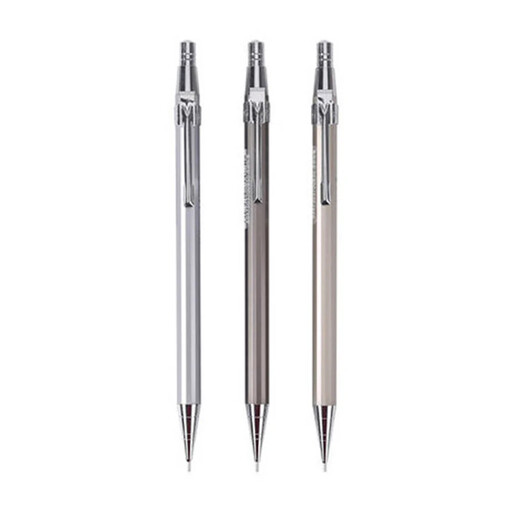
Why this choice suits this profile : This pack is designed for people who take lots of notes, draw sketches or are looking for a 0.5 mm mechanical pencil for precise lines.
The lead diameter and push-button mechanism are clearly specified. This means you can choose the right refills and avoid compatibility issues.
A metal barrel, a 0.5 mm black lead and three available finishes: black, white and gold.
To put together a well-balanced list, choose items according to the tasks you actually carry out:
A desk calculator with a large display can be useful for everyday bookkeeping. Check the number of digits, the power source and the functions you genuinely need, such as a correction key or dual solar-and-battery power. For a hole punch, check the number of holes, punching capacity and whether it has a container for the paper confetti.
We have put together a complete, real-time updated list of products that fully meet these strict selection criteria and European safety regulations.
Paper of around 90 g/m² is suitable for everyday writing. For more intensive use or very inky pens, 100 g/m² paper can feel denser and help reduce show-through. The result also depends on the tip and the amount of ink applied.
Close brush pens and pastel highlighters after every use, then store them according to the instructions on their product page. Avoid high temperatures and humidity. With retractable pens, keep the tip retracted during transport to help prevent marks and damage.
Start by separating the items you use every day from those reserved for creative hobbies. A compartment organiser or an A4 document tray can quickly free up your workspace. A6 notebooks, pencil sharpeners with reservoirs and compact pen packs will easily fit in drawers and bags.