
Livraison le jour même ou le lendemain

Qualité garantie

Débloquez vos offres de bienvenue: Livraison GRATUITE | Jusqu'à -80 % | 30 jours d'essai gratuits à JoyPlus
Téléchargez l'application
Buying school and office supplies can quickly add up when you focus only on colours, promotions or the number of pieces advertised. A well-chosen set should first and foremost meet a real need: taking notes in class, doing homework, staying organised at work, drawing, filing documents or pursuing creative hobbies.
A large bundle isn't necessarily a bargain if several items end up sitting at the back of a drawer. For the new school year, start by checking what you actually need: school exercise books, pens, HB pencils, a ruler, a sharpener and a planner. For studying or the office, focus instead on versatile products that are easy to carry.
A notebook that's too big quickly weighs down a bag, while one that's too small leaves little room for writing. The 17 × 22 cm format generally works well for school exercises, whereas an A6 notebook slips easily into a pocket. For technical drawing or homework that needs more space, a 24 × 32 cm format is often more suitable.
Phrases like "long-lasting", "smooth writing" or "smudge-proof" don't mean much without context. It's better to look at the concrete details: tip width, ink type, number of pages, paper weight, dimensions and type of mechanism. This information lets you compare stationery accessories on an objective basis.
Multi-coloured ballpoint pens are handy for structuring a lesson, correcting a document or distinguishing different categories of information. A 0.7 mm tip is a common compromise between readability and precision. Retractable models also prevent lost caps – a real advantage in a pencil case used every day.
For finer writing, a 0.5 mm mechanical pencil gives a consistent line. It's ideal for diagrams, annotations and detailed note-taking. Just make sure replacement leads are easy to find, and try not to press too hard to avoid breakage.
The number of pages alone isn't enough to judge a notebook's quality. The ruling should match the intended use: Seyès ruling is suited to French school handwriting, while squared pages are better for tables, calculations and lists.
Paper weight is also a useful indicator. 90 gsm or 100 gsm paper generally feels nicer than very thin paper, although the result also depends on the ink you use. Stapled binding keeps things light, while spiral binding lets you lay the notebook flat.
A 30 cm ruler works well with the notebooks and sheets commonly used at school and in the office. A sharpener with a container stops shavings from spilling into your bag. For pastel highlighters, check the tip shape, line width and ink type. A chisel tip of 2 to 5 mm usually lets you draw both a fine line and a broader highlight.
Coloured pencils, markers and notebooks intended for bullet journaling deserve separate storage to avoid rubbing and stains on your school exercise books.
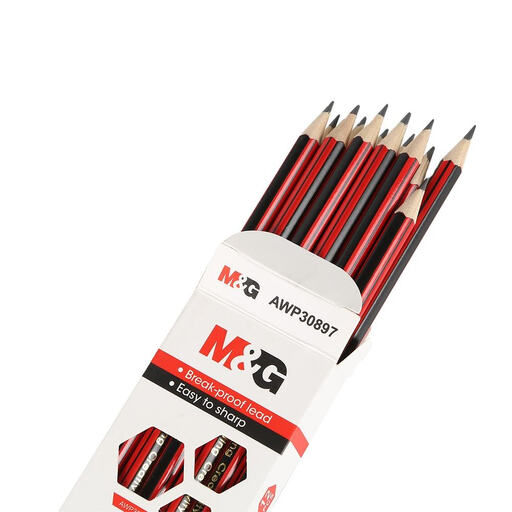
Why this choice suits this profile: With twelve pre-sharpened HB pencils, this pack provides a simple foundation for school, homework and the office.
The bulk pack means you won't need to buy pencils too often, while the HB hardness works well for both everyday writing and sketching.
Twelve wooden pencils with HB lead and a hexagonal barrel to stop them rolling off the desk.
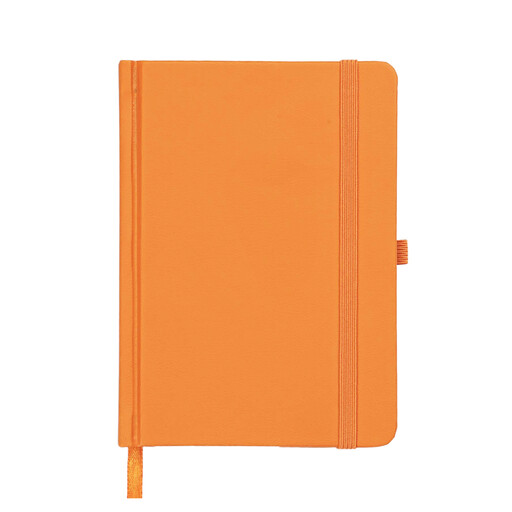
Why this choice suits this profile: Compact and well-finished, this notebook is for those who want to keep notes, lists and ideas together in one place.
The A6 size and hard cover mean you don't have to carry a bulky notebook just for a few notes.
160 pages on 100 gsm offset paper, bookmark, elastic closure and pen loop.
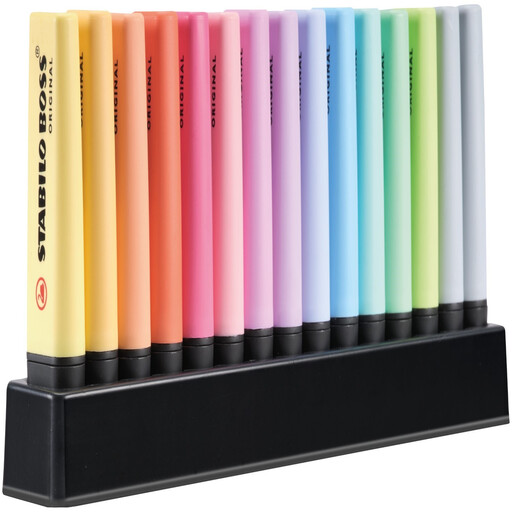
Why this choice suits this profile: Students, teachers and professionals who regularly annotate documents get several pastel shades and two line widths.
The chisel tip and water-based ink give you precise specs to check, rather than just a colour promise.
15 pieces, 14 pastel shades, 2 mm and 5 mm tips, and can be used without the cap for up to four hours according to the product sheet.
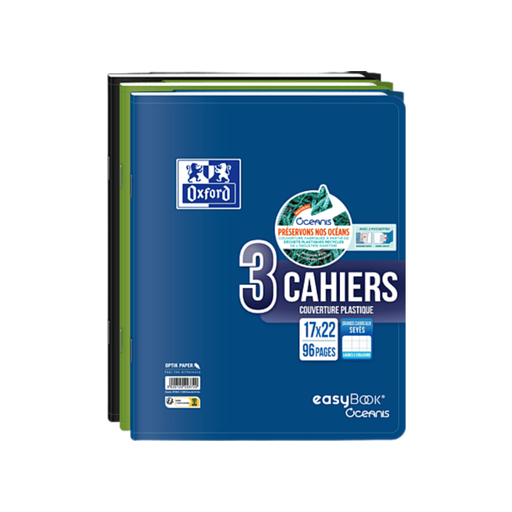
Why this choice suits this profile: This pack lets pupils split their subjects across several school exercise books without having to buy them separately.
The size and ruling are clearly stated, which reduces the risk of receiving a notebook that's poorly suited to French school use.
Three notebooks with 96 pages each, in 17 × 22 cm format, with Seyès ruling.
We've put together a full selection, updated in real time, of products that meet these criteria and European safety requirements.
For school, start with a few school exercise books, pens, HB pencils, a sharpener, a 30 cm ruler and some highlighters. For a student or professional, add a notebook, a planner or a mechanical pencil depending on your habits. Buying in bulk can lower the unit price, as long as you actually use every item.
Close highlighters and pens after use, store pencils in a rigid pencil case and keep notebooks in a dry place. Mechanical pencil leads should be kept away from moisture. With a sharpener, empty the container regularly and remove any shavings that might clog the blade.
A notebook with thick enough paper, fine-tip pens, pastel highlighters and coloured pencils make a versatile base. Check that the ink doesn't bleed through the paper and choose accessories that are easy to carry.