
Livraison le jour même ou le lendemain

Qualité garantie

Débloquez vos offres de bienvenue: Livraison GRATUITE | Jusqu'à -80 % | 30 jours d'essai gratuits à JoyPlus
Téléchargez l'application
Buying school and office supplies might seem straightforward. Yet two products can differ far beyond colour or price. A pen that dries too quickly, a notebook that’s too bulky, or a sharpener that doesn’t fit your colouring pencils can quickly turn a practical purchase into a bad decision.
Whether you’re a schoolchild, student, teacher, parent, budding artist or professional, here are the criteria to consider before putting together a pencil case, setting up a workspace or preparing a drawing kit.
Multi-packs of pens, pencils or sticky notes can seem economical. But only if their format matches the intended use. A pack of 12 pens in the same colour might suit a classroom or shared office, whereas a multi-colour pen will take up less space in an individual pencil case.
Quantity should therefore be weighed against several factors:
An ergonomic shape or a fine tip doesn’t guarantee a pleasant writing experience on its own. For long working sessions, it’s better to check the concrete details: tip diameter, grip type, mechanism, weight and body material.
A 0.5 mm mechanical pencil is ideal for precise annotations, but you’ll need to have suitable replacement leads on hand. A wooden HB pencil, on the other hand, is better suited for sharing in a classroom – provided you have a compatible sharpener.
A sharpener must accept the diameter of the pencils you use. Colouring pencils, standard graphite pencils and some drawing pencils don’t always share the same format. Similarly, watercolour paints require a suitable brush, an appropriate surface and cleaning after each use.
Also remember to check age recommendations, the presence of small parts and storage conditions. Products containing small parts should not be left within reach of children under 3 years old.
It all depends on the effect you’re after:
Multi-colour pens let you distinguish headings, definitions and tasks without multiplying your instruments. Highlighters help you organise information, provided you choose shades that are visible enough without obscuring the text.
For notebooks and exercise books, pay close attention to the size, number of pages and ruling type. An A7 notebook slips easily into a pocket and is ideal for quick lists. An A5 notebook or exercise book offers more space for lessons, meetings or a personal journal.
Paper weight matters too. 100 g paper feels more substantial than very thin paper, but it can also make the notebook heavier. A spiral binding with top opening makes one-handed writing easier, while a hard cover protects pages better when you’re on the move.
Compliance information should be legible and consistent with the intended use. For creative products aimed at children, check the age indications and, where mentioned, references to applicable standards such as EN 71. A compliance statement never replaces the need to follow usage instructions.
The material of covers and accessories is also worth a look. The OXFORD Cristal Luxe A4 cover is described as being made from translucent PVC of 20/100e, free from phthalates and heavy metals, according to information provided by the brand. It also features a label holder and two bookmark flaps.

Why this choice suits this profile: Each pen combines four colours in a retractable format. A compact solution for lessons, lists and everyday annotations.
The retractable mechanism prevents losing caps and reduces the number of pens you need to carry.
0.7 mm tip, four inks per pen, non-slip grip and transparent body to check ink levels.
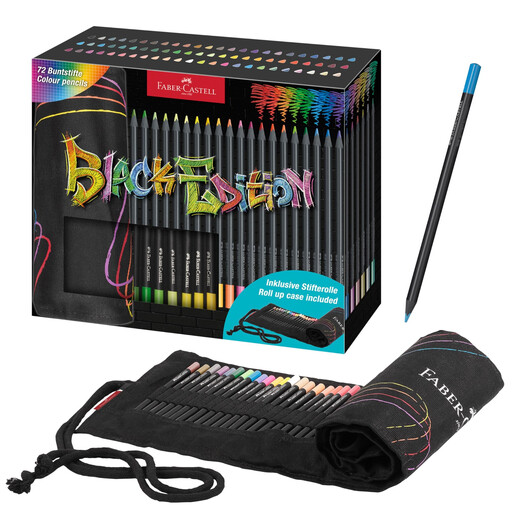
Why this choice suits this profile: This set is designed for those who want to organise a complete drawing kit, whether for creative hobbies or detailed illustrations.
The included roll keeps things tidy and protects the pencils, rather than letting them get damaged in a box without compartments.
72 pencils, including 6 fluorescent and 6 metallic shades, with a SuperSoft lead and triangular shape.

Why this choice suits this profile: Powered by four AA batteries, it’s suitable for classrooms, creative workshops, offices and spaces without a nearby power socket.
The two openings accept pencils from 6 to 12 mm, reducing the risk of using an incompatible sharpener.
Metal blade, removable shavings tray, safety lock and replacement blades included.

Why this choice suits this profile: These compact notebooks are perfect for taking notes on public transport, making to-do lists or separating different projects.
The A7 format stops you from carrying a large notebook just to jot down a few details, and makes it easy to organise by theme.
Pack of four notebooks, squared paper, 50 sheets per notebook and top-opening spiral binding.
To put together a pencil case or set up a workspace, start with your needs rather than trends. A versatile foundation could include:
Teachers and professionals can also benefit from multi-packs, while students should consider weight, refillability and how much space items take up. For drawing, focus on the range of shades, lead strength and storage system.
We’ve put together a comprehensive, real-time updated list of products that meet these strict selection criteria and European safety regulations.
An HB pencil is suitable for everyday writing, exercises and sketches. A 0.5 mm mechanical pencil produces a consistent, precise line, but requires refills and you need to avoid pressing too hard on the lead.
The lifespan depends on how often you use them, storage conditions and the type of ink. Close pens after use, avoid exposing them to heat and store highlighters horizontally when the manufacturer recommends it. A retractable pen also limits the tip’s exposure to air.
A small watercolour set, a suitable brush, water-resistant paper and a container for rinsing are enough to get started. Clean the brush after each session and let the palette dry before closing it to reduce residual moisture.