
Livraison le jour même ou le lendemain

Qualité garantie

Débloquez vos offres de bienvenue: Livraison GRATUITE | Jusqu'à -80 % | 30 jours d'essai gratuits à JoyPlus
Téléchargez l'application
Whether it's for the back-to-school season, setting up a home office, or simply for the joy of creating, choosing the right school and office supplies can quickly become a headache. Faced with the vast world of online stationery, it's easy to fall into common traps that turn shopping into a costly and frustrating chore. Before you check out, let's review the mistakes to avoid and the true quality criteria to help you shop smart.
The packaging is neat and the description is tempting, but the reality is often disappointing. Here are three classic mistakes that can quickly spoil the pleasure of writing or drawing.
To avoid these disappointments, a few technical details make all the difference. These are the true markers of a quality supply item.
Paper weight (g/m?) measures the paper's thickness, but be careful: it isn't the whole story. The quality of its manufacturing is just as crucial.
The type of binding directly impacts the durability and user comfort of your planner or notebook.
There's an ideal supply for every need. Here are our recommendations for three distinct profiles.
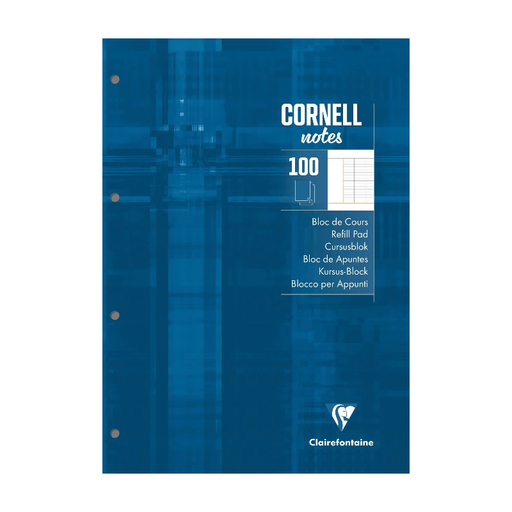
Why we chose it: The best choice for students who want structured note-taking. The Cornell method is incredibly effective for revising and memorising, while the ultra-rigid cardboard back lets you write anywhere, even without a desk.
Its Clairefontaine Vélin Velouté 90g paper prevents ink from bleeding through. No more flimsy notebooks: its ultra-rigid cardboard back is a real game-changer.
Its detachable and 4-hole perforated pages can be filed in a flash. The Cornell layout is a true learning accelerator.
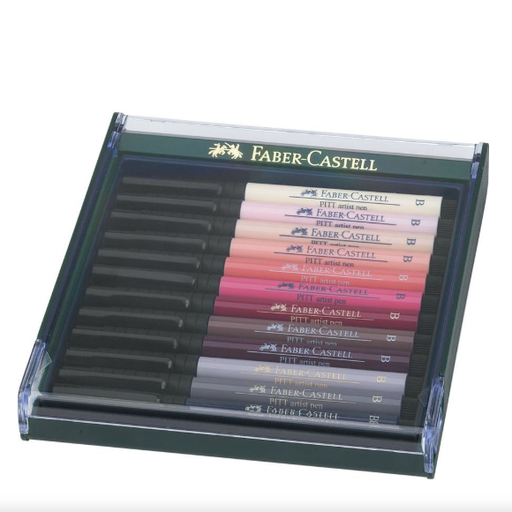
Why we chose it: A must-have for **drawing**, illustration, or *bullet journaling*. Its flexible brush tip allows for infinite line variation, and its high-quality pigmented ink ensures your creations stand the test of time.
Its pigmented India ink is water- and light-resistant, without bleeding through the paper (on an appropriate paper weight). The tip won't fray, so say goodbye to the frustration of low-quality markers!
A brush tip that is both flexible and durable, allowing you to vary your style from fine lines to broad strokes. Archival-quality, odourless, and pH-neutral ink.
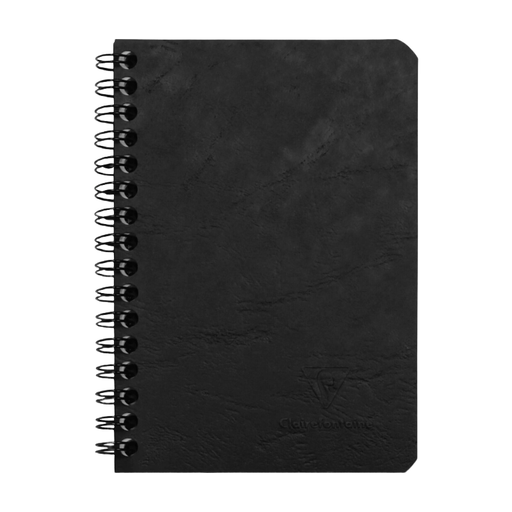
Why we chose it: Its pocket-sized format and hardcover make it the ideal travel companion. With its vintage look and flawless finish, it's perfectly suited for a professional setting.
Its textured, sturdy cover easily withstands the rigours of travel. The combination of Clairefontaine 90g paper and a wire binding ensures a smooth writing experience and exceptional durability.
Opens perfectly flat (180°) for total writing comfort, from the first page to the last. Made in France and PEFC certified: a mark of quality!
We have curated a full range of products that meet our quality criteria and current standards.
1. What is the difference between Seyès ruling and a 5x5 mm grid?Seyès ruling ("grands carreaux" or large grid) is the standard in the French school system. It consists of a main 8 mm grid with horizontal lines every 2 mm to guide handwriting. The 5x5 mm grid ruling is more common in higher education or office settings, as it allows for more dense note-taking.
2. How do I choose the right paper weight for my needs? For daily note-taking (with a ballpoint pen or pencil), 80 g/m? is sufficient. If you're a fan of fountain pens or markers, or if you're looking for a perfectly smooth writing experience, aim for 90 g/m? to ensure the ink doesn't bleed through. For drawing, watercolour, or heavy-duty revision cards, a weight of 120 g/m? to 170 g/m? will be much more suitable.
3. Is a pigmented ink fineliner really different from a standard marker? Absolutely. A standard marker uses dye-based ink, which can fade over time and smudges when it comes into contact with water. A pigmented ink, like that found in Faber-Castell's Pitt Artist pens, contains fine solid pigment particles. The result? A much more stable ink that is water-resistant (once dry) and lightfast. It's the secret to creating long-lasting artwork.