
Livraison le jour même ou le lendemain

Qualité garantie

Débloquez vos offres de bienvenue: Livraison GRATUITE | Jusqu'à -80 % | 30 jours d'essai gratuits à JoyPlus
Téléchargez l'application
Buying stationery and office supplies seems simple… until you find that your notebook fills up too quickly, your ring binder makes the pages curl or your organiser can’t hold your everyday accessories. Students, teachers, people working from home and craft enthusiasts all have different needs.
Yet the same pitfalls crop up time and again:
For a school exercise book, the 17 × 22 cm size with Seyès ruling is a familiar choice for many pupils in France. An A6 notebook slips easily into a bag, while an A5 diary or planner gives you more room to note deadlines, ideas and progress towards your goals.
Paper weight also deserves your attention:
Binding matters just as much as the paper. A spiral binding lets the notebook lie flat and open through 360°, while a ring binder makes it easy to move documents around. If you’ll be carrying it with you, check the closure and cover durability too.
Before choosing an A4 folder, ring binder or wall file holder, measure the space available and work out exactly which documents you need to store. A 40 mm ring binder can hold up to 250 sheets, according to the manufacturer, but it’s best not to fill it to the limit.
For wall storage or a hallway, check:
A wall organiser should only be installed using wall plugs suitable for the type of wall. For a desk organiser, compare the number of compartments, its stability and whether it has a drawer.
0.7 mm gel pens are suitable for everyday notes, journaling and taking notes in class. A 0.5 mm tip gives you finer lines, which is useful in the smaller boxes of a planner or for annotations.
Erasable pens are handy for correcting small mistakes, but make sure they’re suitable for the document you’re using them on. For official documents, signatures and exams, always check whether erasable ink is allowed.
For craft projects, don’t confuse coloured paper with card. Coloured paper is suitable for sticking, light folding and collages ; card is sturdier and better for cards, models and invitations.
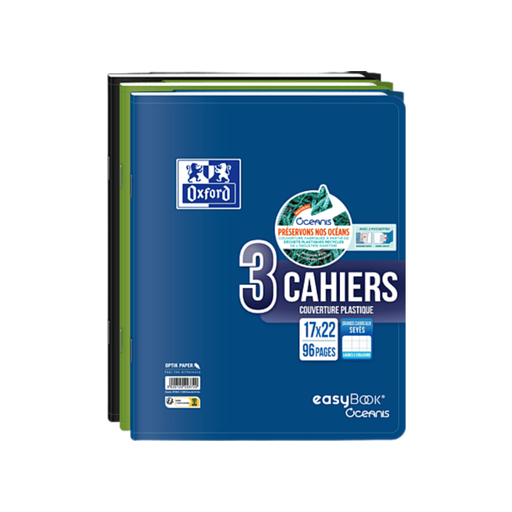
Why this is a good fit for you : This pack of three exercise books is ideal for pupils, students and families who want to keep different subjects separate without buying lots of individual books.
The 17 × 22 cm size, Seyès ruling and 96 pages per exercise book are clearly specified, making it easier to compare them with your school requirements.
Pack of 3 exercise books, French ruling, stapled binding and a size that fits easily into a school bag.
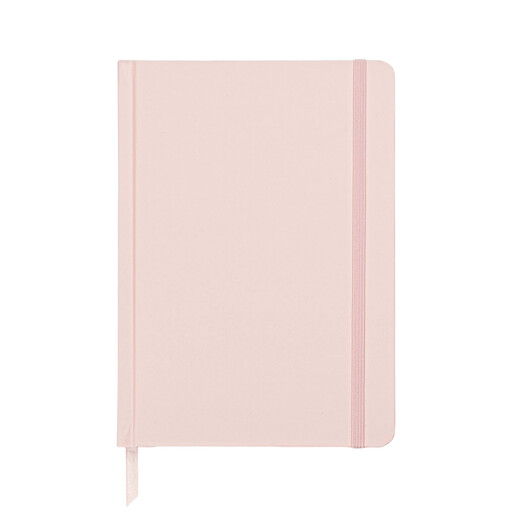
Why this is a good fit for you : The A5 size and undated pages are ideal if you want the freedom to plan projects, appointments or habits at your own pace.
The undated layout means you won’t be left with unused pages if you don’t use your planner for several weeks.
Hardback cover, 112 sheets of 100 g/m² offset paper, elastic closure and bookmark.
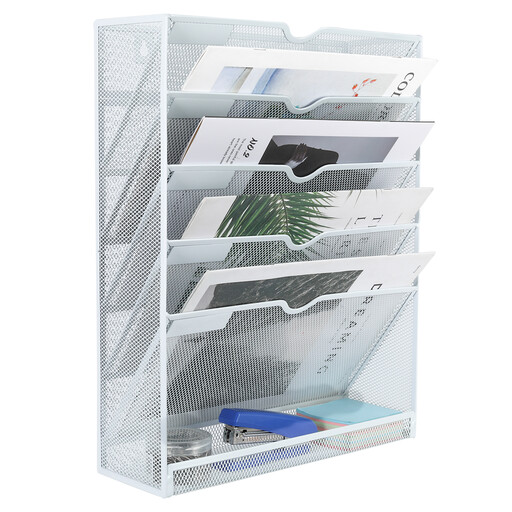
Why this is a good fit for you : People working from home, teachers and professionals who handle lots of paperwork can keep bills, projects, letters and documents to action separate.
The six compartments and label holders help prevent A4 documents from getting mixed up. Make sure you use fixings suitable for your wall.
Six tiers, stated internal width of 315 mm and external dimensions of 32 × 10,3 × 40,5 cm.
We’ve put together a comprehensive selection, updated in real time, of products that meet these strict criteria and European safety requirements.
For a well-organised workspace, choose supplies to suit the different ways you use it:
An A6 notebook with an elastic closure and pen loop is an easy way to complement your workspace without cluttering it. For craft projects or small repairs, choose a clamp-on LED magnifying lamp based on your desk thickness, lens diameter and power source.
It depends on how much you buy and how often you use it. A pack of exercise books or folders can bring down the cost per item, while a hardback planner or metal storage unit is a more durable investment. Always compare the number of items, paper weight, size and included accessories.
Store it somewhere dry, avoid overfilling the rings and use pockets that fit the paper size. Wipe a hardback cover with a soft, dry cloth. For ring binders, divide the sheets between several folders if the mechanism starts to become difficult to close.
Start by sorting documents according to how often you use them: to action, in progress and archived. Keep pens, your pencil sharpener and parcel tape in an organiser that’s easy to reach. Store documents you rarely consult in a ring binder or wall file holder to free up your desk.