
Livraison le jour même ou le lendemain

Qualité garantie

Débloquez vos offres de bienvenue: Livraison GRATUITE | Jusqu'à -80 % | 30 jours d'essai gratuits à JoyPlus
Téléchargez l'application
Buying school and office supplies seems easy… until a pen dries out, a ring binder has the wrong hole spacing or a pencil sharpener can’t cope with coloured pencils. Whether you’re a student, parent, teacher, hobby artist or professional, price alone isn’t enough to tell you which products are right for you.
It’s also worth checking some of the claims made in product descriptions. Here are the main pitfalls to avoid, along with the key things to consider when choosing drawing materials, stationery accessories or everyday organisation tools in the UK.
A marker described as suitable for a wide range of surfaces won’t necessarily give the same results on paper, glass, wood and ceramic. When choosing acrylic markers, check the type of ink, drying time and opacity, and whether you should test it on an inconspicuous area first.
The same goes for erasable pens. They’re handy for everyday corrections, but use heat-sensitive ink that may react to high temperatures. It’s best to avoid using them on final documents or official forms unless you’ve checked the manufacturer’s advice.
A product may look just right, only to prove incompatible with your equipment. Not all A4 ring binders and A4 dividers have the same number of holes. In France, 9-hole models are common in many ring binders and display books, while some systems use four holes.
When choosing a hole punch, check the number of holes, their spacing and the maximum sheet capacity too. Exceeding the stated limit can wear out the mechanism faster and result in uneven holes.
A larger pack isn’t automatically better value. When comparing colouring pens, look at the line width, nib design and whether individual colours can be replaced. For a desk stapler, compatibility with standard staples and its actual sheet capacity matter more than the piece count or appearance.
For drawing, a brush tip lets you vary the line width depending on how much pressure you apply. A bullet or chisel tip, on the other hand, creates a more consistent line. Water-based ink pens are generally suitable for paper and school activities. Opaque-ink acrylic markers work on a wider range of surfaces, but let each layer dry before applying the next.
For colouring and lettering, the stated line width in millimetres gives you an objective way to compare products. For example, the STABILO Pen 68 has a 1 mm tip, according to its product description. The STABILO Swing Cool has a chisel tip that can produce 1 mm and 4 mm lines.
An A6 notebook slips easily into a bag, but offers limited writing space. The Jubiluu A6 notebook shown below measures approximately 10.5 × 14.8 cm and has 160 pages. For taking notes in class, A4 or A5 is often more comfortable.
For desk tools, check the stated capacities carefully. The MAPED Essentials hole punch handles around 10 sheets of 80 g/m² paper, while the Deli stapler is rated for 20 to 30 sheets of 80 g/m² paper. Use these figures to choose a product that suits how often you’ll use it and how much you need to process.
Close pens and markers carefully after every use. Some models should be stored horizontally to keep the ink flowing consistently. Empty an electric pencil sharpener regularly, and unplug it before cleaning. Always put a school compass point away in its case or protect it with its cap.
Keep products with small parts or sharp points out of the reach of young children. Follow the warnings on the packaging too, especially those relating to inks, blades and adhesives.

Why it’s a good fit for this group : Its compact design suits pupils and anyone looking for a simple way to sharpen graphite or coloured pencils.
The built-in container catches shavings, keeping them out of your pencil case. Its single-hole design also helps avoid compatibility issues.
Compact casing, metal blade and built-in container. Colours may vary depending on the model sent.
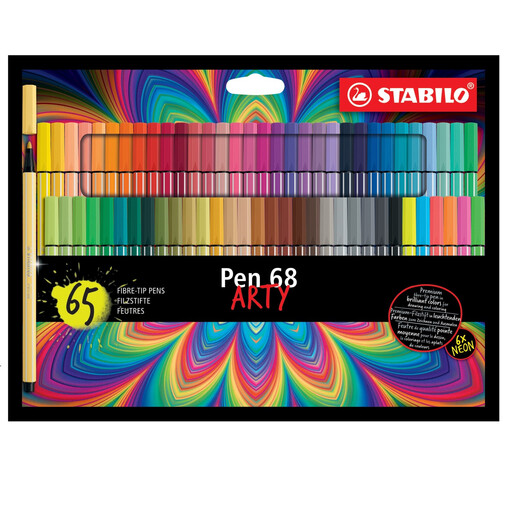
Why it’s a good fit for this group : Hobby artists and craft enthusiasts get a wide-ranging palette for drawing, bullet journalling and colouring.
The 1 mm line width and water-based ink are clearly specified, making it easier to choose the finish you’re after.
65 colours, a durable tip and water-based ink. Made using 96 % bio-based plastic, as stated under the mass balance approach.

Why it’s a good fit for this group : Art studios, classrooms and offices that regularly sharpen 6 to 12 mm pencils can opt for a powered solution.
The compatible pencil diameter, three tip settings and automatic stop are all specified before you buy.
Shavings container, automatic stop and mains-adapter power. Not suitable for wax pencils or chalk.
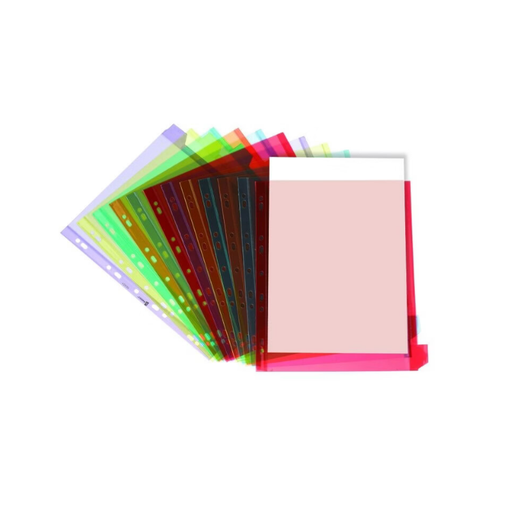
Why it’s a good fit for this group : Pupils, students and office workers sorting several subjects or files can divide sections while keeping their documents protected.
The A4XL size, 9 holes and capacity of around 25 sheets per pocket are specified, helping you avoid filing mishaps.
12 pockets, tabs in six colours and pre-cut Bristol board labels for customising different sections.
We’ve put together a comprehensive selection, updated in real time, of products that meet these exacting criteria and European safety regulations.
A basic pencil case usually includes pens, a pencil, an eraser, a pencil sharpener, a ruler and a few colouring pens. Then add ring binders, dividers, paper, glue sticks and any tools requested by the school. Before buying a multipack, check the list provided by the school.
Replace the caps after every use, store markers according to the manufacturer’s recommendations and avoid leaving them near a heat source. Use the tips on a compatible surface to help prevent clogging and wear.
Power consumption depends on the device’s wattage and how long it’s used. A model powered by an adapter only runs while sharpening, but it must be unplugged before cleaning or maintenance. For occasional use, a manual pencil sharpener is a simple, economical option that needs no power.