
Livraison le jour même ou le lendemain

Qualité garantie

Débloquez vos offres de bienvenue: Livraison GRATUITE | Jusqu'à -80 % | 30 jours d'essai gratuits à JoyPlus
Téléchargez l'application
Between pen multipacks, notebooks in different formats and sticky note pads, choosing your school and office stationery supplies can quickly become a headache. An attractive price does not always guarantee a pleasant everyday experience. For students, pupils, teachers, office workers and journaling enthusiasts, certain details matter far more than the colour of the cover or the latest marketing claims.
Here are the main pitfalls to avoid, the criteria to check and a selection suited to a range of uses in France.
A large multipack may look like a good deal, but only if its contents match your needs. Fifty black pens will not necessarily be useful to an individual who is really looking for a selection of colours to create study notes. Conversely, a shared office, classroom or family can easily make good use of a generous pack.
Before placing your order, check in particular:
Dimensions have a direct impact on writing comfort and portability. An A7 notebook slips easily into a pocket, but offers limited writing space. An A5 spiral notebook is better suited to classes, meetings and journaling. For primary and middle school, the French 17 × 22 cm format with Seyès ruling remains a dependable choice.
A soft cover can save a few grams in your bag, while spiral binding makes pages easier to turn. However, an exposed spiral can catch on the inside of a poorly organised bag. A dedicated pencil case or pouch will help protect your notebooks.
Erasable gel pens generally use thermosensitive ink. Friction removes the writing from the surface, but this technology comes with a trade-off: heat can alter the writing or cause it to reappear. These pens should therefore be avoided for official documents, thermal receipts or writing that must remain permanent.
For homework, planners and drafts, they offer welcome flexibility. For forms, signatures or archived documents, it is better to choose gel ballpoint pens or gel pens with conventional ink.
The tip diameter determines the fineness and visibility of the line:
A soft grip can make long study or writing sessions more comfortable, but it will never compensate for a tip that does not suit your handwriting. For diagrams, corrections and colour-coded notes, a multicolour set will often prove more useful than an assortment chosen purely for its appearance.
When comparing notebooks, look at the number of sheets rather than the advertised number of pages. A notebook with 60 sheets contains 120 pages when counted front and back. Paper weight, when specified, is also a useful indicator: the Deli models featured here list 70 g/m², a common weight for note-taking and journaling.
The ruling should match the intended use:
Repositionable Post-it notes are practical for organising a desk, annotating a notebook or keeping a reminder in view. Be sure to check their size and level of adhesion. Notes measuring 38 × 51 mm are suitable for short messages. The 76 × 76 mm format provides more room, particularly for tasks or ideas that need further detail.
The product listing for the Post-it Super Sticky pack states that it offers stronger adhesion than standard Post-it notes, along with an adhesive made from 60% renewable resources. These details reflect the product specifications provided and do not guarantee identical results on every surface. Always test first on delicate materials.

Why this suits the profile: These four compact notebooks are perfect for lists, reminders and notes taken on the go, without adding bulk to a pencil case or bag.
The A7 format is clearly stated, and the pack contains four 50-sheet notebooks, making it easy to assign each one to a different subject.
Squared paper, top spiral binding, soft covers and four Morandi colours.
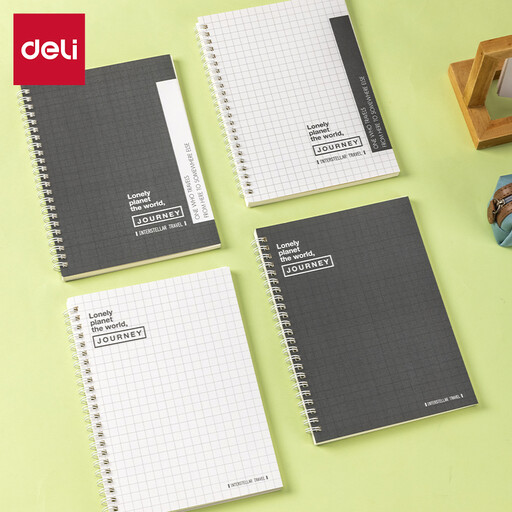
Why this suits the profile: The A5 format works equally well for classes, meetings, personal projects and tracking journals. With four notebooks, each subject can have its own dedicated space.
The dimensions, 148 × 210 mm, and the capacity of 80 sheets per notebook are clearly specified, so you will not mistake a small notebook for a full course notebook.
A5 format, stated 70 g/m² paper, spiral binding and a pack of four notebooks.
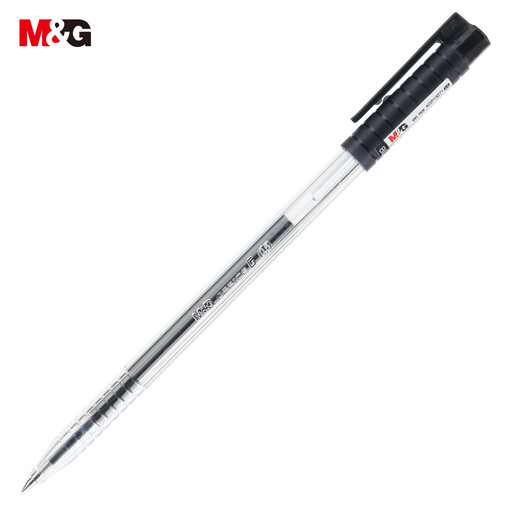
Why this suits the profile: This pack is designed for schools, associations, offices and households that use black pens regularly.
A pack of this size only makes sense if your usage justifies it. Plan to share it or store it in a dry place.
50 pens, 0.5 mm tip, quick-drying black ink and a non-slip grip.

Why this suits the profile: A pack of erasable pens is a natural fit for classes, planners, exercises and schedules where corrections are frequent.
The listing clearly mentions thermosensitive ink and the limitations associated with extreme temperatures and thermal paper.
0.5 mm needle tip, integrated eraser and 12 blue pens in the pack.
We have brought together an updated selection of products for organisation, writing and everyday needs in France.
To build a well-rounded set, you can combine:
The Deli 0.5 mm pens in eight colours are particularly well suited to colour-coded note-taking, drawing and journaling. For especially fine annotations, the 0.38 mm M&G R2 model may be worth considering, provided you choose black ink and store the pens with the tips retracted.
For everyday writing, a 0.5 to 0.7 mm tip offers a comfortable balance. Gel pens produce a smooth line, while erasable models are useful for notes that may need to be changed. For final documents, choose conventional ink and check the specific requirements of the document concerned.
It depends on how frequently it is used, storage conditions and how the item is handled. Keep notebooks in a dry place away from moisture. Close capped pens and retract button-operated models after use to prevent the tip from drying out.
Products marketed as repositionable are designed to be removed and reapplied to certain surfaces. Results can nevertheless vary depending on dust, texture, humidity and how long the note remains in place. For a delicate piece of furniture, screen or painted wall, test the note in an inconspicuous area before leaving it in place for an extended period.