Joybuy Insights

Back to School Guide: Choosing Notebooks and Avoiding Common Pitfalls

The rush for 2026 school supplies is on, and with it comes the inevitable list that seems to grow longer each year. At the heart of this frenzy, the notebook remains a cornerstone. Yet, this seemingly simple object hides pitfalls that can turn a bargain into a real hassle: pages that tear, ink that bleeds through, or a format that doesn't meet teachers' requirements.

Before you fill your shopping cart, let's review the three most common mistakes to avoid:

  1. Underestimating paper weight: Paper that is too thin (typically below 80 gsm) won't stand up to fountain pen ink or repeated erasing. The result: pages with ink bleeding through and work that looks messy.
  2. Choosing an unsuitable binding: A simple stapled binding (saddle-stitched) will struggle to last the entire year in a heavily used notebook. As for a low-end spiral notebook, its rings are likely to snag in a bag and let pages fall out.
  3. Mixing up formats and rulings: Buying an A4 notebook when the list calls for a 24x32 cm notebook is a rookie mistake. Similarly, confusing the Seyès ruling (large French squares) with a 5x5 grid can quickly become a headache for the student.

Decoding the Essential Criteria for a Good School Notebook

To make an informed decision, you just need to know a few key points. They will help you select a school notebook that not only survives the entire year but also offers optimal writing comfort.

Format: More Than Just a Matter of Size

The notebook's dimensions are not a minor detail. Each format corresponds to a specific use, often dictated by the school level:

  • 24 x 32 cm Format: This is the quintessential large school format. Its secret weapon? It allows A4 sheets (21 x 29.7 cm) to be glued in without overhanging. It's essential from primary to secondary school for most subjects.
  • 17 x 22 cm Format: Smaller and more manageable, it's often used as a draft notebook, poetry journal, or for parent-teacher communication.
  • A5 Format (14.8 x 21 cm): Ideal as a personal notepad, diary, or for professional use. It slips easily into any bag.

Ruling: A Line for Every Purpose

The ruling, which is the type of lines printed on the pages, guides your writing.

  • Seyès Ruling (large French squares): This is the standard in the French education system. Its specific grid (horizontal lines every 2 mm, vertical lines every 8 mm) is designed to guide children in forming their letters.
  • 5x5 Grid Ruling (small squares): Composed of a 5 mm square grid, this ruling is favoured for science subjects (maths, physics, chemistry) in middle and high school, as well as in higher education.
  • Lined: More common for quick note-taking or personal writing, it is less used in a strict academic context.

Paper and Binding: The Keys to Durability

A notebook's quality largely depends on these two elements.

  • Paper Weight: Expressed in grams per square metre (gsm), this indicates the paper's thickness and opacity. A 90 gsm paper, like Clairefontaine's Vélin Velouté or Oxford's Optik Paper, offers excellent writing comfort and prevents ink from bleeding or ghosting. A 70 gsm weight is often insufficient for intensive school use.
  • Binding:Saddle-stitching (staples) is common for notebooks with fewer than 100 pages. For greater durability and the ability to open flat, wire-o binding (spiral) is a great option, especially if the spiral is well-protected.

Back to School Notebook Picks

To help you make a clear choice, we've matched user profiles with notebooks that meet specific needs, focusing on durability and practicality.
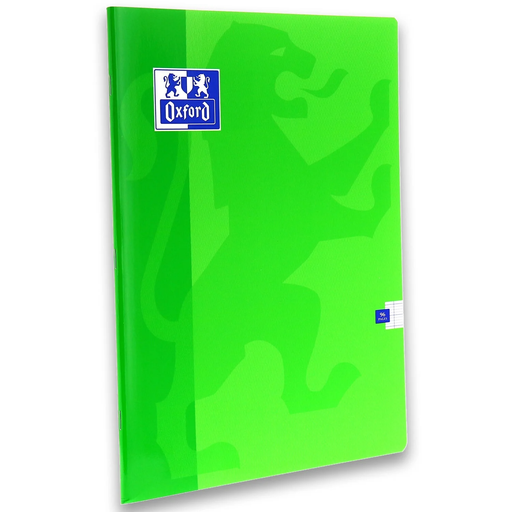
PROFILE: THE STUDENT, FROM PRIMARY TO MIDDLE SCHOOL
OXFORD Color Life notebook 24x32cm large squared Seyès 96 pages stapled green cardboard cover

OXFORD Color Life Notebook 24x32cm Seyès 96 pages

Why it's the right choice: This is the benchmark school notebook. Its 24x32 cm format and Seyès ruling meet teachers' requirements. It is designed to withstand the rigours of a school bag throughout the year.

The pitfall-proof solution:

The 90 gsm Optik Paper prevents ink from bleeding through, even with a fountain pen. The laminated card cover is resistant to wear and minor spills.

Key advantage:

The paper quality ensures unparalleled writing comfort. According to Oxford, the two-tone ruling was designed with ophthalmologists to reduce eye strain.
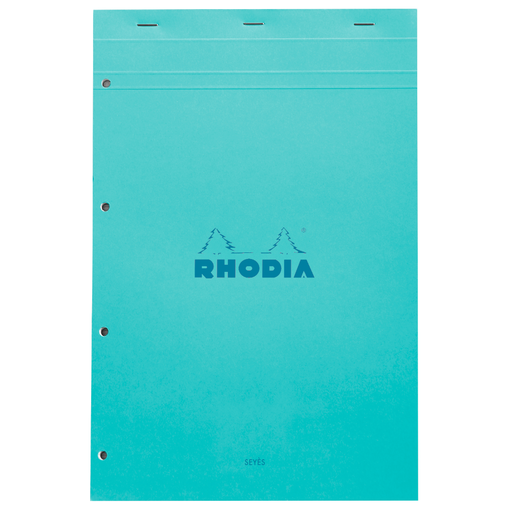
PROFILE: THE ORGANISED STUDENT
CLAIREFONTAINE Rhodia Spiral Notebook, Colors No. 20, Seyès, 80 sheets, microperforated and four-hole punched, assorted covers

Rhodia Colors No. 20 Spiral Notebook Pad, Seyès

Why it's the right choice: Ideal for high school and university students who like to reorganise their notes. The sheets detach cleanly to be filed in a sorter or binder, offering maximum flexibility.

The pitfall-proof solution:

No more torn pages that damage the binding. The micro-perforated and four-hole punched sheets are designed for easy and clean filing, effortlessly.

Key advantage:

The rigid cardboard back allows for comfortable note-taking, even without a desk. The combination of a spiral binding and detachable sheets is a winning duo for organisation.
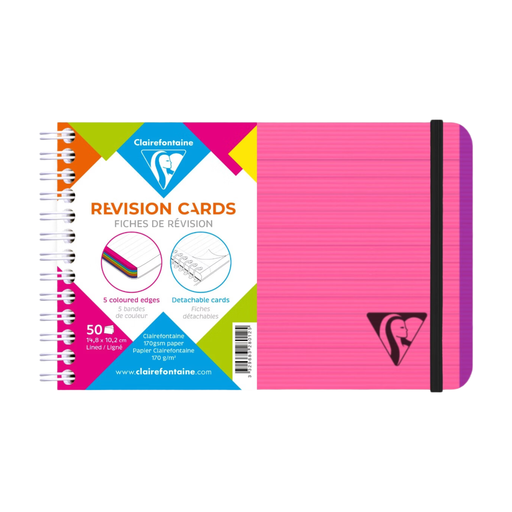
PROFILE: THE REVISION STRATEGIST
CLAIREFONTAINE Linicolor Revision Cards Spiral-Bound Notebook, 14.8 x 10.2 cm, 50 Sheets, Lined, Fuchsia Paper, 170 g/m?

Clairefontaine Linicolor Revision Card Notebook

Why it's the right choice: This tool is specifically designed for creating revision cards. Its compact format and structure make it a powerful alternative to loose index cards that always get lost.

The pitfall-proof solution:

The ultra-durable 170 gsm cardstock ensures that ink from markers or highlighters won't bleed through. The spiral binding keeps all the cards neatly organised.

Key advantage:

The 5 coloured dividers allow you to segment subjects or chapters. The wire-o binding allows for a 360° opening for comfortable double-sided use.
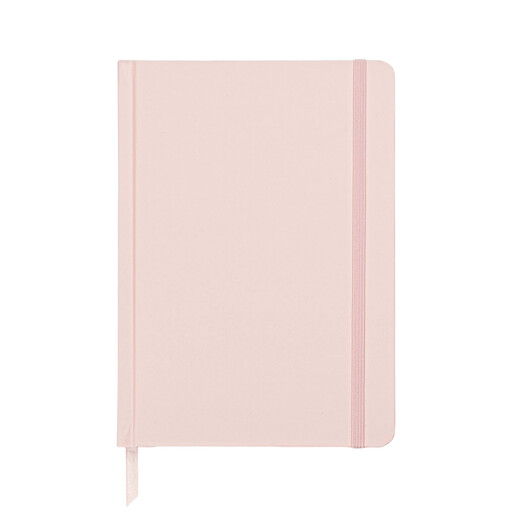
PROFILE: THE PROFESSIONAL OR CREATIVE ADULT
Jubiluu A5 Undated Hardcover 18-Month - 112 Sheets (100g offset paper), Bookmark & Elastic Band - Undated Planner for Long-term Planning, Goal Tracking, or Daily Organization-Blush Pink

Jubiluu A5 18-Month Undated Planner

Why it's the right choice: For those seeking a flexible organisational tool, this undated planner is the ideal solution. It adapts to a non-linear work or personal schedule without ever wasting pages.

The pitfall-proof solution:

Unlike a traditional planner, its undated format prevents waste if you don't use it for a period. The 100 gsm paper and hardcover ensure excellent durability over time.

Key advantage:

Total flexibility with fill-it-yourself monthly and weekly views. Practical built-in accessories: bookmark, elastic closure, and pen loop.

Looking for other options?

We have curated a complete selection of products that meet our criteria for quality and durability.

Frequently Asked Questions About School Notebooks

What's the difference between a 24x32 cm notebook and an A4 format?

Although their dimensions are similar, the 24x32 cm format is slightly larger than A4 (21x29.7 cm). This extra space is crucial: it allows you to glue in an A4 handout from class without it sticking out of the notebook and getting damaged. This is why 24x32 cm is the most requested format on school supply lists.

Is 70 gsm paper sufficient for a school notebook?

A 70 gsm paper can be suitable for a draft notebook or for taking notes with a pencil. However, for daily use with liquid ink pens or markers, it is often too thin. The ink is likely to bleed through the page, making the other side difficult to read. For peace of mind, 80 gsm is the minimum, but 90 gsm remains the ideal.

Spiral or stapled notebook: which one to choose for back to school?

The choice depends on the intended use:

  • Stapled (saddle-stitched) notebook: Lightweight and budget-friendly, it's perfect for thin notebooks (under 100 pages) where you don't need to remove sheets.
  • Spiral-bound notebook: It allows for a 360° opening, which is practical for writing in a small space. If it features micro-perforated sheets, it's ideal for students who need to file their notes. However, pay attention to the quality of the spiral: a flimsy model will quickly get bent out of shape in a backpack.