Families who regularly make sandwiches
A jar is a good choice if you make sandwiches at home before packing them in a lunchbox. Choose a size your household will use, and plan to carry the sandwiches separately from the jar.


For sandwiches made at home, a jar lets you spread the contents across several lunchboxes. If your child needs to eat without a knife, an individual portion with breadsticks serves a different purpose. In either case, check the ingredients, allergens and sugars per 100 g for the product you choose. France’s DGCCRF notes that Nutri-Score is voluntary: when it appears on the packaging, it complements this information but does not replace it.
A jar is a good choice if you make sandwiches at home before packing them in a lunchbox. Choose a size your household will use, and plan to carry the sandwiches separately from the jar.
Checking that the ingredients and precautionary allergen statements are suitable comes before choosing a format. France’s Ministry of National Education says that an individual care plan (PAI) can set out arrangements for a pupil with a food allergy; follow the guidance in place for your child.
Preparing sandwiches in advance means there’s no need to pack a utensil. Nutella & Go, on the other hand, pairs spread with breadsticks; check the ingredients of both before putting it in a lunchbox.
First, decide whether you’ll make the sandwich at home or whether your child needs a ready-to-eat format. Then compare the labels of products that meet their dietary needs.
| What matters | What to check | Who it matters to |
|---|---|---|
| How much you’ll use | Jar size and the amount you usually spread on each sandwich. | When I make sandwiches several times a week, I want to choose a jar that suits my household’s needs; around 36% of consumers put this first. |
| Nutrition information | Sugars and saturated fat per 100 g, plus the portion actually packed in the lunchbox. | When putting together a lunchbox, I prefer to check the nutrition information rather than rely on the logo on the front alone. Around 29% of consumers say this is their top priority. |
| Allergens and school guidance | Ingredients, precautionary allergen statements and, where relevant, any guidance in place for your child. | If my child has a food allergy, I need a product that meets their dietary requirements, whatever the format; around 21% of consumers say this is their main concern. |
| Eating without utensils | Whether you can make sandwiches in advance, or whether all the ingredients in a breadstick portion are suitable. | When my child eats without a knife, I look for a sandwich that’s ready to eat or a format they can eat as it is. Around 14% of consumers prioritise this convenience. |
In France, the DGCCRF describes Nutri-Score as a voluntary label. It distinguishes the logo from the nutrition declaration, which is compulsory on prepacked foods; neither replaces checking the allergens.
Compare the nutrition information per 100 g and the ingredients of the products you’re considering. Use Nutri-Score as an additional guide when it’s shown.
The Carrefour Classic’ 1 kg product page mentions possible traces of cereals containing gluten. For Nutella & Go breadsticks, Nutella lists wheat flour and barley malt extract; these are different types of ingredient information.
If your child has dietary restrictions, read the label for the exact product and format, then follow the guidance that applies to them.
A jar on its own doesn’t provide a ready-to-eat portion for a lunchbox. You’ll need to make the sandwiches and plan how to carry them.
Check that this fits your household’s routine. If not, consider an individual portion and check all its ingredients.
A recipe with this claim may still contain naturally occurring sugars. The claim also tells you nothing about allergens.
Check the ‘of which sugars’ line in the nutrition information and the ingredients list for the exact product before deciding on a portion size.
The Simpl and Carrefour Classic’ ranges include spreads in jars, worth considering when you make sandwiches at home.
The 600 g jar of Nustikao spread is another option to consider for making sandwiches.
Nutella also offers Nutella & Go, which pairs spread with breadsticks for eating without a knife.
These products include jars for making sandwiches at home and a breadstick format to eat without a knife. For a secondary school lunchbox, first choose a format your child can use, then check the label of the product you select.
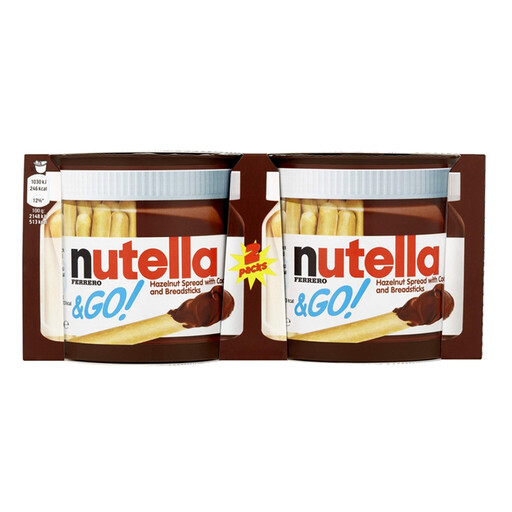 Image unavailable
This format with breadsticks can be eaten without packing a knife. If your child has dietary restrictions, check the ingredients of the spread and breadsticks on the packaging for this 78 g version.
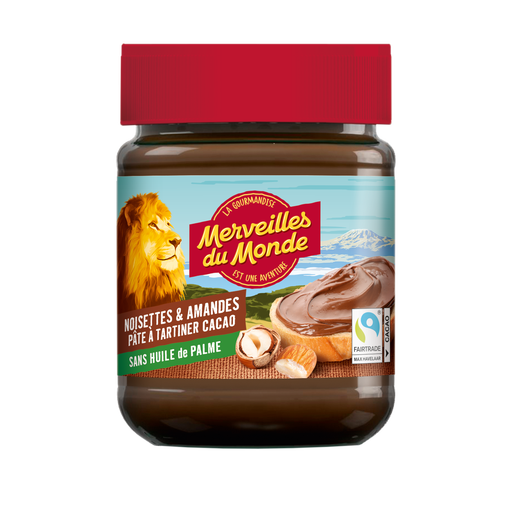 Image unavailable
This jar is suitable for making sandwiches before heading to secondary school. If nuts or milk are ingredients your child needs to avoid, check the label for this product.
 Image unavailable
This large jar is intended for making sandwiches at home, rather than putting straight into a lunchbox. Check that the size suits your household’s needs, and check the ingredients if your child has dietary requirements.
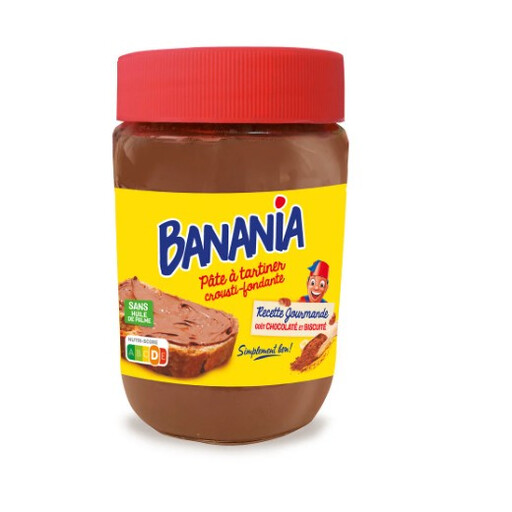 Image unavailable
This jar lets you make sandwiches before packing the lunchbox. The ‘palm oil-free’ claim tells you nothing about sugars or allergens, so check the nutrition information and ingredients for this product.
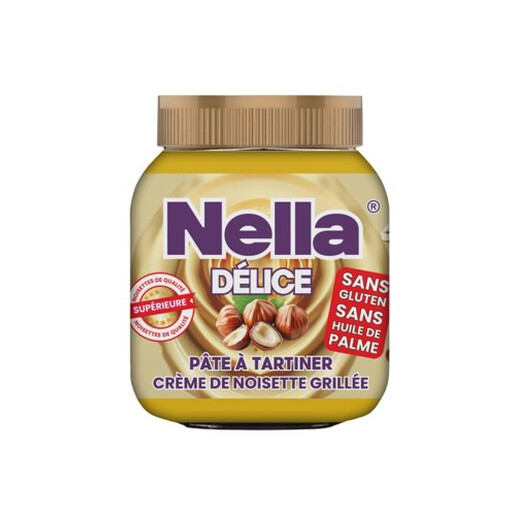 Image unavailable
This jar can be used to make sandwiches at home; you’ll then need to plan how to carry them. To compare it with another jar, check the full nutrition information and allergens on the label.
No. The DGCCRF says that Nutri-Score is voluntary, while a nutrition declaration is compulsory for prepacked foods. To compare products, check their nutrition information and ingredients, whether or not they display the logo.
No, you can’t tell from the product category alone. Carrefour mentions possible traces of cereals containing gluten for Classic’ 1 kg, while Nutella lists wheat and barley in the Nutella & Go breadsticks. Check the full product details and its label.
Check the ingredients for allergens and look for any precautionary allergen statements on every part of the product. France’s Ministry of National Education says that an individual care plan (PAI) can set out arrangements for a pupil with a food allergy. Follow the guidance in place for your child and ask the school about meal arrangements.
No. A spread with this claim may contain naturally occurring sugars. Check the ‘of which sugars’ line per 100 g, then the ingredients and the portion you plan to pack in the lunchbox.
Not if you can make the sandwiches at home: the jar can then be used for several meals. If your child needs to eat without a knife and you haven’t made a sandwich in advance, a format with breadsticks is another option, as long as you check all the ingredients.