Parents who pay close attention to ingredients
You want to compare the ingredients, allergens and nutritional information for the exact cake you’re buying, especially if your child needs to avoid certain ingredients.


For a school lunchbox, choose a cake with a portion size and label that make it easy to check the ingredients, allergens and sugars. Individually wrapped portions are convenient to carry, but labels such as “organic” or “gourmet” don’t tell you everything about nutritional values or whether a product is suitable for someone avoiding certain foods.
You want to compare the ingredients, allergens and nutritional information for the exact cake you’re buying, especially if your child needs to avoid certain ingredients.
You’re looking for ready-portioned cakes so you don’t have to cut one up while packing the lunchbox.
You care about specific features, such as an organic recipe or clearly identified baking ingredients, without overlooking the label.
| Criteria | What to check | Who is it for? |
|---|---|---|
| Allergens and ingredients | Read the ingredients list and highlighted allergens on the exact pack, as well as any warnings about possible traces. | If a child needs to avoid certain ingredients, I want to check their portion before putting it in their lunchbox; around 36% of consumers would put recipe suitability first. |
| Portion size and portability | Check how many individually wrapped portions and cakes are in the pack, then look at the weight of each portion. | On busy mornings, a pre-portioned cake saves me from having to cut one up; convenience would be the priority for around 29% of consumers. |
| Recipe and origin | Look for the features that matter to you, such as organic ingredients, stated origin or clearly specified ingredients. | For a special occasion, I might look for a recipe with clearly identified baking ingredients rather than relying on the word “premium”; around 21% of consumers would prioritise these features. |
| Sugars and nutritional information | Compare sugars per 100 g across cakes of the same type, then check the portion size; look at the Nutri-Score if one is shown. | If I pack cakes regularly, I want to be able to see how much sugar is in the portion I’ve chosen; around 14% of consumers would prioritise this nutritional comparison. |
These labels don’t replace the nutritional information for the cake you’ve chosen. Manger Bouger recommends limiting foods that are high in fat and sugar and, when it comes to biscuits, avoiding those with a Nutri-Score of E in particular.
Compare sugars per 100 g and per portion across similar products, and check the Nutri-Score if one is shown.
The packaging doesn’t tell you whether allergens are present. Some cakes may contain several ingredients that need checking.
Read the exact pack every time you buy it. If an individual healthcare plan (PAI) applies, follow its provisions and the school’s guidance.
A stated reduction compares a recipe with a particular reference product; on its own, it doesn’t tell you how much sugar is in a portion.
Check what the product is being compared with, then read the sugar content per 100 g and for the amount of cake you’re packing.
The brand offers, among other products, soft organic madeleines in ten individually wrapped portions.
The AUCHAN BIO and AUCHAN GOURMET products mentioned here offer two distinct options: soft organic cakes in individual portions and mini soft cakes with clearly identified baking ingredients.
Carrefour offers mini cakes and other soft cakes in its organic range.
The P'TIT DELI and CHAQ. ranges include different formats of soft snacks.
LU offers ranges including Petit Écolier classic, Pocket and Tendre Cœur.
Lidl offers a range of own-label products, including “Saveurs de nos Régions”.
These products are cakes to take with you, where it’s worth comparing the format and label before packing a school lunchbox.
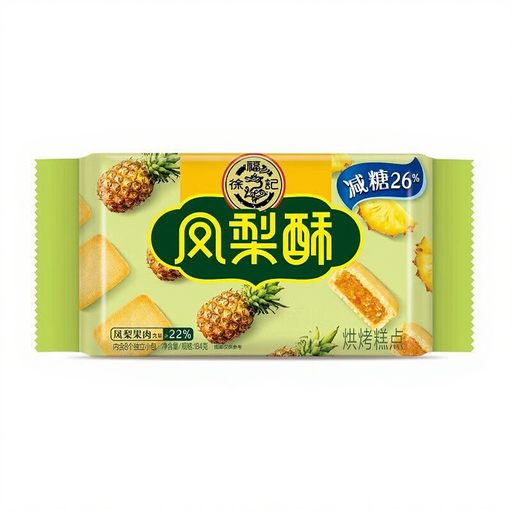 Image unavailable
The eight individually wrapped portions make it easy to take one with you. The “Reduced Sugar” claim is a prompt to check the sugar content per 100 g and per portion on the pack; if you need to avoid certain foods, check the allergens too.
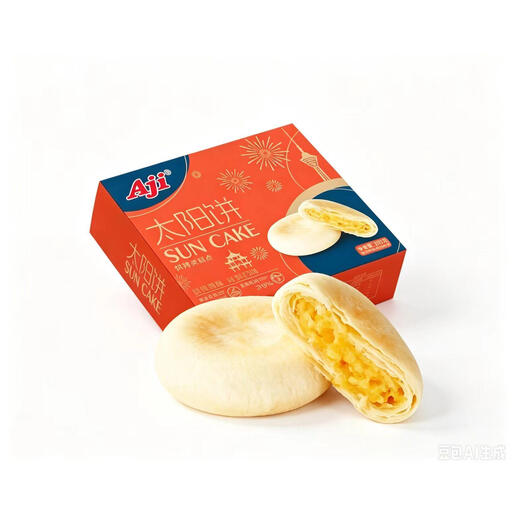 Image unavailable
If you’re planning to take a portion with you, check how many sachets are in the pack. Also check the net weight, sugar content and allergens on the label before comparing this cake with another product.
Start with the ingredients, highlighted allergens and nutritional information per 100 g, then check the amount in one portion. The French Directorate-General for Competition, Consumer Affairs and Fraud Control outlines the labelling rules for prepacked foods.
No. These labels don’t tell you everything about the sugar or allergens. Compare the format and label of the specific product based on what matters for your child.
Check the allergens and any warnings about possible traces on the exact pack every time you buy it, rather than relying on a recipe you’ve bought before. If an individual healthcare plan applies, follow its provisions and the school’s guidance.
It’s useful if you want to put a separate portion straight into the lunchbox. Still, check how many cakes are in the pack and the weight of each portion: individual wrapping isn’t an indicator of nutritional quality.