Parents short on time in the morning
A ready-baked croissant means you won’t need to fit baking in before you leave. Remember to check the number of pieces and allergen information for the product you choose.


If you’re preparing a packed lunch without time to bake in the morning, choose a ready-baked croissant and check the exact product for the number of pieces, ingredients, allergens and storage instructions. Frozen croissants are an option if you can plan ahead for preparation. And remember, “all-butter” doesn’t mean allergen-free: always check the label, especially if your child has dietary requirements at school.
A ready-baked croissant means you won’t need to fit baking in before you leave. Remember to check the number of pieces and allergen information for the product you choose.
The ingredients in the specific croissant matter more than the retailer or the “all-butter” label. The French Ministry of National Education says an individual care plan (PAI) can set out adjustments, including a special diet, for a pupil who needs one.
A multi-pack may suit the portions you need. However, frozen croissants require storage and preparation that ready-baked ones don’t.
Start with your child’s dietary requirements, then choose between a ready-to-eat croissant and one that needs baking, depending on how much time you have.
| What to consider | What to check | Who this matters to |
|---|---|---|
| Allergens and school requirements | Check the allergens and any “may contain” warnings on the exact product. If a special diet is needed, confirm the arrangements with the school. | If my child has an allergy, I need to know that this croissant meets the requirements agreed with the school before I pack it. Around 33% of consumers put this check first. |
| Morning preparation | Check whether it’s “ready to eat” or “ready to bake”, and whether the format fits the lunchbox. | When I’m putting together a packed lunch just before we leave, I look for a croissant that doesn’t need baking. Around 27% of consumers prioritise convenience. |
| Recipe | Compare the ingredients and the type of fat listed. Check the nutritional information on a like-for-like basis, per 100 g. | If I want a croissant made with butter, I look for that in the ingredients rather than assuming it also meets my other requirements. Around 20% of consumers prioritise the recipe. |
| Quantity and storage | Match the number of croissants to the packed lunches you’re making, and follow the storage instructions on the pack. | When I’m making several packed lunches, I look for a quantity I can use without ending up with portions I don’t need. Around 20% of consumers prioritise portion management. |
Lidl’s all-butter croissant contains wheat, milk and eggs, among other ingredients. The product information for Bridor’s professional croissant also lists gluten, milk and eggs.
Before choosing a croissant for a packed lunch, check the allergens and any “may contain” warnings on the exact product.
The storage requirements for a plain croissant don’t necessarily apply to a filling that needs to be kept chilled. Anses recommends limiting how long these foods are left at room temperature.
Check how the filling should be stored, and make sure it stays chilled during the journey and until lunchtime.
Depending on the filling, you may need an insulated lunch bag.
Multi-packs aren’t all prepared in the same way. E.Leclerc, for example, lists an 8-croissant EPI D'OR pack and a 20-croissant ECO+ pack of frozen, ready-to-bake croissants.
Before choosing a pack, compare the number of portions you need, the storage instructions and whether baking is required.
This phrase doesn’t tell you whether you’re looking for a whole croissant, one you can slice and fill, or a pastry that’s ready to eat.
Start with how you plan to use it: eat it as it is, add a filling at home or bake it first. If you need sliced croissants, check the product format explicitly.
Its online bakery range includes croissants from several brands and in different formats.
E.Leclerc lists an 8-croissant EPI D'OR pack weighing 320 g, as well as a frozen ECO+ format that needs baking.
An Auchan product listing features a 15-piece pack of butter croissants weighing 675 g.
Lidl offers an all-butter croissant that’s already baked and ready to eat.
Aldi lists Les Pâtissades croissants in its soft cakes range.
Bridor lists a 75 g professional croissant that’s ready to prove and then bake.
These three products are suited to packed lunches when you can bake the croissants ahead of time. They aren’t suitable if you need a croissant you can put straight into the lunchbox without any preparation.
 Image unavailable
Handy for several portions if you can bake them before putting together the packed lunches.
Pack of 6 croissants, 420 g. Check the baking instructions and allergens on the exact packaging. Don’t assume they’re pre-sliced without checking.
 Image unavailable
For baking several croissants in advance, rather than filling the lunchbox at the last minute.
Pack of 6 croissants to bake, 360 g. Check the baking instructions and allergens on the packaging before planning to pack them for school.
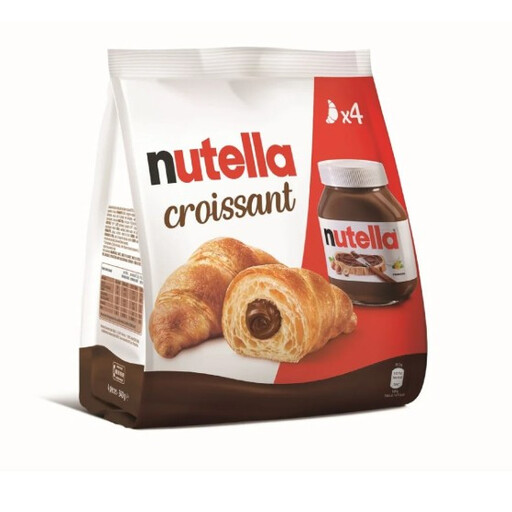 Image unavailable
A ready-filled option, provided you can bake it before putting together the packed lunch.
Pack of 4 croissants, 340 g. The hazelnut filling makes checking the allergens particularly important. Also check the baking instructions and any school requirements that apply to your child.
Don’t choose a croissant without checking the exact product. The options described by Auchan, Lidl, E.Leclerc and Bridor contain wheat or wheat gluten. For prepacked foods, the DGCCRF says allergenic ingredients must be highlighted on the label. Check it every time you buy.
Before choosing a packed lunch, check the arrangements for your child with the school. The French Ministry of National Education says an individual care plan can be put in place to set out a special diet. The arrangements will depend on your child’s needs and the school.
Yes, as long as you can store the filling safely until lunchtime. For fillings that need to be kept chilled, Anses recommends limiting the time they’re left at room temperature. Check the packaging and make sure the filling stays chilled.
Choose according to how you plan to use it: a whole croissant that’s ready to eat, one you can slice and fill, or a product that needs baking. If you need sliced croissants, check that this is clearly stated on the product. The English phrase alone doesn’t confirm the format.