People baking several batches
If you’re making lots of cakes, work out how much filling you’ll need before choosing the jar size. Also check that the product you choose is suitable for your recipe.


If you’re baking several batches for a school cake sale, choose a size that suits the amount of filling you’ll need, then check the label on the exact jar you plan to use. Hazelnut content and allergen information vary between products. Before the sale, it’s more important to provide allergen information for the finished cake than to rely on the brand name or the presence of a Nutri-Score.
If you’re making lots of cakes, work out how much filling you’ll need before choosing the jar size. Also check that the product you choose is suitable for your recipe.
If you’re making or selling the cakes, keep the label for every ingredient and work out which allergens are still present in each finished recipe.
If the ingredients influence your choice, compare the ingredients and nutrition information per 100 g for products in the same category. Nutri-Score can also help you compare them, when displayed.
First, work out how much you’ll need for your batches. Then check the label on the jar you’ve chosen and the allergens in the full recipe. Légifrance sets out the requirements for providing allergen information to consumers buying non-prepacked cakes.
| Criteria | What to check | Who is this for? |
|---|---|---|
| Quantity and size | Estimate how much filling you’ll need for each batch, then compare the net weight of the jars. | If you’re making several cakes, you’ll need enough filling without choosing a much larger size than necessary. Around 46% of consumers would make this their top priority. |
| Allergens in the finished cake | Keep the labels for all the ingredients and check which substances are still present in each recipe. | To give families the right information at the sale, it’s not enough to know the allergens in the spread alone: those in the other ingredients matter too. Around 36% of consumers would make this their top priority. |
| Ingredients and nutrition information | Compare the ingredients list, hazelnut content and information per 100 g for products in the same category. | If the cake recipe is to guide your choice, look beyond the brand name and check the ingredients and sugar content. Around 18% of consumers would prioritise this comparison. |
Ingredients and ‘may contain’ statements vary from one jar to another. You’ll also need to consider other parts of the cake, including the flour used.
Read every label, keep the packaging and prepare allergen information for each recipe. According to Légifrance, when the rules for non-prepacked food apply, this information must appear on or near the food.
Santé publique France says that displaying Nutri-Score is voluntary. A letter on the packaging doesn’t replace checking the ingredients and nutrition information.
Compare the information per 100 g for products in the same category and check Nutri-Score when it’s shown, but don’t make it your only criterion.
These products give you a range of sizes and ingredients to compare. For a school cake sale, your choice will also depend on the label of the jar you use and the cake recipe.
Chocolate and hazelnut spread available in several sizes.
Hazelnut spread, including in a 1 kg jar.
Carrefour hazelnut spread, available in a 750 g jar.
Marque Repère spread, available in a 1 kg jar.
Hazelnut spread sold by ALDI France in a 750 g size.
These hazelnut and cocoa spreads come in a range of sizes, from a 400 g jar to a 3 kg pack. Choose a size to suit your batches and check the label of every ingredient before the sale.
 Image unavailable
The 3 kg size may suit you if you’re making several batches. Check the allergens on the jar and in the full cake recipe.
 Image unavailable
The 1 kg jar is another option for making several cakes. Note the allergens on its label, then add those from the other ingredients in each recipe.
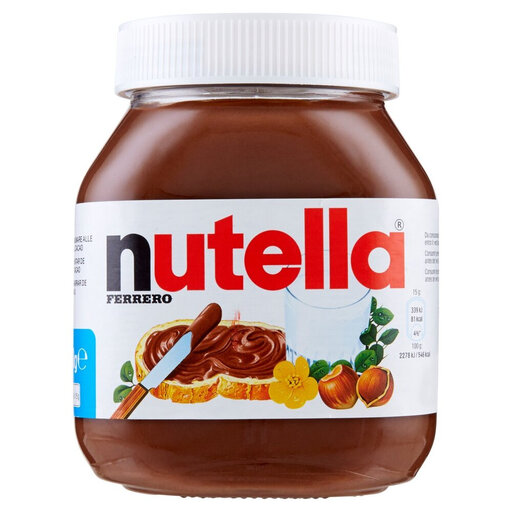 Image unavailable
The 630 g jar gives you a different quantity from the 1 kg and 3 kg sizes. Check the ingredients list and allergen information on the jar you use.
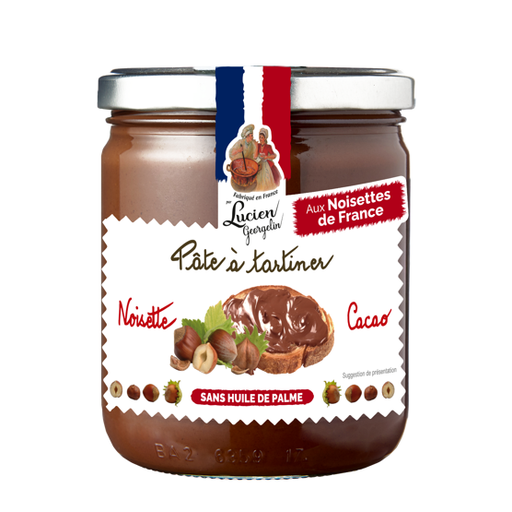 Image unavailable
The 400 g jar may suit you if you need a smaller amount of filling. Before baking, check its label for ingredients, allergens and any ‘may contain’ statements.
Yes, when the cakes fall under the rules for non-prepacked food, food packed at the customer’s request or prepacked food for direct sale. According to Légifrance, information about allergens still present must appear on or near the food. Keep the labels for all the ingredients and check the school’s own guidance too.
No. You can’t tell from the product category alone. Carrefour France, for example, warns that Carrefour Classic' may contain traces of cereals containing gluten. Check the exact label and the other ingredients in the cake, including the flour.
No. Santé publique France says producers display it voluntarily. If it isn’t shown, check the ingredients list and nutrition information per 100 g. If it is shown, don’t use it instead of this information.
The levy described by the Ministry of the Economy applies to sugary drinks; it isn’t automatically a relevant criterion for spread. To compare recipes, check the sugar content per 100 g in particular.
Follow the instructions on the jar you’ve chosen rather than assuming the same advice applies to every brand. For example, and only for its own product, Auchan France’s product information says to store its hazelnut spread at room temperature between 17 °C and 23 °C.