To choose a lower-sugar biscuit for a back-to-school snack, compare the sugars per 100 g in products intended for the same purpose. Then check the portion size, other nutritional information and allergens. The claim ‘reduced in sugars’ doesn’t tell you everything about the product: the Nutri-Score can be a helpful extra point of comparison if it appears on the pack, but displaying it is optional in France, as Santé publique France explains.
Who is this guide for?
Parents who want to compare sugar content
When preparing a snack, you may want to check the amount of sugars per 100 g rather than relying solely on a claim on the front of the pack. The DGCCRF recommends using this common measure to compare the nutritional information of relevant prepacked foods.
Parents who look at the full nutritional picture
You may also want to compare fat, saturates and salt. If the Nutri-Score is shown, it provides an additional guide; Manger Bouger specifically advises against giving children biscuits rated E for snacks.
Parents preparing a snack to take out
The number of biscuits in a pack and the allergens matter just as much as how easily it fits into a school bag. Compare the quantities you’ll actually take with you, and check the information for the specific product you choose.
What should you compare?
Start by comparing the sugars per 100 g in similar biscuits, then check the rest of the label and the portion size.
| What to compare |
What to check |
Who is this for? |
| Reduced sugar |
The amount of sugars per 100 g and, for a ‘reduced in sugars’ claim, the product used as the comparison. |
If I want to reduce the sugars in the biscuit my child takes to school, I need to compare two similar recipes rather than relying on the product name alone. Around 42% of consumers would make this verifiable reduction their priority. |
| Nutritional information |
Saturates and salt per 100 g; the Nutri-Score, if shown. |
If several biscuits have similar sugar levels, I want to look at their overall nutritional content before choosing. This would be the main consideration for around 33% of consumers. |
| Portion size and allergens |
The number of biscuits in each pack, the amount to take and any allergen or ‘may contain’ information. |
When preparing a school bag, I need a practical format with ingredients that suit any dietary requirements I need to consider. This would be the priority for around 25% of consumers. |
Common pitfalls to avoid
-
Assuming the Nutri-Score has to appear on the pack
In France, displaying it is voluntary, according to Santé publique France. So its absence alone doesn’t tell you whether a biscuit is a good choice.
Check the nutrition table: the DGCCRF explains that the nutrition declaration for relevant prepacked foods makes it possible to compare products per 100 g.
-
Choosing based only on a ‘reduced in sugars’ claim
This claim doesn’t tell you about saturates, salt or how many biscuits are intended for a snack.
Compare biscuits intended for the same purpose, then check their portion size and other nutritional information. If the Nutri-Score is shown, Manger Bouger advises against giving children biscuits rated E for snacks.
-
Overlooking allergens in a different recipe
Switching from a butter biscuit to an oat biscuit can also mean different ingredients and ‘may contain’ information to consider.
Check the ingredients list and allergen information on the pack you buy, particularly if you’re choosing a different recipe or format.
Brands to consider
Carrefour
Carrefour’s range includes Carrefour Bio whole oat biscuits with a reduced-sugar claim. Their shape and recipe are different from those of a butter biscuit, so don’t assume they’re directly comparable.
- Worth considering if you’re happy to choose an oat biscuit rather than a traditional butter biscuit.
- Before choosing this product, compare its nutritional values and check what the stated reduction is measured against on the product page and pack.
Auchan
Auchan offers a ‘Less Sugar’ range of biscuits and bars. A product listing for Bjorg oat, chia and millet biscuits gives a sugar content of 17 g per 100 g. These are oat biscuits, not butter biscuits.
- The per-100 g value for this Bjorg product makes it possible to compare with similar biscuits.
- The product listing mentions soya and possible traces of other allergens, so check the pack for the product you buy.
St Michel
St Michel offers butter biscuits in four packs of five. This product is a particular choice of recipe and packaging, and isn’t marketed as reduced in sugars.
- The individual packs make it easy to split the biscuits across several snacks.
- The St Michel product listing names wheat, milk and eggs. If reducing sugars is your priority, compare the amount per 100 g.
Biscuits available on Joybuy
These two products offer alternatives to butter biscuits for a biscuit-based snack: Swedish wholemeal crispbread and an oat biscuit. If you’re specifically looking for a reduced-sugar butter biscuit, check the category and recipe before choosing.
 Image unavailable
Krisprolls wholemeal Swedish biscuits, 425 g
Worth considering if you’re happy to have crispbread instead of a sweet biscuit. The product name includes the claim ‘no added sugars’. Check the pack for sugars per 100 g and the ingredients, and don’t confuse this claim with ‘reduced in sugars’.
View on Joybuy
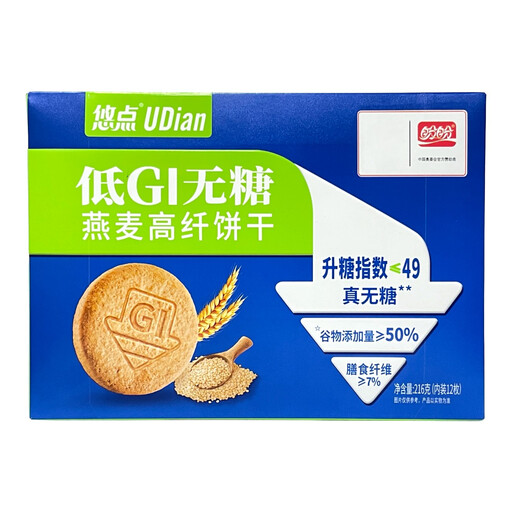 Image unavailable
Panpan oat biscuits, 216 g
An option if you’re happy to choose an oat biscuit rather than a butter biscuit. For a snack, check the pack for sugars per 100 g, ingredients (including whether it contains maltitol), allergens and the recommended portion size.
View on Joybuy
Frequently asked questions
Does the Nutri-Score have to appear on biscuits sold in France?
No. Santé publique France explains that displaying it is voluntary. The DGCCRF distinguishes this logo from the nutrition declaration required for relevant prepacked foods. Even without a Nutri-Score, you can still compare the values shown per 100 g.
Is a ‘reduced in sugars’ biscuit enough to choose a snack?
No. This claim relates to sugars, not every aspect of the biscuit. Also compare the portion size, saturates, salt and allergens. If it’s displayed, the Nutri-Score can provide extra context.
How do you compare packs of different sizes?
Start by comparing the nutritional values per 100 g for biscuits intended for the same purpose. As the DGCCRF explains for relevant prepacked foods, this makes it easier to compare their contents without confusing pack size with composition. Then check how much is actually intended for one snack.
What should you check if an allergen affects your choice of biscuit?
Check the ingredients, named allergens and any ‘may contain’ information for the product you’re buying. Auchan’s product listing for Bjorg oat, chia and millet biscuits mentions soya and possible traces of other allergens; the St Michel butter biscuits listed contain wheat, milk and eggs.


