To choose between a simply coated biscuit, a coated wafer and a filled, coated biscuit, first check the pack’s allergen information and any guidance that applies to your child and their school. Then compare the nutritional values per 100 g and the amount you’ll actually take with you. A preferred texture alone isn’t enough to distinguish between different recipes.
Who is this choice for?
Parents dealing with allergy guidance at school
Your choice should be based on the pack you buy and the guidance for your child. If they have an Individualised Welcome Plan (PAI), it may require certain foods to be avoided or set specific conditions for snacks, as explained by the Ministry of National Education.
Parents who pay attention to what goes into their child’s snack
Comparing sugars, saturated fats and salt per 100 g helps you tell recipes apart. Manger Bouger, the French Public Health Agency’s website, recommends limiting sugary and fatty foods in everyday diets. Among biscuits displaying a Nutri-Score, it advises avoiding those rated E in particular.
Parents packing a snack to take out
A pack that’s easy to carry doesn’t necessarily tell you how much to give your child. Check the total weight, the number of biscuits and, if there are individual packets, how many they contain before packing a snack.
What should you check first?
For a school snack, start with any guidance that applies to your child, then compare the recipes and packaging. A wafer, an unfilled biscuit and a filled, coated biscuit offer different textures. Their shape alone doesn’t determine their nutritional values.
Simply coated biscuit
Consider this: if your child prefers a biscuit without a filling, after checking the specific recipe.
Keep in mind: not having a filling doesn’t mean a biscuit is free from allergens or has any particular nutritional profile.
Coated wafer
Consider this: if your child likes the texture of wafers; Carrefour’s Milka Choco Suprême comes in a 300 g pack.
Keep in mind: a large pack doesn’t define a suitable snack portion, and you still need to check for allergens.
Filled, coated biscuit
Consider this: if your child prefers a combination of biscuit, filling and coating.
Keep in mind: check the ingredients and the contents of any individual packets rather than assuming that one packet is the portion you want.
| What to consider |
What to check |
Who is this for? |
| Allergens and school |
Highlighted allergenic ingredients, ‘may contain’ statements and any school or PAI guidance, if applicable. |
If your child needs to avoid certain ingredients or follow guidance at school, checking that the pack you buy is suitable comes before choosing based on texture. Around 34% of shoppers put allergen and school suitability first. |
| Nutritional composition |
Sugars, saturated fats and salt per 100 g; Nutri-Score, if shown on the pack. |
When choosing a biscuit for an occasional snack, some parents want to compare recipes on a like-for-like basis first. Around 33% of shoppers prioritise this nutritional check. |
| Portion and portability |
Total weight, number of biscuits and the contents of any individual packets. |
If the snack needs to fit into a bag, you’ll want to know what you’re actually taking with you, rather than treating the whole pack as one portion. Around 20% of shoppers prioritise a portable format that’s easy to portion out. |
| Sharing pack |
How much the pack contains and whether you can divide the biscuits between several snacks. |
At home, the main thing to consider with a sharing pack is how much to serve each time. Around 13% of shoppers prioritise a larger family-size pack. |
Common misconceptions to avoid
-
Assuming all chocolate-coated biscuits contain the same allergens
The recipes mentioned in this article contain different ingredients and precautionary statements. Information about one biscuit isn’t enough to make a decision about another, especially if your child has a PAI.
Check the highlighted allergens and ‘may contain’ statements on the pack you’re buying, then follow the guidance for your child and their school or childcare setting.
-
Using the sugar tax to judge the sugar content of a biscuit
The levy described by the French Ministry of the Economy applies to sugary drinks. It isn’t a way to compare solid biscuits.
For biscuits, check the amount of sugars per 100 g in the nutritional information instead.
-
Thinking that Nutri-Score is compulsory
According to the French Public Health Agency, displaying it is voluntary. So its absence doesn’t, by itself, tell you anything about a biscuit’s composition.
Compare the nutritional values per 100 g. If the logo appears on comparable products, use it as an extra guide; Manger Bouger recommends avoiding biscuits rated E in particular for snacks.
Brands to know
These examples relate to specific products, not every biscuit made by each brand. The ingredients in the pack you choose are what matter.
LU
Carrefour describes LU Petits Cœurs Choco'Croc as milk chocolate-coated biscuits, sold in a 90 g box.
- Carrefour’s product listing details the ingredients, including wheat, milk and soya.
- This product isn’t suitable if any of these ingredients need to be avoided. Check the ingredients every time you buy it.
BN
Auchan’s listing for BN Choco Star shows a 195 g pack and states ‘6 x 2 biscuits’.
- The product title gives a useful indication of how the biscuits are portioned.
- The recipe listed includes wheat, milk and soya. Also check the packaging on the pack before planning a snack to take out.
Milka
Carrefour describes Choco Suprême as a milk chocolate-coated wafer, sold in a 300 g pack.
- You can divide this pack between several snacks at home.
- The product listing highlights wheat, milk and soya, and says it may also contain egg and nuts.
P'TIT DELI / Marque Repère
E.Leclerc sells P'TIT DELI milk chocolate-coated sticks in a 150 g pack.
- E.Leclerc’s product listing gives the ingredients and nutritional values per 100 g.
- For this product, it shows a Nutri-Score of E and 34.2 g of sugars per 100 g. The ingredients include wheat, milk and soya.
Carrefour Extra
Carrefour sells Carrefour Extra chocolate-coated wafers in a 150 g pack.
- The product category and pack weight help you identify this as a chocolate-coated wafer.
- To make a choice based on allergens or nutritional values, check the ingredients and nutritional information on the pack you select.
Biscuits and wafers on Joybuy
This selection includes chocolate biscuits and coated wafers, as well as a strawberry-flavoured KitKat option. For a school snack, check the recipe, packaging and any relevant guidance before choosing.
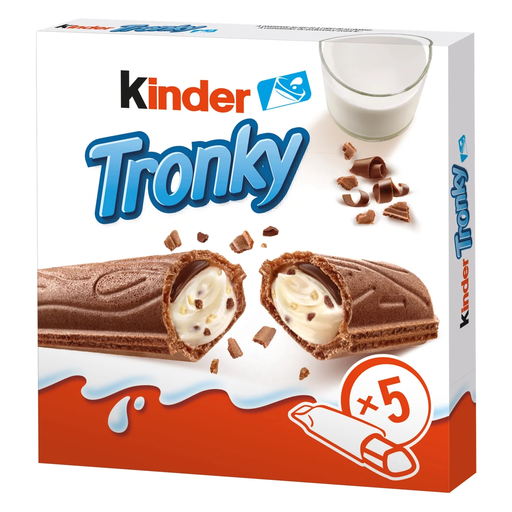 Image unavailable
Kinder Tronky, milk chocolate wafers, 90 g
Worth considering if your child prefers a milk chocolate wafer. For a snack to take out, check how many you plan to give each child. The product listing highlights wheat, milk, soya and hazelnuts, so make sure these fit with any relevant guidance.
View on Joybuy
 Image unavailable
Nestle KitKat Strawberry Short Cake, 9 pieces, 104.4 g
This strawberry-flavoured wafer offers a different taste from a classic milk chocolate coating. The pack contains 9 pieces. Before choosing it for school, check the allergens and nutritional values on the pack you buy.
View on Joybuy
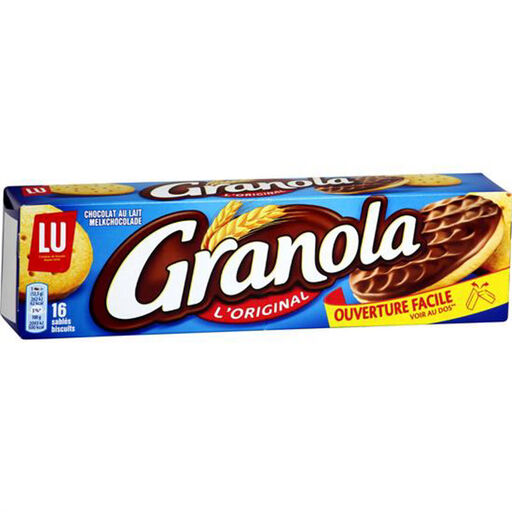 Image unavailable
LU Granola, milk chocolate-coated shortbread biscuits, 200 g
An option to consider if you’re looking for a coated shortbread biscuit rather than a wafer. The product listing highlights wheat, milk and soya, and says it may contain nuts. When packing a snack, also check how many biscuits you want to take with you.
View on Joybuy
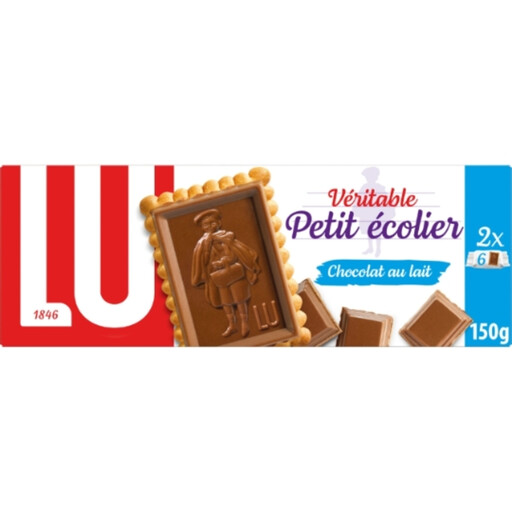 Image unavailable
LU Petit Écolier, butter biscuits covered in milk chocolate, 150 g
Compare this with other coated biscuits if your child prefers a buttery biscuit base. The product listing highlights wheat, milk and soya. Check the allergy guidance and use the pack to work out how many to take with you.
View on Joybuy
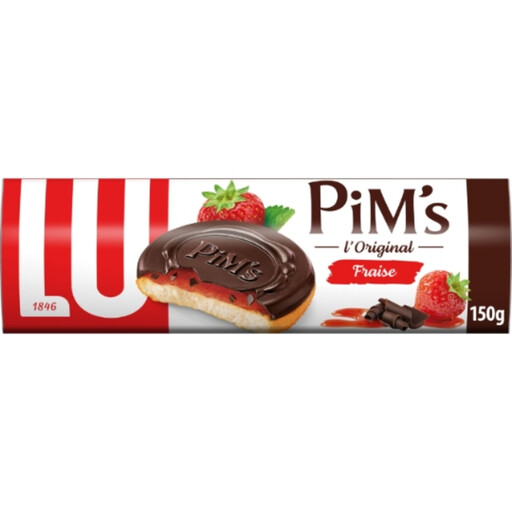 Image unavailable
LU Pim's, strawberry and chocolate sponge-style biscuits, 150 g
This biscuit combines a sponge-style base, strawberry filling and chocolate coating. Choose it for this texture, rather than making assumptions about its nutritional composition. The product listing highlights wheat, eggs, soya and milk powder; check the pack before serving it as a school snack.
View on Joybuy
Frequently asked questions
Does the sugar tax apply to chocolate-coated biscuits?
No. The levy described by the French Ministry of the Economy applies to sugary drinks, not solid biscuits. To compare the sugars in two biscuits, check their nutritional values per 100 g.
Does Nutri-Score have to appear on biscuit packs?
No. The French Public Health Agency explains that displaying it is voluntary. The nutrition declaration required for relevant prepacked foods is separate from this logo. If it appears, Nutri-Score can be an extra way to compare values per 100 g. Manger Bouger recommends avoiding biscuits rated E in particular for snacks.
How should you choose a biscuit for a child with allergies who has a snack at school?
Check the highlighted allergens and precautionary statements on the pack you actually buy, then follow the guidance for your child. The French Ministry of National Education explains that a PAI can set out the adjustments needed to support your child; the brand or type of biscuit is no substitute for this guidance.
Is a chocolate-coated biscuit suitable as an everyday snack?
Manger Bouger recommends limiting sugary and fatty foods in everyday diets and varying the snacks you serve. A chocolate-coated biscuit can be an occasional option, depending on its ingredients and the amount served, rather than an automatic everyday choice.


