Organisers mindful of allergies
If you don’t know about children’s and families’ dietary restrictions, a sealed pack with a clear ingredients list helps you share allergen information. Always check the school’s guidance before choosing a product.


For a school cake sale, first choose biscuits with packaging that lets you check the ingredients and allergens. Then find out whether the request is for ‘sugar-free’ or ‘no added sugar’: these claims are not interchangeable. Check the school’s rules before buying, particularly those relating to gluten and traces of allergens. If it appears on the packaging, Nutri-Score can be a useful addition to the nutrition information, but it is optional in France, as the DGCCRF explains.
If you don’t know about children’s and families’ dietary restrictions, a sealed pack with a clear ingredients list helps you share allergen information. Always check the school’s guidance before choosing a product.
The exact claim on the pack matters: ‘sugar-free’ and ‘no added sugar’ have different meanings. The ingredients list can also help you spot any sweeteners or polyols.
The number of portions and how they’re packaged affect how easy it is to hand out individual biscuits. A convenient format doesn’t remove the need to make sure families can still access the product information.
For a school sale, start with the school’s guidance and the product label. Then check the sugar claim and how the biscuits will be handed out.
| What matters | What to check | Who it matters to |
|---|---|---|
| Allergens and school approval | Read the ingredients and allergen information for the product you’ve chosen, including any warnings about traces. Check the school’s guidance. | If I don’t know about families’ dietary restrictions, I want to be able to clearly identify what each biscuit contains before offering it. Around 33% of consumers put allergens and school approval at the top of their list. |
| Sugar claim | Know the difference between ‘sugar-free’ and ‘no added sugar’. Compare the sugars per 100 g and check the ingredients list. | To offer an option that genuinely meets the request, I need to understand the claim on the pack rather than judge by appearances. Checking the sugar content is the top priority for around 27% of consumers. |
| Portions and labelling | Check the number of biscuits and how they’re packaged, as well as how you’ll keep the pack information available when handing them out. | When biscuits are handed out one at a time, I look for a format that’s easy to distribute without losing access to important product information. Around 20% of consumers put ease of distribution first. |
| Quantities and availability | Count how many usable portions are in each pack and make sure the product is available before planning the sale. | If I need to make sure there are enough biscuits for the event, the number of portions matters just as much as being able to get the same product. Around 20% of consumers prioritise this kind of planning. |
A sugar claim doesn’t tell you about every ingredient. For example, the plain shortbread biscuits by Gerblé featured by Auchan contain wheat and maltitol.
Check the ingredients for the exact product and ask the school to confirm any applicable restrictions before choosing it.
In France, the DGCCRF says that Nutri-Score is optional. Its absence is therefore not enough to judge a biscuit.
Read the nutrition information and ingredients. If the logo is there, use it as additional information.
Individually wrapped portions are easier to hand out, but that alone doesn’t mean they meet a request for sugar-free biscuits. The Petit St Michel featured by its manufacturer contains sugar, gluten and milk, among other ingredients.
Check the format, sugar claim and allergens separately before preparing the portions for sale.
The no-added-sugar plain shortbread biscuits featured by Auchan are one product to compare for this sale.
The no-added-sugar breakfast biscuits featured by Auchan are another product worth considering.
This retailer offers a range of products labelled as sugar-free or no added sugar.
The retailer stocks products including Gerblé and Gullón biscuits with sugar-related claims.
The Petit St Michel is worth considering for its individually wrapped format if the event doesn’t require sugar-free biscuits.
These two products are worth considering if you’re comparing sugar claims for a school sale. One is a savoury cookie; the other is described as a crisp Swedish biscuit with no added sugar. Check that the product type, ingredients and packaging are suitable for your planned sale.
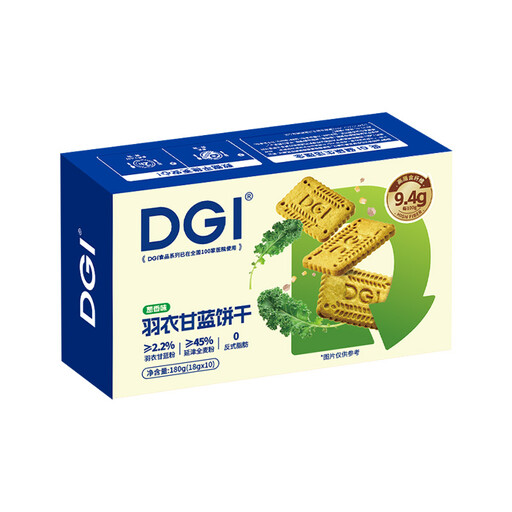 Image unavailable
The green onion flavour sets these cookies apart from the sweet biscuits usually sold at a cake sale. Before choosing them, check the pack for the sugar claim, ingredients and allergens, then confirm that the school allows this type of product and packaging.
 Image unavailable
This product carries the claim ‘No Added Sugar’, which is different from ‘sugar-free’. Its crisp toast-style format might not be what you’d expect for a cake sale. Also check the allergens, portions and the school’s guidance on the packaging you choose.
No. The DGCCRF explains that Nutri-Score is a voluntary label, separate from the nutrition declaration required for prepacked foods under the relevant regulations. If the logo isn’t shown, check the nutrition information and ingredients list rather than assuming anything about the product’s nutritional quality.
No. These are different claims: ‘no added sugar’ doesn’t mean that a product contains no sugar at all. When choosing biscuits for the sale, check the exact claim, then compare the sugars per 100 g and the ingredients list for each product.
Check the product name, ingredients, listed allergens, nutrition information, quantity, date and storage instructions. Keep the original packaging available when handing out the biscuits, and check with the school about its guidance on products and allergens.