For baking cakes or serving portions at your stall, choose a jar of spread. If you want to hand out a ready-portioned snack, consider a format with breadsticks, provided the school allows it and its allergens are clearly indicated. A box of chocolates serves a different purpose, such as a gift or raffle prize, and isn’t a substitute for a baking ingredient. Before buying anything, check the school’s rules and the label on the exact product.
Who are these formats for?
Organisers mindful of allergens
If you’re preparing or selling food for families, check the ingredients and any ‘may contain’ warnings on each product and format, then ask the school for its guidance. The DGCCRF reminds consumers that allergens in prepacked foods must be highlighted on the label.
Volunteers baking in bulk
If you’re spreading or mixing spread into cakes, compare the jar size with the amount you’ll need, then check the recipe and nutritional information per 100 g. Also plan how the portions will be prepared and served in line with the school’s guidance.
Buyers looking for ready-to-hand-out products
A format combining spread and breadsticks saves you having to portion out the contents of a jar at the stall. However, check the whole product: the Nustikao product featured by E.Leclerc contains wheat and barley, among other ingredients.
What should you check before buying?
First decide whether the product is for baking, handing out as it is or using as a prize. The ingredients and the school’s guidance will then determine whether you can offer the format you’ve chosen.
Spread in a jar
Consider it: for baking cakes or portioning servings at your stall.
Plan for: portioning and serving it in a way the school allows.
Portion with breadsticks
Consider it: for handing out a ready-portioned snack, if the school allows this format.
Check: the breadstick ingredients as well as those in the spread; the Nustikao product featured by E.Leclerc contains wheat and barley.
Box of chocolates
Consider it: as a gift, raffle prize or separate sale item.
Remember: a gift box isn’t a substitute for spread used to bake cakes; check its ingredients separately.
| Criteria |
What to check |
Relevant consumers |
| Allergens and school approval |
Check the allergens and any ‘may contain’ warnings on the exact product; ask whether the school allows you to prepare or resell it. |
I want to know whether the food on offer meets the school’s guidance before I organise the sale. Around 36% of consumers would put allergens and school approval first. |
| Format and serving |
Compare the jar size or number of portions, then check how the school expects the food to be served. |
If I need to fill cakes or hand out snacks quickly, the format needs to suit the task; around 29% of consumers would put this need first. |
| Nutritional information |
Compare the sugar and fat content per 100 g in particular; check the Nutri-Score only if it’s shown. |
When comparing recipes, I want to see values based on the same quantity. Around 21% of consumers would make this their top priority. |
| Recipe and origin |
Check the ingredients, the stated proportion of hazelnuts and any origin or manufacturing details specific to the product. |
I’m looking for a particular composition or origin and want to check what’s stated on the jar; around 14% of consumers would make this their first criterion. |
Common mix-ups to avoid
-
Assuming all spreads contain the same allergens
The format affects what you need to check: the Nustikao breadsticks featured by E.Leclerc contain wheat and barley, while the Bio Village product states that it may contain traces of cereals containing gluten.
Check the ingredients, highlighted allergens and any ‘may contain’ warnings on the product you’re buying, then check the school’s guidance.
-
Making your decision based on the Nutri-Score alone
The French Ministry of the Economy says that displaying the Nutri-Score is optional. If it appears on the packaging, it doesn’t replace the ingredients list or allergen information.
Compare the nutritional information per 100 g and the product’s ingredients, whether or not it carries the logo.
-
Treating a gift box as a baking ingredient
A box intended as a gift doesn’t meet the same need as a jar used to fill cakes or serve portions.
Decide separately which products you need for baking and whether you need any prizes, then check the label of each item you choose.
Brands to consider for different recipes and formats
Nutella
Nutella’s French website features a chocolate and hazelnut spread in several jar sizes, so you can choose one to suit the amount you need to prepare or serve.
- The recipe published by Nutella France states that it contains 13% hazelnuts.
- It also states that the product contains milk and soya. Check the label on the jar you choose and the school’s guidance.
Nos Régions ont du Talent
An E.Leclerc range to consider if the hazelnut content and nutritional information of the specific product matter to you.
- The E.Leclerc product page for the 400 g spread states that it contains 35% hazelnuts and 47.3 g of sugars per 100 g.
- This product contains hazelnuts and milk; its displayed Nutri-Score is E, but you should still check the ingredients.
Jardin Bio Étic
Chocolate and hazelnut products to consider if you’re looking for a recipe described as organic or palm-oil-free.
- Carrefour describes one of the products reviewed as organic and palm-oil-free.
- The products reviewed contain hazelnuts and milk; also check the product you choose for any ‘may contain’ warnings.
Nustikao
A format combining spread and breadsticks to consider for handing out individual portions rather than baking cakes.
- The product featured by E.Leclerc comes in a 3 × 60 g pack.
- Its breadsticks contain wheat flour and barley malt extract. Check whether the school allows this product before offering it.
Jars of spread on Joybuy
These jars are suitable for baking cakes or organising portions at your stall. Choose a size that suits your plans, and check the label and the school’s guidance before use.
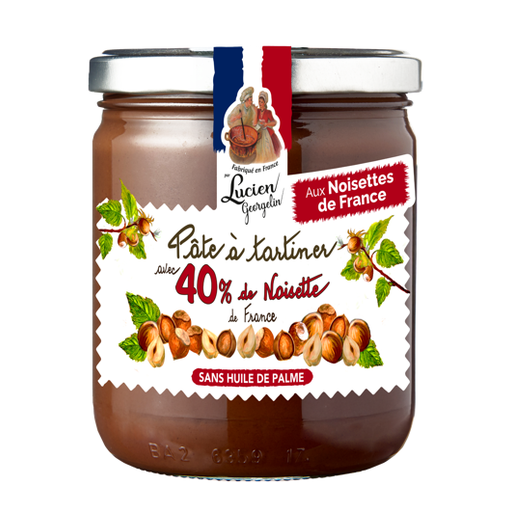 Image unavailable
Lucien Georgelin Lot & Garonne hazelnut and cocoa spread, 40% hazelnuts, 400 g
A jar to consider if you’re preparing a filling or portioning servings yourself.
The product name states that it contains 40% hazelnuts and comes in a 400 g jar. Check the allergens on the label of the jar you buy.
View on Joybuy
 Image unavailable
Rigoni di Asiago Nocciolata Organic cocoa and hazelnut spread, 250 g
A jar to consider for recipes that need a smaller amount of spread.
The stated size is 250 g. Check the ingredients and allergens of the product you buy before using it for the sale.
View on Joybuy
 Image unavailable
Nutella chocolate and hazelnut spread, 3 kg
This large jar is suitable for baking or serving larger quantities, provided you have a plan for portioning it.
Check that 3 kg is the right amount for your needs, then read the jar label and check the school’s guidance.
View on Joybuy
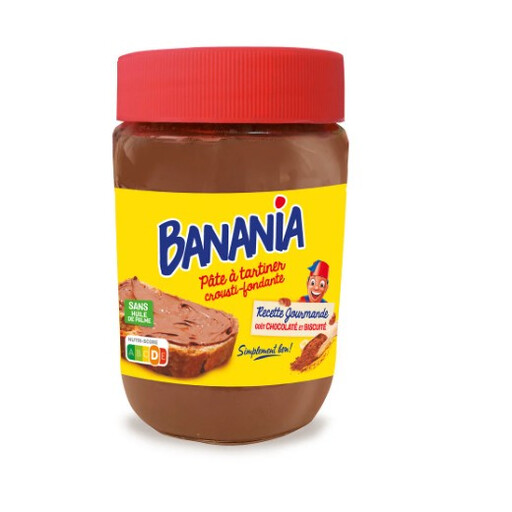 Image unavailable
Banania palm-oil-free spread, 400 g
This jar offers another recipe to consider for filling bakes or preparing portions at your stall.
The product name states that it comes in a 400 g jar and is palm-oil-free. Check the ingredients and any ‘may contain’ warnings on the label.
View on Joybuy
 Image unavailable
FUNKIE Organic smooth hazelnut and cocoa spread, 200 g
This small jar may suit a recipe that needs only a little spread.
The stated size is 200 g. Check that it’s enough for the cakes you’re planning and read the allergen information on the label.
View on Joybuy
Frequently asked questions
Do all chocolate spreads contain gluten?
No, it depends on the specific product and format. The recipe for Nutella in a jar published by the brand doesn’t mention any cereals containing gluten, while the E.Leclerc product page for Bio Village warns that it may contain traces, and Nustikao breadsticks contain wheat and barley. Read the label on the product you buy, and don’t assume it will meet a particular school policy.
Does a jar of spread have to display the Nutri-Score?
No. The French Ministry of the Economy says that displaying the Nutri-Score is optional in France. According to the DGCCRF, a nutrition declaration is still required for the relevant prepacked foods; compare the values per 100 g even if there’s no logo.
What should you check before reselling a prepacked product at a school bake sale?
First check that the school allows you to resell it, then make sure the information on the packaging is available. The DGCCRF notes in particular that allergens in the ingredients must be highlighted and that relevant prepacked foods must carry a nutrition declaration. The arrangements for cakes prepared on site may be different.
Does the tax on sugary drinks affect your choice of spread?
The Ministry of the Economy guidance cited for this contribution covers non-alcoholic drinks, not rules for assessing the nutritional value of solid spreads. To compare these foods, check the sugar content stated per 100 g.


