What sets these products apart?
First, make sure the product is suitable for your guests. Then choose between a classic cheese flavour and a more distinctive recipe, and plan how you’ll serve it outdoors.
Classic cheese wafers
Choose these if: you want to add a cheese flavour to your selection without opting for a specific regional recipe.
Check: the Carrefour Classic’ and Auchan products described in their listings contain wheat, milk and soya, among other ingredients.
Recipes featuring a specific cheese
Choose these if: your guests enjoy recipes featuring Comté and pepper, Roquefort and honey, or Maroilles.
Bear in mind: a more distinctive flavour may not suit everyone.
Crackers and other savoury biscuits
Choose these if: you want to offer a variety of textures rather than serving wafers alone.
Bear in mind: a cracker won’t necessarily have the filling or ingredients of a savoury wafer.
| What to consider |
What to check |
Who is it for? |
| Flavour |
The recipe stated and, if shown on the label, the cheese used. |
If your guests enjoy a particular cheese, the recipe name can help guide your choice. Around 27% of consumers would put this flavour match first. |
| Ingredients and allergens |
The ingredients list and any allergens highlighted on the exact packaging. |
If a guest needs to avoid an ingredient, I want to be able to rule out the relevant packet before serving. Suitability would be the top priority for around 33% of consumers. |
| Serving outdoors |
The storage instructions and how to reseal the packet after opening. |
If drinks on the patio are likely to go on for a while, keeping the rest sealed and away from heat becomes the main concern for around 27% of consumers. |
| How much to share |
The net weight and number of servings, if stated. |
When several people are helping themselves to the selection, I want to make sure there are enough biscuits without opening all the packets at once. Around 13% of consumers would prioritise the quantity they need. |
When comparing the nutritional content of two recipes, the Directorate-General for Competition Policy, Consumer Affairs and Fraud Control (DGCCRF) says that nutrition information uses a standard basis of 100 g or 100 ml. For these biscuits, compare the figures per 100 g, including sugars, fat and salt, rather than making assumptions based on the recipe name alone.
Brands to know
These products are examples of recipes and formats you can compare. A brand featured here isn’t necessarily available from Joybuy.
Carrefour Classic’
Carrefour.fr lists 65 g boxes of cheese-flavoured savoury wafers.
- The product listing provides details of the ingredients and allergens.
- The listed product contains wheat, milk and soya, and may contain traces of nuts.
Auchan
Auchan.fr describes 75 g cheese wafers as filled bites for drinks and nibbles.
- The listing states that each packet contains three servings and advises resealing it after opening.
- It lists wheat, milk and soya, and may also contain traces of nuts.
Trésors Gourmands
Auchan.fr lists several 60 g savoury wafers, including Comté and pepper, and Roquefort and honey recipes.
- The listings specify the cheese featured in each recipe and provide storage instructions.
- Check the allergens for each variety: the recipes listed include wheat, milk and eggs, among other ingredients.
Delacre
Auchan.fr describes Canasta as Gouda-filled wafers in a 75 g packet.
- The listing specifies the filling and advises storing the product away from heat and moisture.
- The ingredients listed include wheat, milk, eggs, soya, palm oil and palm kernel oil.
Tokapi / Marque Repère
E.Leclerc’s Marque Repère savoury biscuits range includes crackers, breadsticks, pretzels and assorted selections.
- These options give you different textures to serve alongside wafers.
- Check the listing for the biscuit you choose to find out what it contains: the category doesn’t describe a directly equivalent filled wafer.
Crackers to round off your drinks spread
These two Joybuy products are savoury crackers to consider if you want to add variety to your patio selection. They aren’t a like-for-like replacement for the cheese-filled savoury wafers featured above.
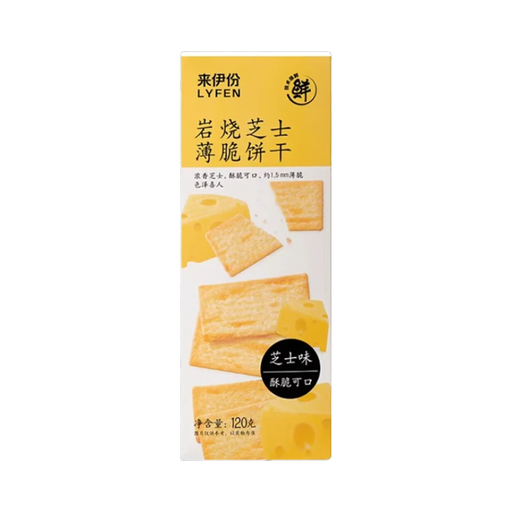 Image unavailable
LYFEN Iwaki Cheese Thin Crackers 120 g
Worth considering if you’d like to serve thin crackers alongside the wafers. The packet is listed as 120 g. If the presence of cheese in the ingredients matters to you, check the packaging rather than relying on the product name. Check the allergens before serving too.
View on Joybuy
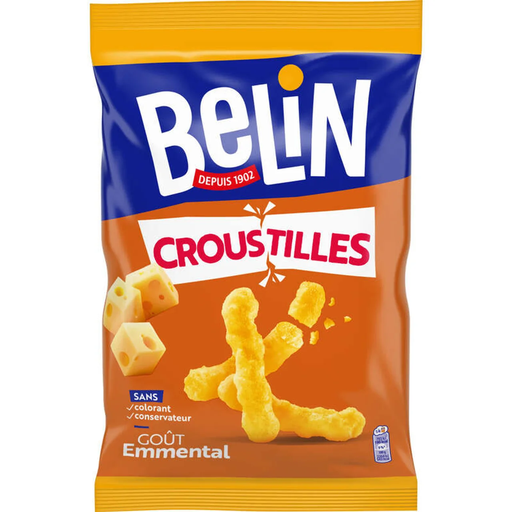 Image unavailable
Belin Gruyère Crustless Cheese Crackers Family Pack 138 g
This 138 g packet of crackers can round off a selection of savoury biscuits. The name mentions Gruyère, while the description refers to an Emmental flavour. If the specific cheese matters to you, check the recipe on the packaging. Check the allergens before serving these to your guests too.
View on Joybuy
Frequently asked questions
How can I check the allergens in a savoury wafer?
Read the ingredients list and check any allergens highlighted on the packet you’ve actually bought. The Carrefour Classic’, Auchan and Trésors Gourmands products described in their listings include wheat and milk, among other ingredients. Depending on the recipe, the label may also list other allergens or traces.
Can I leave an open packet of wafers on the patio?
For products whose listings advise storing them away from heat and moisture, serve a small amount and keep the rest sealed, somewhere shaded and dry. Auchan advises resealing its cheese wafer packet securely after opening.
How can I compare the nutritional information for two types of wafer?
Compare the nutritional values per 100 g, including sugars, fat and salt, rather than comparing portions that may differ in size. The DGCCRF says this standard basis is used to compare nutrition declarations on prepacked foods.


