Who is this guide for?

People sharing a snack before a workout

You’re looking for something to serve to several people, without assuming that a savoury snack will suit everyone just before training. When you eat it and how much you serve matter just as much as the size of the bag.

People comparing food labels

You want to compare recipes using the nutritional information per 100 g, ingredients and salt content, rather than judging the product by appearance alone. The Nutri-Score is an extra point of reference when it’s shown on the product.

Groups with allergy concerns

Check the ingredients on the bag you buy before offering it to everyone. Peanut or cheese recipes, as well as “may contain” warnings, need particular attention depending on the participants’ allergies.

What should you look for before buying?

First decide when you’ll open the bag, then compare the recipes and make sure they suit the group. The weight tells you how much there is to share, not how much one person should eat.

What matters What to check Who is it for?
Timing before exercise How long there is between the aperitif and the workout; how much each person plans to eat. If I’m heading off to train soon, I don’t want to choose a snack based only on the words “family size”. Around 42% of consumers would put the timing of when they eat it first.
Nutritional composition The information per 100 g, particularly salt and fat; the Nutri-Score if shown. To choose between two recipes, I need to read their labels rather than rely on their texture. This would be the top priority for around 33% of consumers.
Sharing and allergens The weight, ingredients list and any “contains” or “may contain” warnings on the pack. When several people are sharing, I want an amount that suits the group and a recipe that’s compatible with their known allergies. Sharing and these checks would come first for around 25% of consumers.

Use the same basis when comparing labels. For example, Auchan’s product listing for Belin Croustilles Emmental in a 260 g bag gives 33 g of fat and 1.5 g of salt per 100 g. These figures apply to this specific product, not to all puffed or cheese-flavoured snacks. Santé publique France also explains that displaying the Nutri-Score is voluntary, so its absence doesn’t tell you what a product’s score would be.

Which assumptions should you avoid?

  • Assuming every pack must show the Nutri-Score

    Santé publique France says that displaying this logo is voluntary. Ruling out a product just because it has no logo would mean missing the chance to compare the nutritional information it does provide.

    Read the nutritional information and ingredients for each product; use the Nutri-Score as extra information when it appears on the product.

  • Assuming “puffed” or “family size” means a light snack

    These terms don’t tell you about the nutritional information or how much each person will eat. For Belin Croustilles Emmental 260 g, Auchan lists 33 g of fat and 1.5 g of salt per 100 g.

    Check the information per 100 g and, if provided, per portion. Then decide how much to serve, taking into account how soon the workout will start.

  • Forgetting about allergens because the bag is for a group

    According to Vico’s product listing, Curly Cacahuète Original contains peanuts and may contain milk, nuts and gluten. A product intended for sharing needs to be suitable for the people who’ll be eating it.

    Ask about the group’s allergies, then check the ingredients list and any trace warnings on the pack you buy.

Which brands and retailers should you compare?

Belin

The range includes Belin Croustilles Emmental in 210 g and 260 g bags, according to Carrefour and Auchan product listings.

  • The two pack sizes let you choose an amount to share that suits your group.
  • For the 260 g product listed by Auchan, the declared figures are 33 g of fat and 1.5 g of salt per 100 g.

Vico / Curly

Vico describes Curly Cacahuète Original as a puffed snack, available in a 230 g size, among others.

  • This size is one option to compare for an aperitif with friends.
  • Vico’s product listing says the recipe contains peanuts and may contain milk, nuts and gluten; check the pack you plan to serve to the group.

Auchan

The retailer offers, among other products, 300 g salted crackers divided into three 100 g bags, as well as savoury snacks from various brands.

  • Separate packs can be useful if the group doesn’t want to open the whole pack at once.
  • Ingredients and nutritional information still need to be checked for each product; don’t assume they’re the same across the category.

E.Leclerc / Marque Repère / Eco+

E.Leclerc offers, among other products, 300 g Marque Repère pretzel sticks and pretzels, a 380 g cracker selection and a 350 g Eco+ selection.

  • These pack sizes make it possible to compare different types of snacks to share.
  • Pack size alone doesn’t tell you about the ingredients or allergens in the selection you choose.

Carrefour

Carrefour product listings can include the weight, ingredients, allergens and nutritional information for products intended for sharing.

  • The listing for Belin Croustilles Emmental is for a 210 g bag, different from the 260 g size mentioned above.
  • Check whether a Nutri-Score is shown for the specific product; don’t assume another product’s score applies.

A sharing-size option on Joybuy

This family-size bag of seaweed biscuits is an option if you’re looking for something to share. The pack size alone doesn’t tell you whether it’s suitable just before a workout: first consider when you’ll be eating it and the needs of the group.
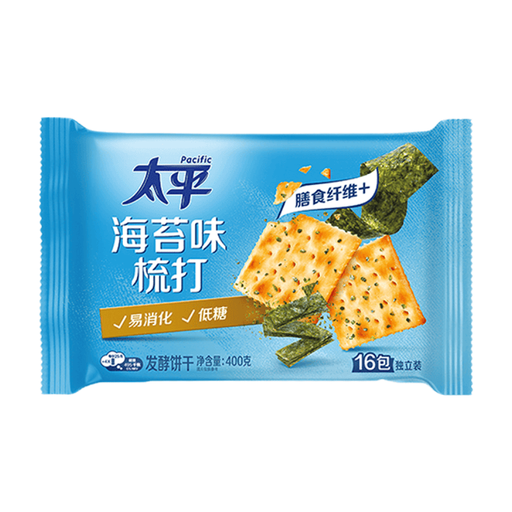
Pacific seaweed biscuits, family-size 400 g pack

Pacific seaweed biscuits, 400 g

A family-size option to consider for sharing at an aperitif, rather than choosing it solely because it’s close to a workout.

The pack is listed as 400 g. Before serving, check the label on the product you’ve bought for the amount planned per person, nutritional information and allergens.

View on Joybuy

Frequently asked questions

Is the Nutri-Score compulsory on savoury snacks in France?

No. Santé publique France explains that producers display the Nutri-Score on a voluntary basis. To compare two bags, read their nutritional information and ingredients, whether or not they show a logo.

Is a good Nutri-Score enough to choose a savoury snack just before exercise?

No. This nutritional guide doesn’t tell you when you should eat the product or how much you plan to have. Consider how long it is until your workout, the information on the label and your personal tolerance. Don’t assume that the score means a product is especially suitable for exercise.

Why compare the salt content per 100 g?

The figure per 100 g lets you compare the labels of different recipes on the same basis. Anses recommends limiting foods with the highest salt content and checking their composition; also consider how much you plan to serve.

How can I check allergens in a bag intended for several people?

Read the ingredients and any “may contain” warnings on the pack you’re going to open. For example, Vico says that Curly Cacahuète Original contains peanuts and may contain milk, nuts and gluten. Don’t assume these warnings apply to another recipe.

Should you choose the biggest bag for a group?

Not necessarily. Compare the weight with the number of people and how much each person wants to eat. A pack divided into several bags can also let you open only part of it.