Active holidaymakers looking for a savoury snack
If protein content matters for your snack, look for figures per 100 g and per portion—the amount you plan to eat. This figure is not a promise of recovery after exercise.


For your holiday, choose savoury crackers based on what matters most to you: a clearly stated protein content for a specific snack, a pulse-based recipe to share, or a classic cracker if you prefer its format or recipe. Compare the protein per 100 g and per portion, then check the salt, fat and allergens. None of these crackers, on its own, has been shown to aid sports recovery. In France, Nutri-Score can help you make comparisons when it is displayed, but Santé publique France says its use is voluntary.
If protein content matters for your snack, look for figures per 100 g and per portion—the amount you plan to eat. This figure is not a promise of recovery after exercise.
A pulse-based recipe or a displayed Nutri-Score can be part of your comparison. Also check the protein, salt and fat in each product rather than relying on its product category alone.
The ingredients in the exact variant you buy are what matter. Some of the products reviewed declare milk or warn that they may contain traces of gluten, soya or peanuts. Read the packaging before serving.
For holiday snacks, start with what matters most to you, then compare the nutritional information and ingredients of the products that meet your needs.
Worth considering: if your main priority is a clearly stated amount of protein in your savoury snack.
Keep in mind: check the portion, ingredients and allergens. Protein content alone does not prove an effect on sports recovery.
Worth considering: if you want to compare lentil- or pea-based recipes for snacks to share.
Keep in mind: containing pulses does not guarantee a particular protein content or mean the product can be labelled “high protein”.
Worth considering: if you care more about the recipe or sharing format than a specific protein goal.
Keep in mind: check the nutrition declaration before comparing it with a high-protein product.
| What to consider | What to check | Who is it for? |
|---|---|---|
| Protein content | Protein per 100 g and per portion; whether the product is labelled “high protein”. | For a savoury snack after an active day, I want to know how much protein my portion actually contains; around 36% of consumers put this verifiable figure first. |
| Nutritional balance | Salt, fat, fibre and protein per 100 g; Nutri-Score, if displayed, when comparing similar products. | When I’m putting together snacks to share, I’d rather look at several nutritional details than maximise protein. That’s the main priority for around 29% of consumers. |
| Allergens | The ingredients list and any “may contain” warnings on the packaging of the exact variant. | If a guest needs to avoid an ingredient, I need to be able to check the crackers before serving them. For around 21% of consumers, this comes before other considerations. |
| Format for your stay | Net weight, portion sizes and storage instructions after opening. | Whether I’m packing a snack or planning food for a group, I first need a format that suits my stay. Around 14% of consumers prioritise this practical consideration. |
A pulse-based recipe does not automatically meet the requirements for this nutrition claim. Under EU rules on nutrition claims, protein must provide at least 20% of a product’s energy value for it to be described as “high protein”.
To compare products, check the protein per 100 g and per portion. Don’t assume a product meets the legal criteria based on its main ingredient alone.
Santé publique France says use of the logo is voluntary. Its absence is no reason to judge a product, and its presence does not tell you everything about allergens or the portion you eat.
If it appears on the packaging, use it to compare similar products alongside the nutrition declaration and ingredients list.
An individual pack may suit a snack on the go, but it may not provide the amount you need for snacks shared with a group.
Check the net weight and how many packs you’ll need for your stay before choosing a format.
Vico Paprika Lentil Chips declare milk and warn that they may contain traces of gluten, soya and peanuts. Warnings vary by product.
If you have an allergy or need to avoid an ingredient completely, check the ingredients and warnings on the packaging you receive.
The brand offers natural crackers and high-protein savoury biscuits for a salty snack.
Its Paprika Lentil Chips let you explore a pulse-based savoury snack.
Pop'apero paprika-flavour puffs combine lentils, split peas and quinoa in a snack made for sharing.
These two chickpea snacks are suited to a savoury holiday spread: one comes in a 30 g individual pack, the other in a 100 g pack. To see whether they meet your protein priorities, compare the nutrition information on their packaging.
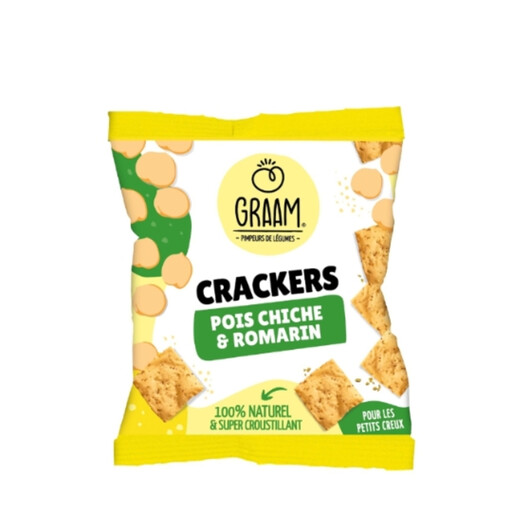 Image unavailable
The 30 g pack could be a handy individual savoury snack to take with you on holiday. If you’re specifically looking for a product labelled “high protein”, check the packaging for this claim. Also check the ingredients if you need to avoid wheat.
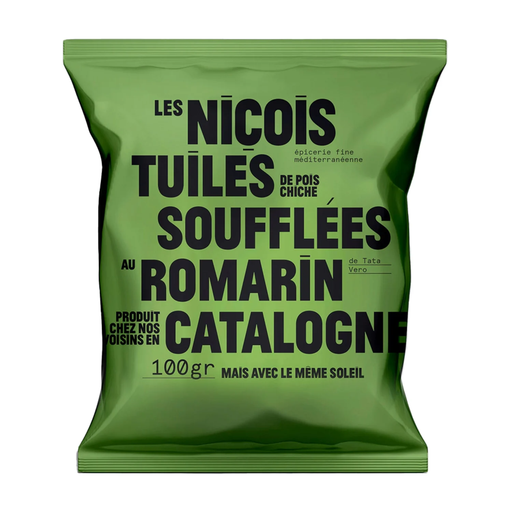 Image unavailable
The 100 g pack is another option for a savoury spread. Compare your planned portion and the nutritional values with those of other snacks you’re considering. If you need to avoid an allergen, follow the information on the packaging you receive.
No. Santé publique France says producers choose whether to display Nutri-Score, which is additional to the compulsory nutrition declaration. If it is displayed, use it to compare similar products, but don’t automatically rule out a cracker without the logo.
In the European Union, rules on nutrition claims allow this wording when protein provides at least 20% of a product’s energy value. Protein figures per 100 g help you compare crackers, but on their own they aren’t enough to confirm that the product can carry this claim.
A cracker’s protein content alone does not demonstrate an effect on sports recovery. When choosing a holiday snack, consider the portion and how it fits into your meals, without assuming the product will deliver an individual result.
Read the information for the exact variant on its packaging. For example, Vico lists milk in its Paprika Lentil Chips and warns that they may contain traces of gluten, soya and peanuts. The Auchan Pop'apero listing warns that it may contain traces of cereals containing gluten and peanuts.